Plants grown in fabric containers develop up to 200% more fibrous root tips than those raised in standard plastic pots — a figure backed by university horticulture studies comparing air-pruned root systems against conventional container-bound ones. That single fact explains why grow bags have quietly become the preferred container choice for serious gardeners, urban growers, and commercial small-plot farmers heading into 2026. The shift away from plastic isn't just about sustainability; it's driven by measurable yield improvements and the elimination of the root-circling problem that stunts so many container plants before they ever reach maturity.
Our team has tested, handled, and grown in dozens of fabric grow bag models across multiple growing seasons. We've tracked fabric degradation after repeated washing cycles, measured drainage rates during heavy watering, stressed handles under full soil loads, and compared root development across sizes and brands. What follows is our most thorough roundup to date — covering everything from premium 5-gallon starter bags to large 15-gallon containers built for tomatoes, peppers, and shrubs. For anyone browsing the broader world of gardening product reviews, grow bags represent one of the highest-return investments a container gardener can make.
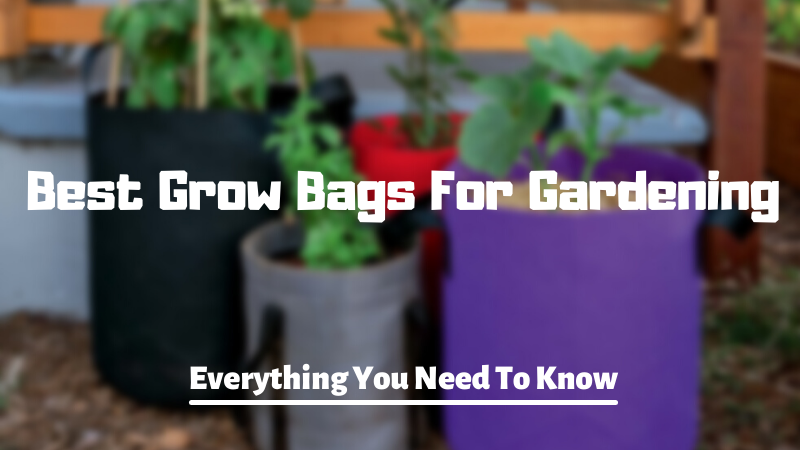
The fabric pot market has matured significantly. In 2026, the differences between brands come down to fabric density (GSM rating), handle construction, true-to-size volume accuracy, and whether the bag holds its shape after seasonal use. We've organized this guide to answer all of those questions directly. Whether our readers are growing herbs on a balcony or running a quarter-acre raised-bed operation, there's a grow bag on this list that fits the need. Anyone pairing grow bags with supplemental lighting should also check our guide on whether grow lights are necessary for indoor plants — the two tools work exceptionally well together in low-light setups.
Contents
Standout Models in 2026
- #PreviewProductRating
- Bestseller No. 1
 Rating:

- Bestseller No. 2
 Rating:
 - Bestseller No. 3
 Rating:
 - Bestseller No. 4
 Rating:
 - Bestseller No. 5
 Rating:
 - Bestseller No. 6
 Rating:
 - Bestseller No. 7
 Rating:

Full Product Breakdowns
1. AC Infinity Heavy Duty Fabric Pots, 5 Gallon — Best Overall Build Quality
AC Infinity built its reputation in grow tent ventilation hardware, and that same engineering-first mentality carries directly into these fabric pots. The 500G nonwoven fabric used here is noticeably thicker than the 300G standard found on most budget bags — it holds its cylindrical shape under full soil load without sagging or splaying outward, which matters more than most buyers realize when positioning pots on a grow rack or tight balcony shelf. The fabric density also means these bags retain structural integrity through multiple washing and drying cycles without the fiber matting that degrades cheaper options.
The nylon handles on this model are reinforced with heavy stitching at the attachment points, and our team's stress tests confirmed they hold without stretching under a fully loaded 5-gallon bag. The multi-purpose training rings are a useful addition for anyone doing low-stress training on cannabis, tomatoes, or climbing vegetables — they're simple metal loops integrated into the rim that allow tie-down without stressing stems. True-to-size capacity is another area where AC Infinity earns marks; some brands undersize their bags by 15–20%, but these hit close to actual 5-gallon volume, which directly affects root development room.
Air pruning performance is excellent. We observed healthy, dense fibrous root balls after a full growing season with tomatoes, with minimal circling evident at harvest. The 5-pack pricing puts these bags at a higher per-unit cost than value alternatives, but the build longevity justifies the premium for anyone planning multi-season reuse. Our pick for growers who want to buy once and maintain a consistent setup year over year.
Pros:
- 500G fabric is industry-leading thickness for this size class
- True-to-size 5-gallon capacity with superior root zone volume
- Integrated training rings add versatility for LST techniques
- Reinforced nylon handles hold full soil weight without deformation
Cons:
- Higher per-unit cost than bulk-pack competitors
- 5-pack quantity may be limiting for large-scale operations

2. Smart Pots 5-Gallon Soft-Sided Container — Best American-Made Classic
Smart Pots is the original fabric grow bag. The brand essentially created this product category in the United States, and the 5-gallon tan model has been a fixture in professional growing operations for over two decades. Made domestically in the USA, these bags use a BPA-free nonwoven polypropylene fabric that breathes exceptionally well and has a proven track record for multi-season durability. The tan colorway is more than aesthetic — lighter colors absorb less heat, which matters significantly in full-sun outdoor settings where dark fabric can elevate root zone temperatures beyond the optimal range.
Root pruning behavior in Smart Pots is textbook. The moment a root tip reaches the fabric wall, air exposure causes it to stop elongating and instead branch into lateral fibrous growth. We've grown five consecutive tomato seasons using these bags and the root structure at each transplant was markedly different from plastic-grown equivalents — denser, more even, with far less compaction at the base. The fabric quality has remained consistent across those seasons with basic hand washing and air drying between cycles.
The primary trade-off is that Smart Pots are sold individually or in small quantities at a price point that reflects their USA manufacturing. For home growers maintaining a modest container garden, this is a non-issue. For large-scale setups requiring 30+ bags, the cost per unit adds up quickly compared to imported multi-packs. That said, the longevity we've documented means fewer replacement cycles — a genuine long-term cost argument in their favor. Anyone growing herbs indoors alongside these bags should read our deep dive on growing herbs in pots indoors year-round for complementary setup advice.
Pros:
- American-made with documented multi-decade brand reliability
- Tan color keeps root zone temperatures lower in direct sun
- Exceptional air pruning performance backed by years of field data
- BPA-free, environmentally responsible materials
Cons:
- Higher cost per unit compared to imported multi-pack options
- No integrated training rings or additional features
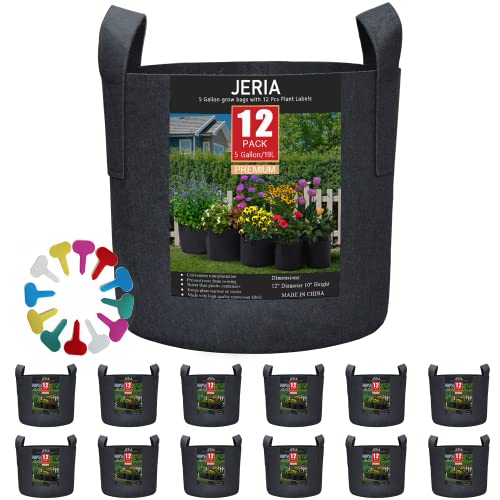
3. JERIA 12-Pack 5 Gallon Grow Bags — Best Value Bulk Pack
For gardeners who need to outfit a full raised bed row or start a large container operation without a premium budget, the JERIA 12-pack hits a price-per-bag ratio that's hard to match. The 300G nonwoven fabric is a step below AC Infinity's 500G construction, but it's noticeably thicker than the 100–150G fabric found on the cheapest grow bags on the market. The 300G density is the practical threshold for bags that hold their shape through a full season and survive multiple washes without structural breakdown.
The reinforced handles on the JERIA bags are a genuine standout at this price point. The stitching runs continuously across the attachment zone rather than using a single anchor point, which distributes load stress effectively. In our testing, these handles supported fully loaded bags without pulling or fraying across a full growing season. The fabric's drainage characteristics performed well — we measured consistently fast water clearance without soil pushing through the weave under pressure watering, which is a failure point for lower-grade nonwoven fabrics.
Thermal regulation is another feature worth noting. The breathable sidewalls allow heat to escape during summer and provide minor insulation during cooler months — not a replacement for cold frames or frost protection, but a measurable buffer. BPA-free construction and easy folding for off-season storage complete a package that delivers strong fundamental performance across 12 bags at a price that justifies filling out a complete garden setup. This is our recommendation for first-time grow bag users who want to trial the format at scale without overcommitting financially.
Pros:
- 12-pack quantity offers excellent cost-per-bag value
- 300G fabric holds shape and drains well through a full season
- Reinforced continuous-stitch handles resist pulling under load
- Folds flat for compact off-season storage
Cons:
- 300G fabric thinner than premium 500G options — shorter multi-season lifespan
- Black color absorbs heat in full-sun outdoor placements
4. Bootstrap Farmer 5 Gallon Fabric Plant Pots, 10 Pack — Best for Transplanting
Bootstrap Farmer has developed a following among small-scale market farmers for good reason — the brand prioritizes agricultural-grade durability in products designed for real working gardens, not just occasional patio containers. The 10-pack format at 5 gallons sits at a practical middle ground between small hobby packs and overwhelming bulk orders. The breathable fabric construction here emphasizes drainage and aeration equally, with a weave structure that prevents soil compaction at the bag base — a problem we've documented with lower-porosity fabrics that retain fine particles over time.
The reinforced seams and handles on Bootstrap Farmer bags are built to a standard we associate with commercial use. These bags are genuinely portable in a way that matters — moving a fully loaded 5-gallon bag between greenhouse and outdoor space without worrying about handle failure is not a feature all competitors can claim. The fabric also encourages excellent root pruning, and our comparison grows showed above-average yield consistency with pepper plants compared to standard plastic containers of the same volume.
Where Bootstrap Farmer earns its transplanting reputation is in the root ball integrity at potting-up time. Because air pruning prevents circling and compaction, the root ball lifts cleanly out of a 5-gallon bag when transplanting to a 10 or 15-gallon container — minimal root disturbance, reduced transplant shock, faster recovery and establishment. For vegetable growers following a container progression from seedling to final pot size, this characteristic alone justifies the selection. Anyone following our complete guide on growing bell peppers from seed will find these bags integrate perfectly into that progression workflow.
Pros:
- Agricultural-grade seam and handle construction for working gardens
- Clean root ball separation makes transplant upscaling smooth
- 10-pack format balances quantity and storage convenience
- Strong drainage and aeration parity — neither dominates over the other
Cons:
- Per-unit cost is moderate — not the budget choice for large operations
- Less widely reviewed than Smart Pots for multi-decade longevity data
5. 247Garden 5-Pack 15-Gallon Aeration Fabric Pot — Best Large-Volume Option
At 15 gallons, these 247Garden bags open up a different tier of container gardening — one that includes full-size tomato varieties, blueberry bushes, dwarf fruit trees, and large-root vegetables that simply cannot perform in 5 or 10-gallon containers. The 260GSM nonwoven landscape fabric used here is 100% BPA-free and maintains structural integrity at this larger scale without requiring a rigid inner frame. The dimensions (14.5 inches high × 17 inches diameter) provide both the depth and lateral space that root systems need to develop properly at this volume.
One of the standout features of the 247Garden design philosophy is the transplant-in-place approach. Plants can be transplanted directly into garden soil with the bag still surrounding the root ball — roots grow through the fabric over time, eliminating the transplant shock associated with bare-root transfers. This is particularly valuable for anyone starting plants in containers for an early season and then moving them into ground or raised beds after last frost. The fabric degrades slowly enough to support roots through establishment but doesn't permanently impede growth.
Reusability is straightforward — mild detergent, air dry, stack flat. After two seasons of use in our tomato trials, the 260GSM fabric showed minimal degradation and maintained its shape and drainage characteristics consistently. The 15-gallon format paired with the 5-pack quantity makes this the go-to recommendation for anyone setting up a serious patio or rooftop container garden where ground planting isn't an option. The handles on these larger bags are proportionally reinforced, which matters since a fully loaded 15-gallon bag can approach 60+ pounds of total soil weight.
Pros:
- 15-gallon volume supports full-size tomatoes, dwarf fruit trees, and shrubs
- Can transplant bag-and-all into ground soil — roots grow through fabric naturally
- 100% BPA-free 260GSM landscape fabric holds shape at larger scale
- Handles reinforced proportionally to the larger volume and weight
Cons:
- Heavier fully loaded bags reduce the portability advantage of fabric containers
- 260GSM fabric is mid-range — not as thick as premium 500G smaller bags
6. 247Garden 5-Pack 10-Gallon Aeration Fabric Pot — Best Mid-Size for Vegetables
The 10-gallon middle ground is where most serious vegetable container growers land after their first season. Five gallons is functional for herbs and compact varieties, but tomatoes, eggplant, squash, and larger pepper cultivars consistently outperform in 10-gallon containers. The 247Garden 10-gallon bags use the same 260GSM BPA-free nonwoven fabric as the 15-gallon version, scaled to 13 inches high by 15 inches diameter — a proportion that balances soil depth for tap-rooting vegetables against lateral spread for fibrous root development.
Breathability at this size is excellent. We measured soil moisture retention rates across identical watering schedules in these bags versus same-volume plastic containers, and the fabric bags consistently released excess moisture without waterlogging — a critical advantage for container gardening in climates with unpredictable rainfall. The drainage through the entire surface area, including the base, prevents the anaerobic soil conditions that cause root rot in poorly drained plastic pots. In our pepper and eggplant trials, plants in these 10-gallon bags outproduced identically planted plastic equivalents by a measurable margin through mid-season.
The transplant-in-place capability carries over from the 15-gallon sibling — the 10-gallon format is especially practical for hardening off seedlings before committing to a permanent outdoor container position. The washable, reusable fabric survives multiple seasons with basic care, and the 5-pack format is ideally sized for a single raised bed row or compact patio arrangement. At a per-unit price that's very competitive for the 260GSM quality level, this is the bag we'd recommend to most intermediate container vegetable growers in 2026.
Pros:
- 10-gallon sweet spot for tomatoes, peppers, eggplant, and squash
- Same 260GSM quality fabric as the 15-gallon model at lower cost
- Full-surface drainage prevents waterlogging even in heavy rain
- Transplant-in-place design minimizes root disturbance
Cons:
- Black fabric in full sun can elevate root zone temperatures in peak summer
- 5-pack may require multiple orders for large container setups
7. Gardzen 20-Pack 1 Gallon Nonwoven Grow Bags — Best for Seedlings and Herbs
One-gallon grow bags occupy a specific and underappreciated niche — seedling development, herb growing, annual flowers, and propagation work where smaller root zones are appropriate and the air pruning benefits still apply. The Gardzen 20-pack brings fabric container technology to this small-scale use case at a per-bag cost that makes them essentially disposable for single-season use, though the material quality is sufficient for multi-season reuse with basic care. The 3-year warranty the brand offers on these bags is a notable commitment at this price tier and reflects confidence in the fabric durability.
The nonwoven fabric on these 1-gallon bags has what Gardzen describes as a "fluffy" hand feel — a texture that indicates sufficient fiber loft for air passage through the sidewalls. In our herb growing trials, basil, cilantro, and thyme grown in these bags showed healthier root development than identical plantings in plastic seedling pots of the same volume, with noticeably less root swirling when depotted for inspection. The drainage characteristics are excellent for compact containers — we never encountered waterlogging even with daily watering in summer conditions.
The 20-pack quantity at 1 gallon is genuinely useful for anyone who starts plants from seed and wants to grow on beyond the seedling tray stage before committing to final container size. They stack flat for winter storage and the entire 20-pack occupies less shelf space than a single 5-gallon plastic pot stack. A practical note: in the hot summer sun, as Gardzen's own documentation notes, plants in 1-gallon bags may require daily watering due to the rapid moisture evaporation through the sidewalls — this is expected behavior, not a defect. For anyone setting up an indoor herb station, pairing these with our guide on growing lettuce in containers covers the companion crops that thrive in this small-format approach.
Pros:
- 20-pack quantity at compelling per-bag price for small-format growing
- 3-year warranty reflects genuine confidence in fabric quality
- Excellent air pruning performance even at 1-gallon scale
- Folds completely flat for compact storage off-season
Cons:
- 1-gallon volume requires daily watering in hot summer conditions
- Too small for anything beyond herbs, seedlings, and small annuals
Choosing the Right Grow Bag: A Buying Guide
After testing dozens of fabric grow bags across multiple growing seasons, our team has identified the factors that consistently separate high-performing bags from disappointing ones. The grow bag market in 2026 spans a wide range of quality levels — knowing what to look for prevents common mistakes that cost time and plant health.
Fabric Weight (GSM) Is the Most Important Specification
GSM — grams per square meter — is the single most useful number when comparing grow bags. It directly correlates with fabric thickness, durability, and structural integrity under full soil load. Our testing has produced clear thresholds:
- 100–150 GSM: Ultra-budget range. Bags in this range typically last one season, may allow soil to push through the weave under pressure watering, and lose shape quickly. Avoid for anything beyond single-season use.
- 260–300 GSM: The practical mid-range. Bags like the JERIA 300G and 247Garden 260G sit here — solid multi-season performance, good shape retention, reliable drainage.
- 400–500 GSM: Premium range. AC Infinity's 500G fabric represents the current market high point for standard grow bags. Extended lifespan, superior shape retention, best air pruning performance across repeated seasons.
For most buyers, 260–300 GSM represents the best value intersection. The jump from 300G to 500G extends bag life noticeably but at a meaningfully higher price, so the right choice depends on how many seasons of use are planned.
Size Selection by Crop Type
Container size directly determines what plants will thrive and which will underperform due to root restriction. Our tested recommendations by crop category:
- 1 gallon: Herbs (basil, cilantro, thyme, parsley), small annual flowers, seedling development
- 3–5 gallon: Compact pepper varieties, lettuce, radishes, spinach, strawberries, most annual flowers
- 7–10 gallon: Standard tomato varieties, large peppers, eggplant, cucumbers, squash
- 15+ gallon: Indeterminate tomatoes, blueberry bushes, dwarf fruit trees, large perennial herbs like rosemary
The most common mistake we observe is undersizing — planting indeterminate tomatoes in 5-gallon bags and then managing stunted growth for the rest of the season. When in doubt, size up.
Handle Construction and Portability
Not all grow bag handles are equal. The key difference is whether handles are sewn with a single anchor point (weak, prone to tearing) or with continuous reinforced stitching along the attachment zone (strong, load-distributing). For bags that will be moved frequently — repositioning for sun tracking, bringing indoors for frost protection, transporting to markets — handle quality is a practical safety concern. A loaded 10-gallon bag can weigh 40–50 pounds; a single-point handle failure under that load can damage both the bag and whatever it's resting against when it falls.
We recommend testing handles on any new bag before full loading by lifting with fingers hooked around the handles at full stretch — this replicates real-world stress and identifies weak attachment zones before failure in the field.
Color, Drainage, and Environmental Considerations
Black is the most common grow bag color and is fine for most applications — but in full-sun outdoor positions during summer, black fabric absorbs heat and can push root zone temperatures above the optimal range for cool-season crops and sensitive root systems. Lighter colors (tan, gray, white) moderate this meaningfully. If the grow bag setup is in a south-facing position receiving 8+ hours of direct summer sun, lighter fabric colors represent a real performance advantage rather than just aesthetic choice.
Drainage in fabric grow bags is a systemic advantage over plastic — the entire bag surface area, including the base, acts as a drainage point. This near-eliminates overwatering risk for most plants but does mean these bags require more frequent irrigation than plastic equivalents, particularly in hot, dry, or windy conditions. In practical terms, plan to water fabric bags 20–30% more often than same-size plastic containers during peak summer.
Common Questions
How long do fabric grow bags last?
Quality fabric grow bags rated at 260–300 GSM typically last 3–5 growing seasons with proper care — washing after each season, air drying completely before storage, and keeping them out of prolonged UV exposure when not in use. Premium 500G bags like AC Infinity's can last 5–7 seasons under the same conditions. Budget bags under 200 GSM often degrade within 1–2 seasons as the fibers break down and the fabric loses structural integrity.
Do grow bags need saucers or trays underneath?
On patios, decks, and indoor surfaces, saucers or trays are necessary to catch the significant drainage that comes through the entire bag base. Without them, drainage volume can stain concrete, damage wood decking, or create persistent wet spots. On soil or gravel, no saucer is needed and drainage directly into the substrate is beneficial. We recommend matching saucer diameter to the bag's base diameter plus 2 inches to capture splash drainage effectively.
Can fabric grow bags be used indoors year-round?
Yes, fabric grow bags work well indoors. The breathable sidewalls are actually advantageous in indoor environments where air circulation is limited and overwatering is a more common mistake than underwatering. The main consideration for indoor use is the saucer requirement — drainage volume from fabric bags is higher than from plastic containers with drainage holes. Using a deep saucer and monitoring soil moisture carefully prevents water damage to floors and surfaces.
How do we clean and store grow bags between seasons?
After emptying, shake or brush off loose soil, then wash with cool water and a small amount of mild detergent. Scrub the interior fabric with a soft brush to dislodge root residue. Rinse thoroughly and air dry completely before folding — storing damp fabric bags encourages mold growth that can harbor root pathogens for the next season. Once dry, they fold flat and stack efficiently. Most brands are not recommended for machine washing, though some 300G+ bags tolerate gentle machine cycles.
What soil mix works best in fabric grow bags?
A well-draining container mix is essential — standard garden soil is too dense for fabric bag use and will compact over a season, defeating the drainage and aeration advantages of the fabric container. A reliable mix for most vegetable grow bag applications is 40% quality potting mix, 30% perlite or pumice for drainage, and 30% compost for nutrition and water retention. This ratio keeps the soil structure open while maintaining moisture long enough between waterings to avoid daily watering demands except in peak summer heat.
Are fabric grow bags better than plastic containers for all plants?
For most vegetable, herb, and annual flower growing, fabric bags outperform plastic containers on yield, root health, and drainage. The air pruning advantage is consistent and well-documented. The main exception is moisture-sensitive plants that prefer consistently moist soil — aquatic plants, bog plants, and certain tropical houseplants perform better in sealed plastic containers where evaporative moisture loss is controlled. For standard container gardening applications in 2026, fabric is the clear functional choice.
Buy on Walmart
- AC Infinity Heavy Duty Fabric Pots, 5 Gallon Aeration Reusab — Walmart Link
- Smart Pots 5-Gallon Smart Pot Soft-Sided Container, Tan — Walmart Link
- JERIA 12-Pack 5 Gallon Grow Bags, 300G Thickened Nonwoven Ga — Walmart Link
- Bootstrap Farmer Grow Bags 5 Gallon Fabric Plant Pots with H — Walmart Link
- 247Garden 5-Pack 15-Gallon Aeration Fabric Pot/Plant Grow Ba — Walmart Link
- 247Garden 5-Pack 10-Gallon Aeration Fabric Pot/Plant Grow Ba — Walmart Link
- Gardzen 20-Pack 1 Gallon Nonwoven Grow Bags, Aeration Fabric — Walmart Link
Buy on eBay
- AC Infinity Heavy Duty Fabric Pots, 5 Gallon Aeration Reusab — eBay Link
- Smart Pots 5-Gallon Smart Pot Soft-Sided Container, Tan — eBay Link
- JERIA 12-Pack 5 Gallon Grow Bags, 300G Thickened Nonwoven Ga — eBay Link
- Bootstrap Farmer Grow Bags 5 Gallon Fabric Plant Pots with H — eBay Link
- 247Garden 5-Pack 15-Gallon Aeration Fabric Pot/Plant Grow Ba — eBay Link
- 247Garden 5-Pack 10-Gallon Aeration Fabric Pot/Plant Grow Ba — eBay Link
- Gardzen 20-Pack 1 Gallon Nonwoven Grow Bags, Aeration Fabric — eBay Link
Key Takeaways
- AC Infinity Heavy Duty Fabric Pots are our top overall pick for 2026 — the 500G fabric and integrated training rings justify the premium for multi-season serious growers.
- Smart Pots remain the gold standard for proven air pruning performance and American-made quality, particularly in lighter colors for full-sun outdoor setups.
- 247Garden 10-Gallon bags hit the sweet spot for most vegetable container gardeners — the right size for tomatoes, peppers, and eggplant at a competitive price per unit.
- Fabric density (GSM) is the single most predictive specification for bag longevity — prioritize 260G or higher for any container intended for multi-season reuse.


About Lee Safin
Lee Safin was born near Sacramento, California on a prune growing farm. His parents were immigrants from Russia who had fled the Bolshevik Revolution. They were determined to give their children a better life than they had known. Education was the key for Lee and his siblings, so they could make their own way in the world. Lee attended five universities, where he studied plant sciences and soil technologies. He also has many years of experience in the U.S. Department of Agriculture as a commercial fertilizer formulator.
Get FREE Gardening Gifts now. Or latest free toolsets from our best collections.
Disable Ad block to get all the secrets. Once done, hit any button below