15 Best Pruning Shears for Professional Gardeners – The Ultimate Guide
by Lee Safin
You walk into a garden center or scroll through Amazon looking for pruning shears, and suddenly you're staring at dozens of options — Swiss-made, Japanese steel, ergonomic handles, bypass, anvil, lightweight, heavy duty. It's overwhelming. The wrong pair will leave your hands aching and your plants torn up. The right pair will last decades and make every cut feel effortless.
Whether you're deadheading roses, shaping shrubs, or tackling overgrown branches in 2026, the tool you hold matters as much as the technique you use. Professional gardeners know this. A quality pair of bypass pruning shears (the type where two blades pass each other like scissors, giving a clean cut instead of crushing the stem) is the single most-used tool in any serious garden kit. Browse our full gardening reviews section for more expert picks across every category.
We tested and researched the top options across price points, hand sizes, and use cases to bring you this definitive guide. Below you'll find the seven best pruning shears available right now, a buying guide to help you match specs to your actual needs, and answers to the questions we hear most often.

Best Choices for 2026
- #PreviewProductRating
- Bestseller No. 1
 Rating:

- Bestseller No. 2
 Rating:
 - Bestseller No. 3
 Rating:
 - Bestseller No. 4
 Rating:
 - Bestseller No. 5
 Rating:
 - Bestseller No. 6
 Rating:
 - Bestseller No. 7
 Rating:

Full Product Breakdowns
1. Felco F2 Pruning Shears — Best Overall
The Felco F2 is the benchmark every other pruning shear gets compared against. Made in Switzerland since the 1940s, these 9.25-inch clippers have earned a permanent spot in the tool kits of professional arborists, vineyard workers, and serious home gardeners worldwide. The forged aluminum body is genuinely lifetime-grade material — not marketing language. The cutting blade is hardened carbon steel that slices cleanly through branches up to 1 inch thick without tearing or crushing plant tissue.
What really sets the F2 apart from budget alternatives is the replaceable parts system. Every single component — blade, spring, bolt, even the rubber bumper — can be ordered and swapped. You never need to buy new shears again. The blade stays sharp longer than most competitors, and when it does dull, you sharpen it with a standard diamond file rather than replacing the whole tool. If you're serious about pruning and want to invest once, this is the pick.
The handle size suits large to medium hands best. Left-handed gardeners should look elsewhere (the F2 is right-handed only), but for standard right-hand use it delivers near-perfect balance at 8.7 oz. When you're out in the garden for hours — maybe following a hydrangea pruning session or shaping roses — that balance and weight distribution makes a real difference over time.
Pros:
- Fully replaceable parts — every component is available separately
- Forged aluminum handles with lifetime guarantee
- Hardened carbon steel blade holds an edge exceptionally well
- Clean bypass cut protects plant health
- Trusted by professional arborists and vineyard workers globally
- Ergonomic design reduces hand fatigue during extended use
Cons:
- Premium price point — higher upfront cost than most competitors
- Right-hand only design excludes left-handed gardeners
- Sized for medium-large hands; may feel bulky for small hands

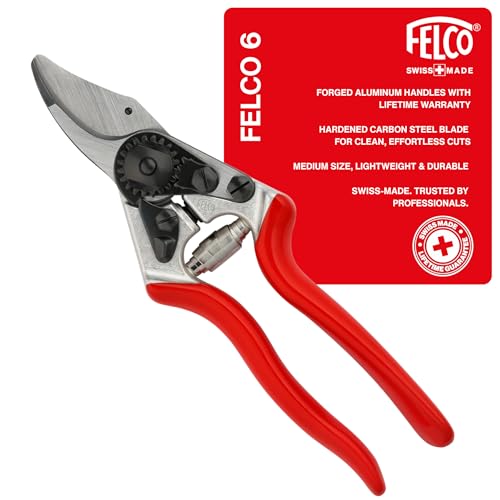
2. Felco F6 Pruning Shears — Best for Medium Hands
If the F2 is too big for your hand, the Felco F6 is the answer. At 7.7 inches, it's the compact sibling — same Swiss precision engineering, same replaceable-parts philosophy, but sized specifically for medium and smaller hands. The rotating handle is the F6's standout feature, turning as you cut to dramatically reduce friction and repetitive-strain stress on fingers and wrist. If you have arthritis or find standard shears aggravate your hand after extended sessions, this design change alone is worth the upgrade.
The F6 shares the same hardened steel bypass blade system as the F2, giving you clean, precise cuts that heal faster on your plants. It also includes a built-in wire cutter notch near the blade pivot — handy for cutting twist ties, thin garden wire, or floral wire without reaching for a separate tool. The sap groove (a channel machined into the blade) prevents resin and sticky sap from binding the blade mid-cut, which is a real problem when pruning pines, fruit trees, or roses.
Like all Felco tools, every component is individually replaceable. The cushioned shock absorber on the handle reduces impact vibration, which matters when you're making dozens of cuts per hour. For gardeners with medium-sized hands who want professional-grade performance without hand fatigue, the F6 is the clear choice in 2026.
Pros:
- Rotating handle significantly reduces strain and repetitive-motion fatigue
- Sized perfectly for medium and smaller hands
- Built-in wire cutter and sap groove add practical versatility
- Cushioned shock absorber softens impact on each cut
- Full replaceable-parts system, same as F2
Cons:
- Premium price, same as F2 range
- Slightly smaller cutting capacity compared to the F2
3. ARS HP-VS8Z Signature Heavy Duty Pruner — Best Heavy Duty
ARS is Japan's most respected name in professional cutting tools, and the HP-VS8Z is their flagship hand pruner. If you're regularly cutting through tough, woody stems or dealing with dense ornamental shrubs and fruit trees, this is the tool built for that punishment. The hard chrome plating over the blade isn't cosmetic — it provides genuine protection against rust, oxidation, and sap buildup that would otherwise degrade a bare steel blade within a season or two of heavy use.
The single-hand latch release is one of those design decisions that sounds minor until you've spent a day in the garden. You can unlock these shears with one hand — no fumbling, no needing to set down what you're holding in your other hand. For professional gardeners and landscapers who are constantly opening and closing their pruners, this saves real time and reduces wrist strain over a full workday.
The ARS HP-VS8Z comes with a limited lifetime manufacturer's guarantee, backing up the build quality claim. These are not a budget buy, but they're built to outlast cheap alternatives many times over. If you're maintaining an orchard, tackling butterfly bush pruning regularly, or dealing with thick rose canes, the extra cutting force and blade durability of the ARS pays for itself quickly.
Pros:
- Hard chrome plating resists rust and sap buildup exceptionally well
- Single-hand latch operation — fast, intuitive, practical
- Japanese precision blade geometry delivers powerful, clean cuts
- Limited lifetime manufacturer's guarantee
- Excellent for heavy-duty, high-volume professional use
Cons:
- Heavier than competing lightweight options
- Higher price than entry-level professional shears
- Parts replacement is less straightforward than Felco's system
4. Bahco Ergo Bypass Pruner PX-M2 — Best Ergonomic Design
Bahco's ergonomics research is not just a selling point — it's the entire design philosophy behind the PX series. The handle is shaped to keep your wrist in a natural, neutral position (the same posture a hand specialist would recommend for repetitive-motion tasks). If you prune daily or have any existing wrist or hand discomfort, the Bahco PX-M2 is the pruner your body will thank you for choosing. The Slicing Cut blade technology channels cutting force into an efficient, smooth slicing motion rather than a blunt compress-and-snap, which means cleaner wounds on stems and less effort per cut.
What makes the PX series genuinely exceptional is the fit customization. It's available in three handle sizes and three blade lengths — eight total ergonomic formats — and it works equally well for left or right hands. Most pruners make left-handed gardeners settle for a suboptimal grip. Bahco refuses that compromise. You choose the configuration that matches your actual hand size and strength, not the other way around.

For detail-oriented work — shaping topiaries, deadheading densely planted beds, or working through the kind of precise rose pruning described in any serious deadheading guide — the Bahco's combination of low-fatigue design and precision blade makes it a standout performer. According to Wikipedia's overview of pruning, clean cuts that minimize tissue damage are critical to plant health — and the Bahco's Slicing Cut technology delivers exactly that.
Pros:
- Multiple handle and blade size configurations for a custom fit
- Left and right hand versions available — truly inclusive design
- Neutral wrist position reduces strain during extended pruning sessions
- Slicing Cut blade technology produces exceptionally clean cuts
- Lightweight yet built for daily professional use
Cons:
- Selecting the right configuration requires research upfront
- Not as widely available in physical stores as Felco or Fiskars
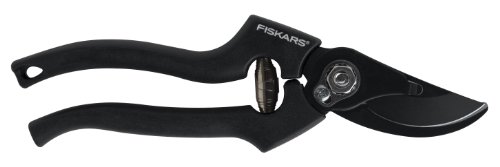
5. Fiskars Professional Bypass Pruning Shears — Best Adjustable Tension
Fiskars has built its reputation on making professional-quality tools accessible without the Swiss or Japanese price premium. The Professional Bypass Pruning Shears deliver on that promise with one feature that genuinely sets them apart from the field: adjustable blade tension. You can dial the resistance up or down to match your grip strength and the material you're cutting. Soft flower stems need less tension. Tough woody rose canes need more. No other pruner in this price range gives you that kind of adaptability.
The angled cutting head is another practical win. It positions the blade at a slight offset from your wrist line, which means you can reach into dense shrubs and cut at awkward angles without twisting your wrist into an uncomfortable position. This is exactly the kind of thoughtful detail that separates a tool designed by people who actually garden from one designed purely on paper.
These shears are ideal for gardeners who handle a range of tasks — light stem cutting one moment, thicker branch work the next. If you're growing dahlias, peonies, or any plant that demands regular stem management at varying thicknesses, the Fiskars Professional adapts instead of forcing you to swap tools. The stainless steel blade holds a reasonable edge and is easier to wipe clean than carbon steel in humid conditions.
Pros:
- Adjustable blade tension — matches your hand strength and cutting material
- Angled cutting head reduces wrist strain at awkward cutting angles
- Strong stainless steel blade resists rust well in outdoor conditions
- More affordable than Swiss or Japanese premium options
- Suitable for a wide variety of pruning tasks
Cons:
- Not as rebuildable as Felco — replacement parts harder to source
- Blade doesn't hold an edge as long as premium hardened steel
6. Okatsune 103 Bypass Pruners — Best for Precision Work
Okatsune is a name that serious gardeners know well, but it hasn't achieved the mainstream recognition of Felco or Fiskars — which means you get exceptional Japanese craftsmanship without the brand premium baked into the price. The 103 model is the general-purpose medium size, measuring 7.9 inches and weighing just 8.1 oz. That weight-to-performance ratio is outstanding — it's one of the lightest pruners in this roundup, yet it handles daily professional work without flexing or fatiguing.
The steel used in Okatsune blades is high-carbon Japanese steel, hardened and ground to a razor-fine edge at the factory. Out of the box, these shears feel noticeably sharper than most Western alternatives. The bypass design is precise and tight-fitting, which eliminates the slight blade wobble you sometimes feel in cheaper pruners — that wobble is what causes ragged cuts and stem crushing. Clean, tight blade alignment is what separates a pruner that heals plants from one that damages them.
The Okatsune 103 is especially well suited for fine detail work: shaping bonsai, cutting flower stems, managing the delicate new growth on perennials and climbing plants. If you're working through lavender beds or maintaining the kind of plant-by-plant precision that a serious garden demands, these shears reward careful technique. They're a specialist's tool that generalists will also love once they try them.
Pros:
- Lightweight at 8.1 oz — minimal fatigue during extended fine work
- Factory-sharp Japanese high-carbon steel blade
- Precise blade alignment prevents blade wobble and ragged cuts
- Well-balanced for detail work and delicate plant management
- Competitive price for the quality tier
Cons:
- Replacement parts less readily available than Felco
- Not designed for heavy-duty thick branch cutting
- Less ergonomic handle padding compared to cushioned alternatives
7. Kimura 8" Pro Bypass Pruning Shears — Best Value Japanese Steel
The Kimura 8" Pro is the best value proposition in this entire list. You get Japanese SK5 steel blades — forged in Japan and heat-treated to 60 HRC (Rockwell hardness, the standard measure of steel hardness) — at a price point that significantly undercuts premium Swiss and established Japanese brands. 60 HRC puts these blades in the same hardness bracket as professional-grade knives, meaning excellent edge retention and less frequent sharpening compared to softer steel blades common in budget pruners.
The 8-inch length gives you a slightly longer lever arm than compact models, which translates to more cutting force with less grip effort. For gardeners dealing with thick rose canes, woody herb stems, or the kind of tough growth you encounter when following a butterfly bush pruning routine, that extra leverage is immediately noticeable. The non-slip PVC coating on the aluminum handles is specifically designed for gardeners with arthritis or carpal tunnel — the grip stays secure even with wet or gloved hands.
If you're skeptical of a newer brand on a list dominated by Felco and ARS, understand what you're getting: Japanese-forged SK5 steel, aluminum handles, proper bypass geometry, ergonomic design, and a 1-inch cutting capacity at a fraction of the cost. It won't have Felco's century of refinement or the replaceable-parts ecosystem, but for a gardener who wants professional-grade cutting performance without a professional-grade price tag, the Kimura delivers in 2026.
Pros:
- SK5 steel blades heat-treated to 60 HRC for outstanding edge retention
- Non-slip PVC handle coating works well for arthritis and carpal tunnel sufferers
- 8-inch length provides excellent leverage for thicker cutting tasks
- 1-inch cutting capacity — handles most pruning tasks with ease
- Strong value at its price point
- Lightweight aluminum construction reduces carry fatigue
Cons:
- Newer brand — less long-term field data than Felco or ARS
- No replaceable parts system — replace the whole tool when it wears out
- PVC coating may compress slightly over years of heavy use
Buying Guide: How to Choose the Best Pruning Shears
Before you spend money on pruning shears, spend two minutes matching your needs to the specs that actually matter. Here's what separates the right tool from the wrong one.
Bypass vs. Anvil: Know the Difference
Every pruner on this list is a bypass pruner — the correct choice for live plant material. In a bypass design, a sharp upper blade passes a flat lower blade (like scissors), slicing cleanly through the stem. An anvil pruner has one blade that closes against a flat plate, which crushes the stem before cutting it. Anvil pruners are fine for dead wood but damage live tissue and invite disease. For anything growing in your garden, always choose bypass.
Blade Material and Hardness
Blade quality determines how long your shears stay sharp and how they hold up to moisture and sap. Key considerations:
- High-carbon steel (Felco, Okatsune, ARS): Holds the sharpest edge longest. Requires drying after use to prevent rust.
- SK5 steel (Kimura): Japanese industrial grade, heat-treated for hardness. Excellent edge retention, good rust resistance.
- Stainless steel (Fiskars): More rust-resistant, lower maintenance, but typically doesn't hold an edge as long as carbon steel.
- Chrome plating (ARS): Adds rust and sap resistance on top of the underlying steel — best of both worlds on premium tools.
For most gardeners, carbon steel or SK5 blades wiped dry after each use will outperform stainless steel blades that are never maintained.
Hand Fit, Grip, and Ergonomics
A pruner that doesn't fit your hand will cause fatigue and inaccurate cuts. Size up your hand before buying:
- Large hands: Felco F2 (9.25"), ARS HP-VS8Z, Kimura 8" Pro
- Medium hands: Felco F6 (7.7"), Bahco PX-M2, Fiskars Professional
- Small hands or arthritis: Felco F6 with rotating handle, Bahco PX-M2 (smallest configuration), Kimura 8" Pro with PVC grip
- Left-handed gardeners: Bahco PX series — the only option here with an explicit left-hand configuration
If you prune for more than 30 minutes at a time, ergonomics matter far more than you think. Features like rotating handles (F6), cushioned bumpers, and shaped grips aren't luxury extras — they prevent cumulative injury.
Cutting Capacity and Intended Use
Don't buy a precision tool for heavy work or a heavy-duty pruner for delicate tasks. Match the tool to your garden:
- Light stem work and flowers (roses, dahlias, herbs): Okatsune 103, Bahco PX-M2, Felco F6
- General garden pruning up to 1": Felco F2, Fiskars Professional, Kimura 8" Pro
- Heavy shrubs, fruit trees, tough woody stems: ARS HP-VS8Z, Felco F2, Kimura 8" Pro
- Daily professional volume use: Felco F2 or F6 (replaceable parts make these the only long-term professional choice)
Maintenance and Longevity
The tools on this list range from "replace when worn out" to "maintain for life." If you want a forever pruner:
- Buy Felco. The replaceable parts system means the only thing you ever truly wear out is the blade, and that's a $15 part.
- Sharpen carbon steel blades with a ceramic sharpening rod or diamond file — 30 seconds every few uses keeps the edge keen.
- After each session, wipe blades with an oily cloth (mineral oil or WD-40). This prevents rust and keeps the pivot moving freely.
- Check the pivot bolt tension periodically — loose bolts cause blade misalignment and ragged cuts.
A $50 pruner that lasts 20 years costs less than a $20 pruner you replace every two years. Buy quality once and maintain it — that's the professional gardener's approach.
FAQs
What is the difference between bypass and anvil pruning shears?
Bypass pruners work like scissors — a sharp blade slides past a flat lower blade, slicing cleanly through the stem. Anvil pruners press a single blade down against a flat plate, which can crush the stem and introduce disease. For live plant material, always use bypass pruners. Anvil types are only appropriate for cutting dry or dead wood where crush damage doesn't matter.
How often should I sharpen my pruning shears?
Sharpen after every 3–5 hours of active pruning, or whenever you notice the blades tearing rather than slicing cleanly. A ceramic rod or diamond sharpening file takes 30 seconds and keeps your blade in working order. High-carbon steel blades (Felco, Okatsune, ARS) typically need sharpening less often than softer stainless steel, but all blades benefit from regular honing.
Can I use the same pruning shears on all my plants?
Yes, with one important caveat: clean and disinfect your blades between plants, especially when working on diseased specimens. Pruning shears transfer bacterial and fungal diseases from one plant to the next through sap residue. A quick wipe with isopropyl alcohol between cuts — especially when pruning roses, fruit trees, or any plant showing signs of disease — prevents spread and protects your whole garden.
Are Felco pruning shears worth the high price?
For professional gardeners and serious enthusiasts, yes — without question. The replaceable parts system means you never need to buy new shears again; you just replace the blade, spring, or bolt as needed. The lifetime-guaranteed forged aluminum handles and precision Swiss engineering genuinely outlast multiple generations of cheaper tools. If you calculate total cost over 20 years, Felco is often cheaper than repeatedly replacing mid-range alternatives.
What size pruning shears should I get for small or arthritic hands?
The Felco F6 (7.7") with its rotating handle is the best option for small hands or arthritis — the handle rotates with each cut to reduce friction and finger strain dramatically. The Bahco PX-M2 is also excellent and comes in three handle sizes with left-hand options. The Kimura 8" Pro with non-slip PVC grip is another strong choice for gardeners who need a secure, cushioned hold without fighting a stiff or slippery handle.
How do I clean and maintain pruning shears to make them last longer?
After each use: wipe the blades with a cloth dampened with mineral oil or light machine oil to prevent rust and keep the pivot smooth. After working on diseased plants: wipe with isopropyl alcohol before the oil. Monthly: check the pivot bolt for tightness and adjust blade tension if needed. Seasonally: disassemble, clean all parts, sharpen the blade, lightly oil all metal surfaces, and reassemble. Stored clean and oiled, quality pruning shears will outlast decades of regular use.
Buy on Walmart
- Felco F2 Pruning Shears – 9.25" Swiss-Made Garden Clippers f — Walmart Link
- Felco F6 Pruning Shears – 7.7" Swiss-Made Garden Clippers fo — Walmart Link
- ARS HP-VS8Z Signature Heavy Duty Pruner — Walmart Link
- Bahco Ergo Bypass Pruner PX-M2 — Walmart Link
- Fiskars Professional Bypass Pruning Shears — Walmart Link
- Okatsune 103 Bypass Pruners General Purpose Medium (One Pack — Walmart Link
- Kimura® 8" Pro Bypass Pruning Shears, Heavy Duty Japanese SK — Walmart Link
Buy on eBay
- Felco F2 Pruning Shears – 9.25" Swiss-Made Garden Clippers f — eBay Link
- Felco F6 Pruning Shears – 7.7" Swiss-Made Garden Clippers fo — eBay Link
- ARS HP-VS8Z Signature Heavy Duty Pruner — eBay Link
- Bahco Ergo Bypass Pruner PX-M2 — eBay Link
- Fiskars Professional Bypass Pruning Shears — eBay Link
- Okatsune 103 Bypass Pruners General Purpose Medium (One Pack — eBay Link
- Kimura® 8" Pro Bypass Pruning Shears, Heavy Duty Japanese SK — eBay Link
Final Thoughts
The right pruning shears make every hour in the garden more productive and less physically demanding — and in 2026, there's no reason to settle for a tool that fights you on every cut. If you want the gold standard, go with the Felco F2 or F6 and know you'll never need to buy another pair. If you want professional-grade Japanese steel at a fraction of the cost, the Kimura 8" Pro or Okatsune 103 will exceed your expectations. Pick the pair that fits your hand, your budget, and the plants you love, then get out there and start cutting.


About Lee Safin
Lee Safin was born near Sacramento, California on a prune growing farm. His parents were immigrants from Russia who had fled the Bolshevik Revolution. They were determined to give their children a better life than they had known. Education was the key for Lee and his siblings, so they could make their own way in the world. Lee attended five universities, where he studied plant sciences and soil technologies. He also has many years of experience in the U.S. Department of Agriculture as a commercial fertilizer formulator.
Get FREE Gardening Gifts now. Or latest free toolsets from our best collections.
Disable Ad block to get all the secrets. Once done, hit any button below