Can a recycled egg carton genuinely replace a store-bought seed tray for starting tomatoes? Yes — and in several ways, it works better. When you grow tomato seeds in egg cartons, you're using a free, biodegradable container that controls moisture, separates each seedling's roots, and breaks down harmlessly in the ground at transplant time. It's one of those gardening tips that sounds almost too clever to work, but the results are consistent: healthy seedlings, zero transplant shock, and a method that even first-time gardeners nail on the very first try.
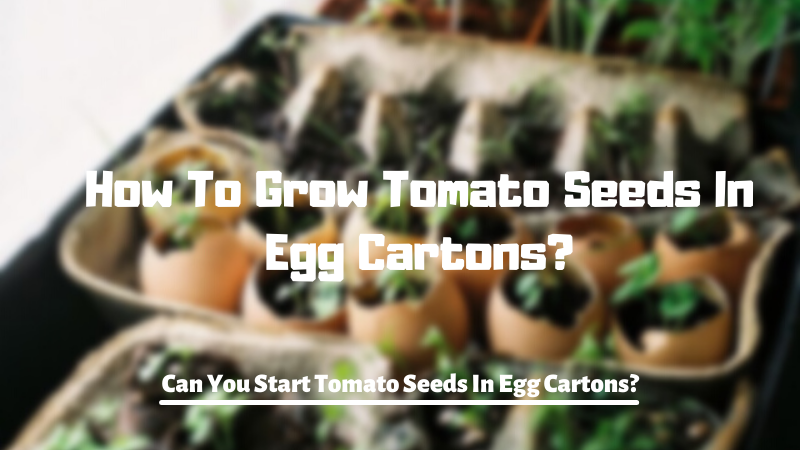
Each cell of a cardboard carton holds just the right volume of soil for a tomato seed to germinate and develop its first true leaves. When transplant day comes, you plant the whole cell — no digging out, no root disturbance. That single advantage sets this method apart from most plastic seed trays, where tangled roots almost always take a hit during transplanting.
This guide covers the full 10-step process, the right timing, daily care, a real cost breakdown, how to fix the most common problems, and a season-long strategy to carry your seedlings all the way to harvest. Follow these steps and you'll have strong transplants ready exactly when your garden is.
Contents
- Quick Setup: Everything You Need Before You Plant
- The Right Time to Start — And When to Skip Egg Cartons
- Beginners vs. Experienced Growers: How Your Approach Changes
- How to Grow Tomato Seeds in Egg Cartons: The 10-Step Process
- Troubleshooting: Fixing the Problems That Trip Up Most Growers
- What It Really Costs to Start Tomatoes in Egg Cartons
- From Seedling to Harvest: Your Long-Term Growing Plan
- Frequently Asked Questions
- Final Thoughts
Quick Setup: Everything You Need Before You Plant
Choosing the Right Egg Carton
Cardboard egg cartons are the clear winner for tomato seed starting. They absorb moisture and release it slowly, keeping the seed-starting mix from drying out too fast between waterings. More importantly, cardboard breaks down directly in garden soil — you can plant each cell whole, without cutting it apart or poking out the seedling.
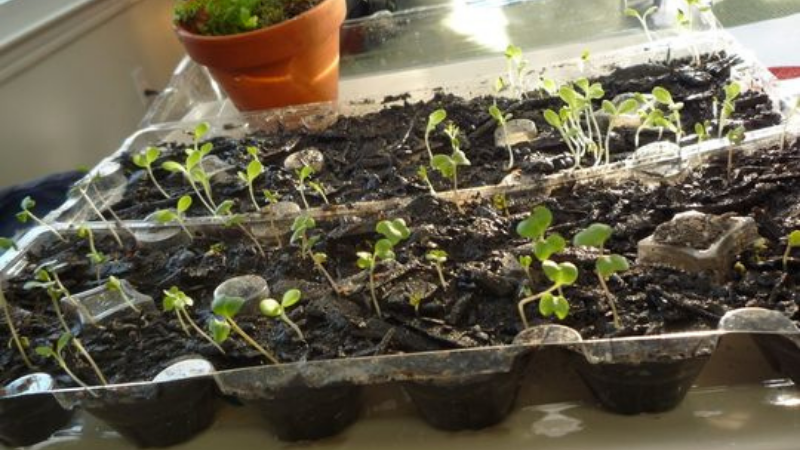
Plastic egg cartons work, but you'll need to pop each seedling out at transplant time — and that risks root damage. Foam cartons are the worst choice because they don't breathe and won't decompose. If cardboard is available, always choose it.
Soil Mix and Basic Supplies
Your full supply list is short and inexpensive:
- One or two 12-cell cardboard egg cartons
- Seed-starting mix (not garden soil — it's too dense and poorly drained)
- Tomato seeds of your chosen variety
- A spray bottle or watering can with a fine rose head
- Clear plastic wrap or a small humidity dome
- A warm location or seedling heat mat
Use seed-starting mix, not regular potting soil. It's lighter, drains faster, and contains less fertilizer — all things that help young seeds germinate without being smothered. According to established sowing principles, seeds carry all the energy they need to sprout; a loose, well-aerated medium simply gets out of their way.
Pro tip: Moisten your seed-starting mix before filling the cells — dry mix wets unevenly once it's packed into small compartments and can create dry pockets right where your seeds sit.
The Right Time to Start — And When to Skip Egg Cartons
Ideal Timing for Indoor Seed Starting
Timing is the factor most gardeners get wrong first. Start too early and your seedlings outgrow their cells before outdoor temperatures are safe. Start too late and you lose prime growing weeks. The standard guidance: start tomato seeds 6 to 8 weeks before your last expected frost date.
- Zones 9–10: Start seeds in January to early February
- Zones 6–8: Start in late February to mid-March
- Zones 4–5: Start in mid-March to early April
Check your local cooperative extension service for precise frost dates in your specific area. That date is your anchor for everything else.
When Egg Cartons Fall Short
Egg cartons are ideal for germination and the first two to three weeks of growth — not long-term housing. Their cells are small (roughly 2–3 inches deep), which means roots will hit the walls quickly. Move seedlings out once they show their second set of true leaves.
Consider a different container if:
- You're growing large beefsteak or paste varieties with aggressive early root development
- You plan to keep plants indoors longer than four weeks post-germination
- Your space is very warm and plants are growing faster than expected
If you're extending the indoor season with grow lights, the egg carton start pairs well with an artificial light setup — see the full guide on growing tomatoes with artificial light for a complete indoor strategy.
Beginners vs. Experienced Growers: How Your Approach Changes
The Beginner Approach
If this is your first time, keep it simple. One cardboard carton, a small bag of seed-starting mix, and a warm windowsill. The most common beginner mistake is overwatering — seeds need consistent moisture, not saturated soil. Mist the surface; don't pour water directly into the cells.
Plant two seeds per cell and thin to one after germination. Don't skip thinning — two seedlings in the same tiny cell will both be weaker than a single seedling with full access to the available soil and nutrients.
If you're building your gardening knowledge from the ground up, these 32 gardening tips for beginners give you a solid foundation to work from alongside your seed-starting efforts.
How Experienced Growers Refine the Method
Once you've done one successful run, a few upgrades make a measurable difference:
- Bottom watering: Place the carton in a shallow tray and add water to the tray — the cells wick moisture upward without disturbing the soil surface or dislodging seeds.
- Thermostat-controlled heat mat: Holding soil temperature at 75–80°F (24–27°C) produces faster, more uniform germination across all cells.
- Overnight seed soaking: For thick-coated varieties, soaking seeds in warm water for 12 hours before planting can shave 2–3 days off germination time.
- Succession planting: Start a fresh carton every two weeks to stagger ripening and extend your harvest window.
How to Grow Tomato Seeds in Egg Cartons: The 10-Step Process
Steps 1–5: Preparing and Planting
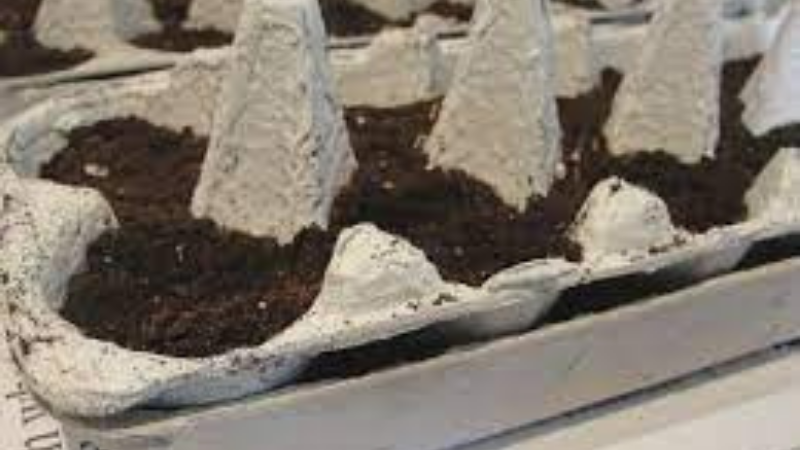
Step 1 — Poke drainage holes. Use a pencil or skewer to punch one hole in the bottom of each cell. Without drainage, water pools at the bottom and suffocates seeds before they ever sprout.
Step 2 — Pre-moisten your mix. Add water to your seed-starting mix in a bowl and stir until it holds its shape when squeezed but doesn't drip — like a wrung-out sponge.
Step 3 — Fill each cell. Fill to about ¼ inch below the rim. Don't pack the soil down hard — air circulation around seeds matters for germination.
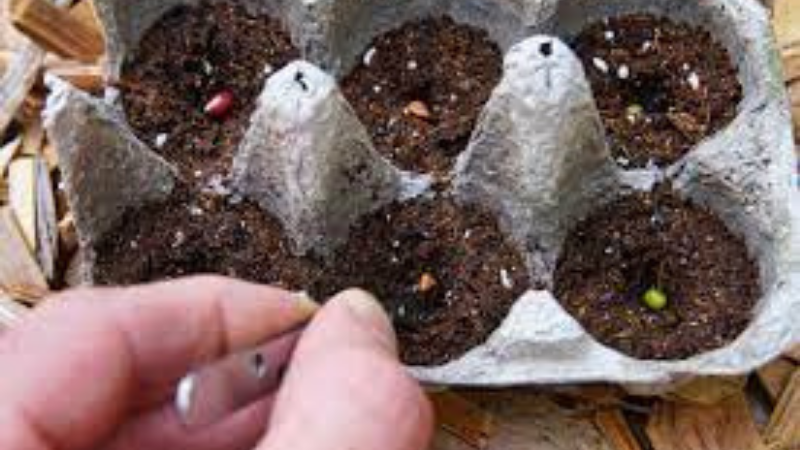
Step 4 — Sow your seeds. Place 2 seeds per cell and press them about ¼ inch (6 mm) into the surface. Cover lightly with a pinch of mix.
Step 5 — Label each row. If you're planting more than one variety, label rows with the variety name and the sowing date. When germination times vary, you'll be glad you did.
Steps 6–10: Germination to Transplant Readiness
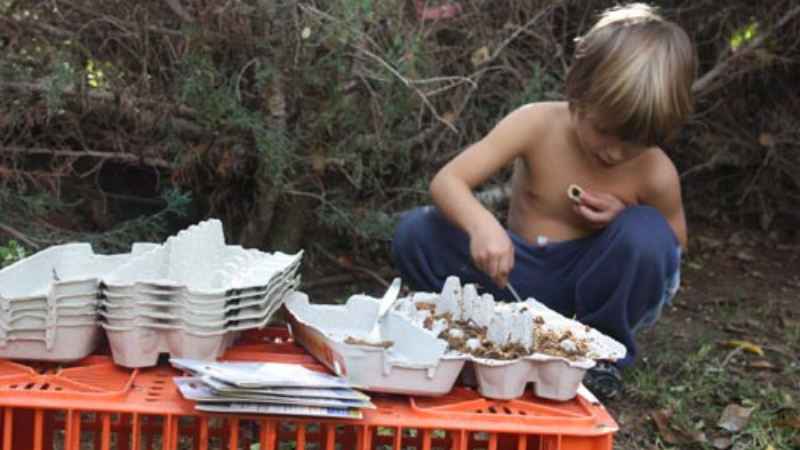
Step 6 — Mist and cover. Spray the surface lightly with water, then cover the carton with plastic wrap or a clear dome. This traps humidity and creates the warm, moist environment seeds need.
Step 7 — Keep soil warm. Place the covered carton somewhere that holds 70–80°F (21–27°C). A heat mat placed underneath is the most reliable method. At these temperatures, most tomato seeds germinate in 5 to 10 days.
Step 8 — Remove the cover immediately at sprout time. The moment you see seedlings pushing through the surface, remove all plastic. Leaving the cover on invites the fungal disease damping off (a condition that rots seedlings at the soil line).
Step 9 — Provide 14–16 hours of light daily. Seedlings need strong, consistent light. A south-facing window is workable in summer; an LED grow light set 2–4 inches above the seedlings is far more reliable in shorter days.
Step 10 — Thin to one seedling per cell. Once the first true leaves appear, snip the weaker seedling at soil level with scissors. Don't pull it — pulling disturbs the roots of the seedling you're keeping.
Troubleshooting: Fixing the Problems That Trip Up Most Growers
Leggy Seedlings and Damping Off
These two problems account for the majority of egg carton failures.
Leggy seedlings — tall, thin, floppy stems — mean your plants are stretching for light they're not getting. Move them closer to your light source right away, or rotate the carton daily if you're using a window. A grow light eliminates this problem entirely by delivering consistent intensity from above.
Damping off is a fungal disease. Seedlings look perfectly healthy one day and collapse the next, with a pinched, water-soaked stem right at the soil line. Prevent it by removing your cover the moment sprouts emerge, watering from below rather than above, and ensuring good air circulation around the carton at all times.
Mold, Pests, and Poor Germination
White surface mold on the soil is almost always harmless — it's just decomposing organic material from the cardboard. Better airflow and less surface moisture clears it up quickly. Mold on stems is a different matter and should be treated as damping off.
For pests, fungus gnats are the most common at the seedling stage. Their larvae live in the soil and feed on roots. Letting the soil surface dry slightly between waterings breaks their reproductive cycle fast. If spider mites appear later in the season, this guide on getting rid of spider mites in soil covers plant-safe treatments that work.
Warning: Never leave the plastic cover on after seedlings emerge — the warm, still, humid air right at soil level is the primary condition that triggers damping off fungus.
| Problem | Most Likely Cause | Fix |
|---|---|---|
| Leggy, floppy stems | Insufficient light | Move closer to light source or add grow light |
| Collapsed seedlings (damping off) | Excess moisture + poor airflow | Remove cover after germination; water from below |
| White surface mold | High humidity, organic material | Improve airflow; reduce surface watering |
| No germination after 14 days | Soil too cold or old seed stock | Add heat mat; do a paper-towel germination test before replanting |
| Fungus gnats | Consistently wet soil surface | Let surface dry between waterings |
What It Really Costs to Start Tomatoes in Egg Cartons
Free and Low-Cost Supplies
Here's a realistic cost breakdown for your first run:
- Egg carton: $0 — save it from your grocery trip
- Tomato seeds: $2–$4 per packet (30–50 seeds)
- Seed-starting mix (small bag): $5–$8, enough for 3–4 full cartons
- Spray bottle: $1–$3, or use one you already own
- Plastic wrap: $0 — most kitchens have it
Total for your first grow: roughly $8–$15. Compare that to buying six-pack transplants from a nursery at $4–$8 each, and you're saving significant money while gaining access to hundreds of tomato varieties you'll never see at a garden center.
Where to Invest for Better Results
Once you're hooked and want to improve, two purchases make the biggest practical difference:
- Seedling heat mat ($15–$25): Raises soil temperature to the optimal germination range and can cut germination time nearly in half in a cool house.
- LED grow light ($20–$60): Eliminates leggy seedlings completely. Even a basic clip-on LED outperforms a winter windowsill by a wide margin.
Those two tools bring your first-season investment to around $45–$100, and both last for years of reuse. The per-season cost drops dramatically after your first setup.
From Seedling to Harvest: Your Long-Term Growing Plan
Hardening Off: The Step Most Beginners Skip
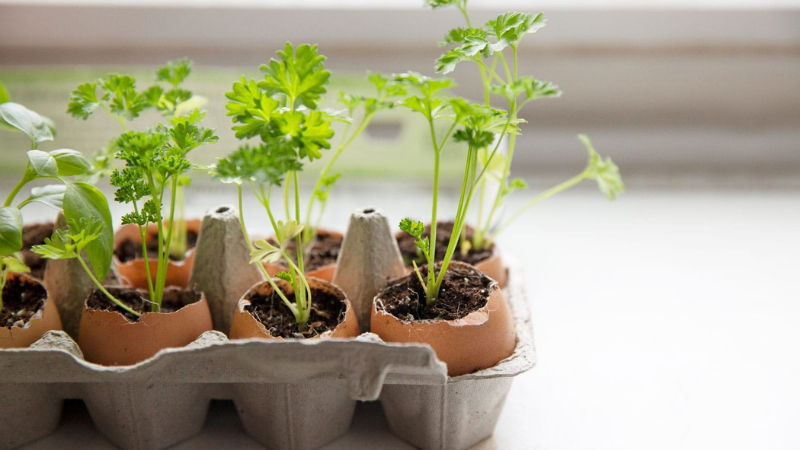
Hardening off (gradually introducing indoor seedlings to outdoor wind, sun, and temperature swings) is not a step you can skip. Tomatoes that go straight from a warm indoor environment to full outdoor sun will show wilting, sunscald, and stress within hours. Take 7–10 days and do it properly.
Start with just 1–2 hours outside in a sheltered, partially shaded spot. Add 1–2 hours of outdoor exposure each day. By day 7–10, your seedlings tolerate a full day outside without stress and are ready for the ground.
Transplanting to the Garden
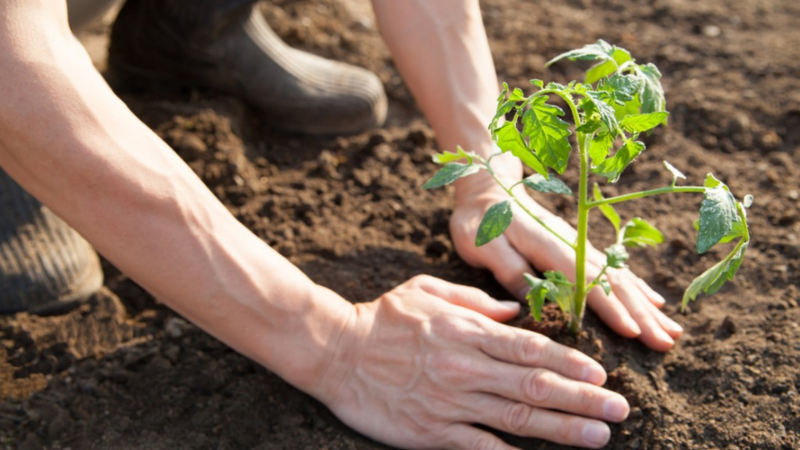
Watch soil temperature, not just air temperature. Tomatoes need soil that has warmed to at least 60°F (15.5°C) for healthy root establishment after transplanting. Planting into cold soil stunts growth even when daytime air temperatures look safe. A simple soil thermometer takes the guesswork out of this decision completely.
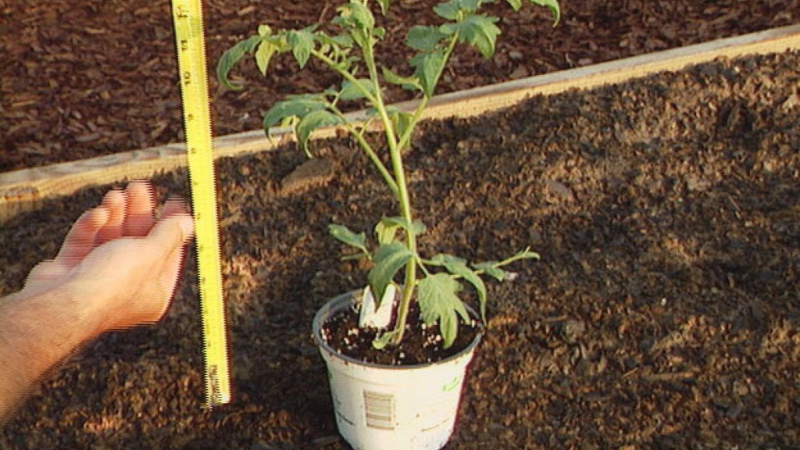
When your cardboard cells are ready to go in the ground:
- Water the carton thoroughly about one hour before transplanting
- Tear individual cells apart along the perforations, or plant the intact bottom section of the carton
- Plant deep: tomatoes root along buried stem tissue — planting up to the lowest set of leaves builds a significantly stronger root system
- Water in well immediately after planting, then mulch around the base to retain soil moisture and suppress weeds
Frequently Asked Questions
Can you start tomato seeds in egg cartons?
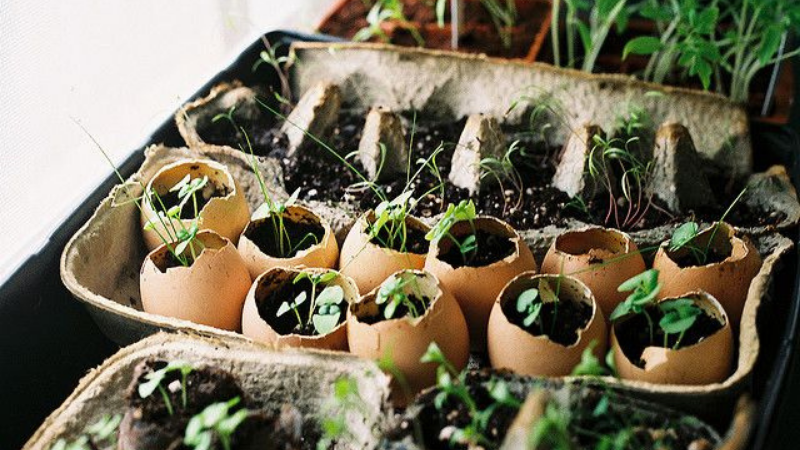
Yes, absolutely. Egg cartons — especially cardboard ones — are excellent for starting tomato seeds. Each cell provides the right small volume of soil for germination and early root development, and cardboard cartons can be planted directly in the ground at transplant time, eliminating root disturbance entirely.
How many tomato seeds should I plant per cell?
Plant two seeds per cell to improve germination odds, then thin to one seedling per cell once both have sprouted. Snip the weaker seedling with scissors at soil level rather than pulling it out — pulling can uproot or damage the root system of the seedling you want to keep.
Do I need to poke holes in egg cartons for drainage?
Yes. Use a pencil, skewer, or chopstick to poke one drainage hole in the bottom of each cell before filling with soil. Without drainage, water pools at the bottom of the cell, saturates the root zone, and creates exactly the anaerobic conditions that cause seeds to rot before they sprout.
How long does it take tomato seeds to germinate in egg cartons?
At optimal soil temperatures of 70–80°F (21–27°C), most tomato seeds germinate in 5 to 10 days. Cooler soil temperatures slow germination significantly and can push the timeline to 14 days or more. A seedling heat mat is the most reliable way to maintain optimal temperature consistently.
Can I use plastic egg cartons to start seeds?
You can use plastic egg cartons, but they're less ideal than cardboard. Plastic doesn't absorb excess moisture, doesn't break down in soil, and requires you to physically remove each seedling at transplant time — which risks root damage. If plastic is all you have, handle the seedlings gently and transplant on a cool, overcast day to reduce transplant stress.
When should I transplant egg carton tomato seedlings?
Transplant once seedlings have developed two or three sets of true leaves, all frost risk has passed, and your garden soil temperature has reached at least 60°F (15.5°C). Before transplanting, complete 7–10 days of hardening off outdoors in increasing daily increments of sun and wind exposure.
Final Thoughts
Starting tomatoes in egg cartons is one of those methods that rewards you every time you use it — low cost, minimal waste, and results that rival anything you'd get from expensive nursery trays. Grab a cardboard carton from your next grocery run, pick up a small bag of seed-starting mix, and put these 10 steps to work this season. Your first homegrown tomato transplant is closer than you think.


About Lee Safin
Lee Safin was born near Sacramento, California on a prune growing farm. His parents were immigrants from Russia who had fled the Bolshevik Revolution. They were determined to give their children a better life than they had known. Education was the key for Lee and his siblings, so they could make their own way in the world. Lee attended five universities, where he studied plant sciences and soil technologies. He also has many years of experience in the U.S. Department of Agriculture as a commercial fertilizer formulator.
Get FREE Gardening Gifts now. Or latest free toolsets from our best collections.
Disable Ad block to get all the secrets. Once done, hit any button below