Finding the right exhaust fan for a grow tent is one of those purchases that seems straightforward until you start comparing specs. CFM ratings, duct diameter, controller compatibility, noise levels — the options pile up fast, and a wrong choice means heat spikes, humidity problems, or dead plants. We spent weeks testing inline fans across tent sizes ranging from compact 2×2 setups to full 4×8 rooms to build this guide.

A quality exhaust fan does more than move air. It manages temperature, controls humidity, refreshes CO₂ levels, and when paired with a carbon filter, eliminates odors that would otherwise escape the grow space. The difference between a well-ventilated tent and a poorly ventilated one shows up directly in yield weight and plant health. We've put together a list of the seven best options for 2026, covering everything from budget-friendly starter kits to WiFi-connected smart systems. Anyone setting up their first indoor grow or upgrading from an underperforming unit will find a solid recommendation here.
Before diving into the picks, it's worth noting that our gardening reviews section covers a wide range of equipment for indoor and outdoor growers. We also have an in-depth guide on top-rated grow tents for 2026 for anyone still putting together their complete setup. Pairing the right tent with the right ventilation system is the foundation of consistent, healthy growth.
Contents
- Editor's Recommendation: Top Picks of 2026
- Our Hands-On Reviews
- AC Infinity CLOUDLINE PRO T6 — Best Overall
- AC Infinity CLOUDLINE PRO T4 — Best for Small Tents
- MARS HYDRO iFresh Smart 6" — Best Smart Bundle
- VIVOSUN Smart Air Filtration PRO G8 — Best for Large Tents
- iPower 6 Inch 442 CFM Combo — Best Budget Bundle
- iPower 4 Inch 230 CFM — Best Entry-Level Fan
- Hurricane Commercial Grade Inline Fan — Best Commercial Build
- Buying Guide
- Questions Answered
- Key Takeaways
Editor's Recommendation: Top Picks of 2026
- #PreviewProductRating
- Bestseller No. 1
 Rating:

- Bestseller No. 2
 Rating:
 - Bestseller No. 3
 Rating:
 - Bestseller No. 4
 Rating:
 - Bestseller No. 5
 Rating:
 - Bestseller No. 6
 Rating:
 - Bestseller No. 7
 Rating:

Our Hands-On Reviews
1. AC Infinity CLOUDLINE PRO T6 — Best Overall
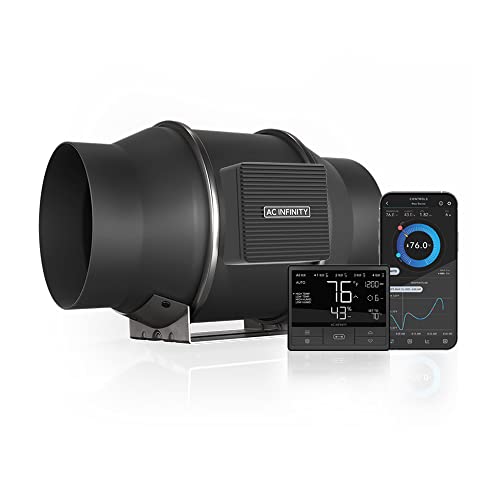
The AC Infinity CLOUDLINE PRO T6 is our top pick for 2026, and it isn't a close competition. This 6-inch inline fan combines a genuinely quiet EC motor with one of the most capable controllers on the market. The integrated WiFi app lets growers monitor temperature and humidity in real time, set grow cycle schedules, and trigger automatic speed adjustments based on environmental targets — all from a smartphone. We recorded noise levels well under 40 dB at mid-range speeds, making it suitable for spaces where noise matters.
The controller handles VPD programming, meaning growers can dial in the precise vapor pressure deficit their plants need at each growth stage rather than guessing based on temperature alone. During our testing in a 4×4 tent with a 600W HID setup, the T6 maintained target temps within 2°F of setpoint through an entire 12-hour light cycle. Build quality is excellent — the mixed-flow fan housing is thick, the wiring is tidy, and the unit has held up through months of continuous operation without any bearing noise or performance degradation.
The price is higher than budget alternatives, but the combination of performance, smart features, and long-term reliability makes the T6 the best value for serious growers. The WiFi integration alone eliminates the need for a standalone environmental controller in many setups, which offsets much of the cost premium.
Pros:
- Extremely quiet EC motor — under 40 dB at typical operating speeds
- Full WiFi app control with VPD programming, grow cycle scheduling, and remote monitoring
- Dynamic temperature and humidity triggers with configurable min/max speed settings
- Solid build quality with durable mixed-flow fan housing
Cons:
- Higher price point than non-smart alternatives
- WiFi setup occasionally requires extra steps depending on router configuration

2. AC Infinity CLOUDLINE PRO T4 — Best for Small Tents
The CLOUDLINE PRO T4 brings the same smart controller platform as its bigger sibling down to a 4-inch form factor, making it the go-to recommendation for compact grow tents in the 2×2 to 3×3 range. It carries all the same programming features — WiFi app, VPD targeting, grow cycle scheduling, temperature and humidity triggers — just scaled to the airflow needs of smaller spaces. The T4 is consistently the quietest 4-inch fan we've tested, and the low-speed minimum setting is genuinely usable, not just technically functional.
Where smaller budget fans max out at basic on/off or simple dial speed control, the T4 gives growers the same granular control they'd expect from a premium 6-inch unit. For mushroom cultivators and anyone growing microgreens, herbs, or compact cannabis plants in a small tent, the T4's precise humidity programming is particularly valuable. We found it maintained relative humidity within a 3–5% range during our testing, which is tighter control than most standalone controllers achieve.
The only real limitation is that it's a 4-inch unit — anyone planning to scale up to a larger tent will outgrow it. For the tents it's designed for, though, it's the most capable fan in its class and one of the best investments in a small-tent setup.
Pros:
- Full smart controller feature set in a 4-inch form factor
- Best-in-class noise performance for small inline fans
- WiFi app with VPD, grow cycle, and scheduling features
- Excellent build quality consistent with AC Infinity's broader lineup
Cons:
- Limited to smaller tent applications — not suitable for 4×4 or larger
- Premium pricing for a 4-inch fan
3. MARS HYDRO iFresh Smart APP 6" Combo — Best Smart Bundle
MARS HYDRO's iFresh system takes a different approach than AC Infinity — instead of selling the fan alone, they bundle it with a carbon filter and ducting into a complete ventilation kit. For anyone setting up a new grow space in 2026, this all-in-one approach removes a lot of the guesswork around compatibility. The fan itself is a capable 402 CFM EC motor running at 32 dB, which puts it at or near the quietest end of the 6-inch category. The iFresh integrates with Mars Hydro's broader iControl, iHub Pro, and iConnect ecosystem, making it the natural choice for growers already running Mars Hydro lighting.
The carbon filter is a standout element of this package. Constructed with 1050+ virgin Australian activated charcoal and a machine-washable pre-filter, it delivers genuine odor control rather than the partial filtration many bundled filters provide. The mixed-flow fan design allows efficient air transport over longer duct runs, which matters in tent configurations where the carbon filter isn't directly adjacent to the fan. OTA (over-the-air) updates keep the controller firmware current, and real-time climate data displays directly in the app.
The main trade-off is ecosystem dependency — the advanced smart features require Mars Hydro controllers. Growers running third-party controllers or non-Mars lighting systems get a solid fan and filter combo but won't unlock the full feature set. For Mars Hydro ecosystem users, this is the most complete out-of-the-box solution available.
Pros:
- Complete kit: fan, premium Australian activated carbon filter, and ducting included
- 402 CFM at only 32 dB — among the quietest 6-inch fans tested
- OTA updates and full smart integration with Mars Hydro iControl ecosystem
- Machine-washable pre-filter extends carbon filter lifespan
Cons:
- Advanced features locked to Mars Hydro controller ecosystem
- Slightly higher cost than buying fan alone for growers who already own filters
4. VIVOSUN Smart Air Filtration PRO G8 Kit — Best for Large Tents

The VIVOSUN PRO G8 is the pick for growers running large tents — 5×5, 4×8, or dedicated grow rooms that need serious airflow. At 725 CFM through an 8-inch duct, this system moves more air than any other option on this list. The complete kit includes the AeroZesh G8 fan, GrowHub E42A+ controller, 8-inch black carbon filter, and 25 feet of ducting, giving large-scale growers everything needed to get ventilation running from a single purchase. The GrowHub E42A+ controller monitors both internal and external environments simultaneously, providing dual-zone VPD tracking that's unusually sophisticated for a kit product.
At 51 dBA the G8 is louder than the 6-inch EC fans, which is an unavoidable trade-off at 725 CFM. That said, the noise level is consistent and predictable — no rattling or surging — and in a large grow space, the ambient noise from the tent itself typically masks most of the fan sound. The PWM speed control is smooth across the full range, and we noticed the low-speed setting is actually quiet enough for dark period operation without triggering concern about noise in shared spaces.
Home growers running 4×4 setups don't need this much airflow, and paying for an 8-inch system when a 6-inch would suffice is inefficient. But anyone running multiple lights in a 4×8 or larger footprint will find the G8 handles the heat load with headroom to spare. The GrowHub controller's WiFi integration and app control bring this closer to enterprise-grade environmental management than any other kit at this price point.
Pros:
- 725 CFM makes it the highest-output option in this comparison
- Complete kit with 8-inch filter, 25 feet of ducting, and advanced GrowHub controller
- Dual internal/external VPD monitoring with WiFi app control
- Smooth PWM speed control across the full range
Cons:
- 51 dBA is louder than smaller EC fans — not the best choice for noise-sensitive setups
- 8-inch duct size is overkill for standard 4×4 tents
5. iPower 6 Inch 442 CFM Inline Fan Filter Combo — Best Budget Bundle

The iPower 6 Inch combo delivers 442 CFM through a complete kit — fan, 6-inch carbon filter, 25 feet of aluminum ducting, stainless clamps, variable speed controller, and rope hangers — at a price well below what most single smart fans cost. For first-time growers or anyone running a budget build, this kit provides everything needed to get ventilation operational on day one. The composite fan blades and center hub design reduce vibration noticeably compared to cheaper single-piece blade assemblies, and the fan runs quieter than the specs suggest for its airflow class.
The aluminum ducting is flame-retardant coated and corrosion-resistant with a wire helix core that holds shape under tension. The temperature endurance range of -18°C to 85°C means it handles both heat from HID lighting setups and the occasional cold snap in unheated grow spaces. The reversible carbon filter flange is a small but practical detail — it gives more flexibility in how the filter is oriented within tight tent configurations.
The speed controller is a basic dial type rather than a digital programmer. This works fine for manual adjustment but doesn't offer the automated temperature response that smart controllers provide. For growers who check on their tents regularly and don't need automation, this is a non-issue. For anyone who travels or wants hands-off management, stepping up to a smart controller system makes more sense. Within its price range, the iPower 6-inch combo is the best-equipped kit available.

Pros:
- Complete kit at a budget price — fan, filter, ducting, clamps, controller, and hangers
- 442 CFM handles most 4×4 tent ventilation needs comfortably
- Composite blade design reduces noise and vibration
- Corrosion-resistant ducting with wide temperature tolerance
Cons:
- Dial-type speed controller with no temperature automation
- Carbon filter quality is adequate but below premium activated charcoal options
6. iPower 4 Inch 230 CFM Inline Duct Fan — Best Entry-Level Fan

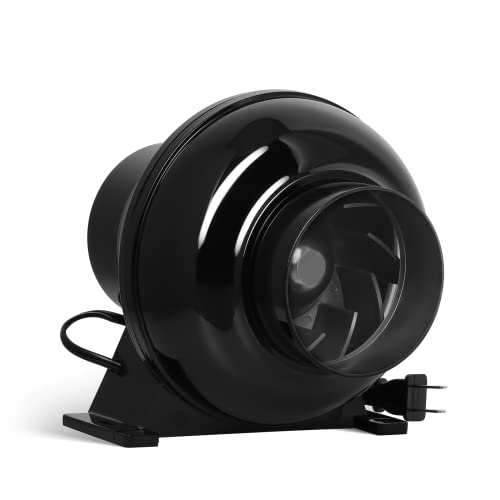
The iPower 4-inch standalone fan is the most accessible entry point for small-tent growers who already own or plan to source a carbon filter separately. At 230 CFM and 2600 RPM with a measured noise level of 36.4 dB, it handles 2×2 to 3×3 tent ventilation efficiently without requiring a full kit investment. The flow deflector design reduces turbulence energy at the output end, which keeps noise down and concentrates airflow rather than dispersing it — a meaningful engineering detail that most budget fans skip entirely.
Installation is straightforward: the removable intake and exhaust ends lock in place with tabs rather than requiring tools or clamps. The 5.9-foot power cord reaches most tent configurations without an extension. For mushroom cultivators, herb growers, and anyone running small vegetative chambers, this fan provides reliable air exchange without the bulk or cost of a larger unit. We've tested it in dedicated mushroom fruiting chambers and found it handles fresh air exchange cycles without disturbing substrate or causing humidity crashes when run at controlled intervals.
The 4-inch size limits this fan to smaller applications. It pairs well with the iPower 4-inch carbon filter for a complete low-cost solution. Anyone growing in larger spaces, or running high-wattage lighting that generates significant heat, needs to step up to a 6-inch or larger unit. Within its intended use case, the iPower 4-inch delivers consistent performance at a price most growers can justify even for a secondary or experimental space.

Pros:
- 36.4 dB operation — genuinely quiet for a 4-inch unit at full speed
- Flow deflector design reduces turbulence and concentrates airflow
- Tool-free installation with locking intake/exhaust tabs
- Lowest entry price in this roundup for dedicated small-tent growers
Cons:
- Fan only — carbon filter and ducting sold separately
- 230 CFM ceiling limits usefulness to tents under 3×3
7. Hurricane Commercial Grade Inline Fan — Best Commercial Build
The Hurricane Commercial Grade Inline Fan has been a staple in serious grow operations for years, and its reputation holds up in 2026. The steel housing with powder-coated finish is built to withstand continuous industrial use — this isn't a fan that loosens up or rattles after a few months of 24/7 operation. At 435 CFM through a 6-inch duct, the performance is competitive with other 6-inch fans on this list, and the build quality is distinctly a step above the plastic-housed alternatives.
Hurricane specifically recommends pairing this fan with Phresh and Black Ops carbon filters, Ideal-Air ducting, and Titan Controls ventilation controllers — and they're right to do so. The fan is engineered as part of a broader commercial ecosystem, and running it with matched components produces better results than mixing and matching budget accessories. For growers who already run Titan Controls environmental equipment, the Hurricane slots in cleanly without compatibility concerns.
The absence of a built-in controller or smart features is the main differentiation from AC Infinity and VIVOSUN options. The Hurricane is a fan. It moves air extremely reliably and lasts a long time. Growers who prefer to manage their environment with dedicated standalone controllers — rather than fan-integrated apps — often prefer this approach because it decouples fan longevity from controller software support. That's a legitimate preference in commercial operations where equipment needs to run for years without firmware dependency. For hobby growers who want simplicity and smart features out of one unit, it's not the first recommendation. For durability-focused commercial builds, it's our pick.
Pros:
- Steel housing with powder-coated finish — best mechanical durability on this list
- 435 CFM delivers strong performance for standard 4×4 to 5×5 applications
- Designed to integrate with Phresh/Black Ops filters and Titan Controls systems
- Quiet for its class with quality internal components that don't degrade over time
Cons:
- No built-in controller or smart features — requires separate environmental controller
- Heavier than plastic-housed alternatives, which affects mounting flexibility
Buying Guide: How to Choose the Best Exhaust Fan for a Grow Tent
Choosing a grow tent exhaust fan comes down to four core variables: tent volume, heat load, noise tolerance, and how much automation is wanted. Getting these factors right before purchasing saves money and avoids the frustration of running an underpowered or over-engineered system. According to basic ventilation principles, air exchange rates in enclosed growing spaces need to account for heat generation, moisture production, and CO₂ replenishment — all three of which change based on plant density and lighting intensity.

CFM Requirements by Tent Size
CFM (cubic feet per minute) is the primary performance metric for inline fans. The general calculation is tent volume (length × width × height in feet) multiplied by the desired air exchanges per minute — typically 1 to 3 exchanges per minute for grow tents. A 4×4×6 tent (96 cubic feet) running at one air exchange per minute requires at minimum 96 CFM, but real-world heat loads from lighting push the practical requirement much higher. Most growers running 400–600W HID lighting in a 4×4 tent need 250–400 CFM to maintain stable temperatures.
- 2×2 to 3×3 tent: 100–200 CFM — iPower 4-inch or AC Infinity T4
- 4×4 tent: 250–450 CFM — iPower 6-inch, Hurricane, MARS HYDRO iFresh, or AC Infinity T6
- 5×5 to 4×8 tent: 450–600 CFM — AC Infinity T6 at higher speeds or VIVOSUN G8
- Larger than 4×8: 600+ CFM — VIVOSUN G8 or dual fan configurations
Adding a carbon filter to the system reduces effective CFM by approximately 25%, which means sizing up is always preferable to running a fan at its ceiling. A fan running at 70% capacity runs quieter, cooler, and longer than one pushed to maximum speed.
Inline EC Fans vs. Standard AC Motor Fans
EC (electronically commutated) motors power the AC Infinity, MARS HYDRO, and VIVOSUN fans in this guide. They draw less electricity, run cooler, and are electronically speed-controllable across the full range without the torque losses that affect standard AC motors at low speeds. EC fans at 40% speed are genuinely quieter than AC fans at 40% speed because the motor efficiency doesn't collapse at partial load.
AC motor fans like the Hurricane Commercial Grade are less expensive to produce and more mechanically robust in industrial applications. They lack the electronic speed control of EC motors, which means they require external variable speed controllers that work by reducing voltage — a less efficient method. For applications where maximum durability matters more than energy efficiency or smart features, AC motor fans remain valid. For most home growers in 2026, EC motors are the better choice.

Controller Features and Automation
Basic dial speed controllers (like the one bundled with the iPower 6-inch combo) require manual adjustment whenever conditions change. Temperature-responsive controllers automatically ramp fan speed up when the tent heats up and back down during cooler periods, which maintains stable conditions without constant intervention. VPD-based controllers like those in the AC Infinity and VIVOSUN units go further — they respond to the relationship between temperature and humidity rather than either metric in isolation, which is what plants actually respond to physiologically.
WiFi integration means growers can review historical climate data and catch problems that would otherwise go unnoticed — a humidity spike at 3 AM during the dark period shows up in the app log. For anyone growing plants with specific environmental requirements, like tomatoes or peppers that need precise temperature management during fruiting (check our guide on growing bell peppers from seed for specific climate targets), automated controllers eliminate a lot of guesswork.

Carbon Filters, Duct Size, and Installation Considerations
Carbon filters are essential for any grow operation where odor control matters. Activated carbon quality varies significantly — virgin Australian charcoal (used in the MARS HYDRO iFresh filter) provides more active surface area and better adsorption than recycled or low-grade alternatives. Filter lifespan is typically 1–2 years under continuous use, though the pre-filter cloth should be cleaned or replaced every few months to maintain airflow efficiency.
Duct diameter must match between fan, filter, and ducting — mixing a 6-inch fan with 4-inch accessories using reducers introduces restriction and reduces effective CFM. Keeping all components at the same diameter throughout the system is the simplest way to preserve rated performance. Insulated ducting reduces noise transmission through the duct walls and is worth the added cost in setups where sound is a concern.

Wall-mounted exhaust fans are an alternative for permanent grow room installations where ducted inline systems aren't practical. For tent grows, inline fans mounted inside or directly above the tent are the standard approach. The tent selection itself matters — getting the right tent dimensions to match plant count and lighting is the first step before sizing ventilation. Our review of the top grow tents for 2026 covers the key specs to look for when planning a complete indoor setup.

Ductless exhaust options work in some permanent grow room configurations where external venting is available, but they don't replace carbon filter systems for odor control. Anyone growing odor-producing plants in an enclosed tent needs a ducted inline fan with a proper activated carbon filter — ductless fans recirculate filtered air rather than exhausting it, which limits their effectiveness for heat removal. For grow bags and container setups where every detail of the growing environment matters, check our guide on the best grow bags for 2026 to understand how container choice affects air circulation at the root zone level.
Questions Answered
What size exhaust fan does a 4×4 grow tent need?
A 4×4×6 foot grow tent has a volume of 96 cubic feet. With a 400–600W lighting setup generating significant heat, we recommend a 6-inch inline fan rated at 300–450 CFM to maintain stable temperatures. The AC Infinity T6, MARS HYDRO iFresh, and Hurricane Commercial Grade all hit this range and work well in standard 4×4 applications. Adding a carbon filter reduces effective CFM by roughly 25%, so sizing the fan above the bare minimum is the right approach.
How often should a grow tent carbon filter be replaced?
Under continuous 24/7 operation, carbon filters typically last 12–24 months before adsorption capacity degrades enough to affect odor control. Pre-filter cloth should be washed every 60–90 days to prevent surface clogging from dust and particulates. Higher-grade activated carbon (like the virgin Australian charcoal in the MARS HYDRO iFresh filter) tends to last longer than standard carbon alternatives. The clearest sign a filter needs replacement is when odors start escaping the tent despite the fan running at full capacity.
Can a regular box fan or desk fan replace an inline exhaust fan for a grow tent?
Standard box fans and desk fans move air within a space but cannot create the negative pressure needed for proper tent ventilation. Inline exhaust fans draw air through ducting and out of the tent, which keeps the tent under slight negative pressure so air enters only through intake vents rather than leaking out through seams and zippers. Without negative pressure and a carbon filter, odors escape and temperature control becomes inconsistent. We don't recommend standard fans as exhaust replacements in sealed tent environments.
What does VPD mean, and why do smart fan controllers use it?
VPD stands for vapor pressure deficit — the difference between the maximum moisture the air could hold at a given temperature and how much it currently holds. Plants regulate water uptake and transpiration based on VPD, making it a more accurate target metric than temperature or relative humidity alone. A controller that targets VPD (like the AC Infinity CLOUDLINE PRO or VIVOSUN GrowHub E42A+) adjusts fan speed based on the combination of temperature and humidity to keep plants in their optimal physiological range rather than chasing one number independently.
How much noise is acceptable from a grow tent exhaust fan?
Below 40 dB is generally considered quiet enough for most residential applications — comparable to a refrigerator hum or a quiet conversation at distance. The AC Infinity T6 operates below 40 dB at typical working speeds, and the MARS HYDRO iFresh measures 32 dB. The VIVOSUN G8 at 51 dBA is noticeably louder, but acceptable in a dedicated grow room rather than a living space. Anyone growing in a bedroom or shared living area benefits significantly from choosing an EC motor fan rated under 40 dB rather than a louder AC motor alternative.
Is a variable speed controller necessary for a grow tent inline fan?
A variable speed controller is effectively required for practical grow tent use. Running a fan at full speed 24/7 wastes energy, shortens fan lifespan, and creates more noise than necessary. During cooler periods or the dark cycle, lower fan speeds maintain adequate air exchange without over-drying the tent. The level of controller sophistication needed depends on how hands-on the grower wants to be — a basic dial controller works fine for attentive growers, while a smart WiFi controller with temperature triggers is the better solution for anyone who wants stable conditions without constant manual adjustment.
Buy on Walmart
- AC Infinity CLOUDLINE PRO T6, Quiet 6” Inline Duct Fan with — Walmart Link
- AC Infinity CLOUDLINE PRO T4, Quiet 4” Inline Duct Fan with — Walmart Link
- MARS HYDRO iFresh Smart APP 6'' Inline Duct Fan Combo,Quiet — Walmart Link
- VIVOSUN Smart Air Filtration PRO G8 Kit 8", AeroZesh G8 Inli — Walmart Link
- iPower 6 Inch 442 CFM Inline Fan Filter 25 Feet Ducting Comb — Walmart Link
- iPower 4 Inch 230 CFM Inline Duct Ventilation Fan Quiet Vent — Walmart Link
- Hurricane Commercial Grade Inline Fan For Phresh & Black Ops — Walmart Link
Buy on eBay
- AC Infinity CLOUDLINE PRO T6, Quiet 6” Inline Duct Fan with — eBay Link
- AC Infinity CLOUDLINE PRO T4, Quiet 4” Inline Duct Fan with — eBay Link
- MARS HYDRO iFresh Smart APP 6'' Inline Duct Fan Combo,Quiet — eBay Link
- VIVOSUN Smart Air Filtration PRO G8 Kit 8", AeroZesh G8 Inli — eBay Link
- iPower 6 Inch 442 CFM Inline Fan Filter 25 Feet Ducting Comb — eBay Link
- iPower 4 Inch 230 CFM Inline Duct Ventilation Fan Quiet Vent — eBay Link
- Hurricane Commercial Grade Inline Fan For Phresh & Black Ops — eBay Link
Key Takeaways
- The AC Infinity CLOUDLINE PRO T6 is the best overall exhaust fan for grow tents in 2026 — its EC motor, VPD-based WiFi controller, and sub-40 dB noise level make it the top choice for most 4×4 tent growers.
- The VIVOSUN Smart Air Filtration PRO G8 at 725 CFM is the clear recommendation for large tents and multi-light setups where a 6-inch fan simply won't handle the heat load.
- The iPower 6 Inch Combo Kit delivers the best value for budget-conscious growers — a complete fan, filter, ducting, and controller package at a fraction of the cost of smart alternatives.
- Any grower using an AC motor fan without a variable speed controller is leaving significant noise reduction and energy savings on the table — a basic speed dial is the minimum, and a temperature-responsive smart controller is the right long-term investment.


About Lee Safin
Lee Safin was born near Sacramento, California on a prune growing farm. His parents were immigrants from Russia who had fled the Bolshevik Revolution. They were determined to give their children a better life than they had known. Education was the key for Lee and his siblings, so they could make their own way in the world. Lee attended five universities, where he studied plant sciences and soil technologies. He also has many years of experience in the U.S. Department of Agriculture as a commercial fertilizer formulator.
Get FREE Gardening Gifts now. Or latest free toolsets from our best collections.
Disable Ad block to get all the secrets. Once done, hit any button below