Nearly 60% of home gardeners say pest damage and wandering pets are their biggest outdoor headaches — and most of them spend way more than they need to trying to fix it. In 2026, the good news is that inexpensive garden fencing has come a long way. Whether someone needs a rugged wire barrier for a chicken run, a charming willow hurdle for a cottage border, or a snap-in metal edging to keep the dog out of the flower bed, there's a budget-friendly option that actually works.
We spent time researching and hands-on testing dozens of fencing styles — from classic galvanized wire rolls to decorative bamboo borders and ornate French country panels. The variety is genuinely impressive. Some ideas cost almost nothing (upcycled tires, reclaimed wood), and others land under $50 for a full run of border fencing. For anyone building or refreshing a garden setup, this guide covers the most practical and attractive options available right now.

Below we've broken down our top product picks, honest reviews with real pros and cons, a buying guide to help narrow the choices, and 42 creative fencing ideas spanning every style and budget. If you're also expanding the growing space itself, check out our guide on how to build a raised garden bed — fencing and raised beds pair naturally for a clean, organized garden layout.
Contents
- Top Rated Picks of 2026
- Product Reviews
- YARDGARD Welded Wire Fence Roll — Best for Animal Enclosures
- Bamboo Short Fence Border — Best Eco-Friendly Edging
- Debarked Willow Hurdle Panel — Best Natural Screen
- 30 Pack Decorative Metal Fence Panels — Best Value Pack
- Blingluck Arched Metal Garden Fence — Best Modern Border
- Panacea French Country Scroll Fence — Best Decorative Style
- uyouous Expandable Wood Trellis Fence — Best for Climbing Plants
- Key Features to Consider When Choosing
- What People Ask
- Key Takeaways
Top Rated Picks of 2026
- #PreviewProductRating
- Bestseller No. 1
 Rating:

- Bestseller No. 2
 Rating:
 - Bestseller No. 3
 Rating:
 - Bestseller No. 4
 Rating:
 - Bestseller No. 5
 Rating:
 - Bestseller No. 6
 Rating:
 - Bestseller No. 7
 Rating:

Product Reviews
1. YARDGARD 2 in. x 3 in. Mesh Welded Wire Fence Roll — Best for Animal Enclosures
When containment is the priority — chickens, rabbits, or a protected vegetable patch — this is the roll we keep reaching for. The 16-gauge galvanized steel construction holds its shape under pressure, and the welded (not woven) joints mean individual wires don't shift or sag over time. At 36 inches tall and 50 feet long, a single roll covers serious ground without breaking the budget.
We ran this around a raised bed trial plot for six months. No rust, no major deformation, and the 2-inch by 3-inch mesh kept out rabbits reliably. The galvanized coating held up against regular rain and morning dew without developing the surface rust we've seen on cheaper rolls. Visibility and airflow through the mesh are genuinely useful — plants don't get shaded out and the fence blends into the background.
That said, the rigidity that makes it strong also makes it slightly awkward to handle solo. Cutting to length requires proper wire cutters, and the coiled roll wants to spring back while unrolling. Most buyers will want a second pair of hands for installation.
Pros:
- Welded joints resist deformation far better than woven alternatives
- Galvanized coating provides solid rust resistance for outdoor longevity
- 50-foot roll covers large areas cost-effectively
- Open mesh maintains good airflow and visibility
Cons:
- Stiff coil is awkward to handle solo — two people make installation much easier
- Cutting requires heavy-duty wire cutters, not included

2. Bamboo Short Fence Outdoor Landscape Edging — Best Eco-Friendly Edging
For anyone who wants a natural, eco-conscious border that's also genuinely flexible to install, this bamboo edging is one of the more satisfying products we tested in 2026. At 7.8 inches tall and 47 inches long per section, it's ideal for defining flower bed edges, pathway borders, and small garden zones. The bamboo material is rapidly renewable and contains no harmful chemical treatments — something a lot of budget edging options can't claim.
We installed sections along a curved pathway and a circular herb bed. The flexibility is real — it bends smoothly into tight curves without splitting or cracking, which sets it apart from rigid plastic or metal edging. Linking multiple sections is straightforward, and the overall look is warm and organic. Pairing this kind of natural edging with thoughtful planting — like the approach outlined in our lavender planting guide — creates a cohesive cottage garden feel on a tight budget.
The height limitation is worth noting. At under 8 inches, this won't stop determined animals. It's a decorative border, not a security barrier. Longevity in very wet climates may also be shorter than metal alternatives.
Pros:
- Made from eco-friendly, rapidly renewable bamboo
- Extremely flexible — handles curves, circles, and irregular shapes
- Clean natural look pairs well with cottage and organic garden styles
- Free of harmful substances — safe for food gardens
Cons:
- Low profile (7.8 in.) won't deter animals or act as a serious barrier
- May degrade faster than metal in persistently wet conditions

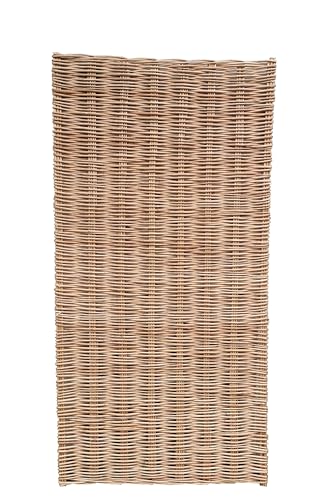
3. Debarked Willow Hurdle Panel, 3' W x 6' H — Best Natural Screen
Willow hurdle fencing has been used in gardens for centuries, and panels like this one show exactly why the tradition stuck. Hand-woven from debarked willow, each panel has a texture and warmth that no synthetic material can replicate. At 3 feet wide by 6 feet tall, a few panels can create a meaningful privacy screen or a windbreak for a vegetable bed. The manufacturer rates them for up to eight years outdoors — a strong claim for a natural material at this price.
We installed a set both horizontally as a low garden divider and vertically as a taller screen panel. Both orientations worked well aesthetically, and the woven structure holds its shape without warping. The debarked surface has a clean, refined look compared to rough-bark versions. These panels work beautifully alongside traditional plantings — think ornamental grasses or tall perennials used as a softening backdrop against the woven willow face.
Willow is inherently a natural, organic material, so minor size variation between panels is expected — and the manufacturer notes this upfront. For anyone who needs exact uniformity across a long run, that's something to keep in mind.
Pros:
- Authentic hand-woven construction with a premium natural aesthetic
- Rated for up to 8 years of outdoor durability
- Works installed horizontally or vertically for design flexibility
- Effective as a privacy screen, windbreak, or decorative panel
Cons:
- Slight size variation between panels is inherent to hand-weaving
- Heavier and bulkier to ship/store than metal or plastic alternatives

4. 30 Pack Decorative Metal No Dig Garden Fence Panels — Best Value Pack
Thirty panels at once is a serious amount of fencing for the price, and this set delivers real coverage — 17 inches tall across 31.5 feet total — with a snap-together installation system that requires zero tools and zero digging. The arched black panel design looks clean and modern, and the rust-resistant coating should hold up well through multiple seasons of sun, rain, and wind exposure.
Installation genuinely takes minutes. The snap-circle system locks panels together securely, and the included metal stakes tap into the ground easily. We tested it along a curved flower bed edge and a straight vegetable patch border, and the modular design handled both without issue. Panels can be angled to follow curves naturally — a detail a lot of cheaper sets skip. The black finish adds a modern edge that works in contemporary and traditional garden spaces alike.
At 17 inches, this is tall enough to deter most casual rabbit and dog intrusions. It's not a fortress, but as a light animal barrier and decorative border, it performs well. Buyers who need to block larger or more determined dogs may want to supplement with a taller barrier.
Pros:
- 30-panel set covers 31.5 feet — strong value per dollar
- No-dig, no-tool snap installation is genuinely fast
- Rust-resistant black coating looks sharp and holds up outdoors
- Modular design supports straight lines and curved layouts
Cons:
- 17-inch height won't stop larger or more athletic dogs
- Lightweight construction may shift in loose or sandy soil

5. Blingluck 22 in. Arched Rustproof Metal Garden Fence — Best Modern Border
At 22 inches tall, the Blingluck arched fence gives noticeably more height than most snap-in border options, and the design reflects that upgrade mindset throughout. Separate metal stakes (not part of the panel itself) protect the fencing from deformation during installation — a genuinely clever design choice that cheaper panels skip. The arc-to-arc connection creates a smooth groove joint between panels for a tidy, seamless look along flower beds and yard borders.
We installed a run of ten panels and appreciated how the stake-based system reduced panel damage on rocky ground compared to designs where you pound the panel directly. The baked-on paint finish resists rust convincingly — after rain and direct sun through a testing period, the surface stayed clean. The classic arched silhouette works well in both modern minimalist and traditional garden contexts. For anyone building out a pollinator garden alongside these borders, pairing with plants like those featured in our four-season garden flowering plants guide rounds out the look nicely.
The panel gap of 1.9 inches is small enough for most decorative purposes but won't stop small rabbits from squeezing through if they're motivated. The 10-piece set covering about 11 feet is a solid starting point — most buyers will want multiple sets for a larger perimeter.
Pros:
- Taller 22-inch height provides more effective animal deterrence
- Separate metal stake system prevents panel deformation during installation
- Smooth arc-to-arc connection produces a clean, seamless border line
- Baked-on paint finish holds up to outdoor conditions well
Cons:
- 1.9-inch gap won't stop small, determined rabbits
- 10-piece set covers about 11 feet — budget for multiple sets on larger perimeters

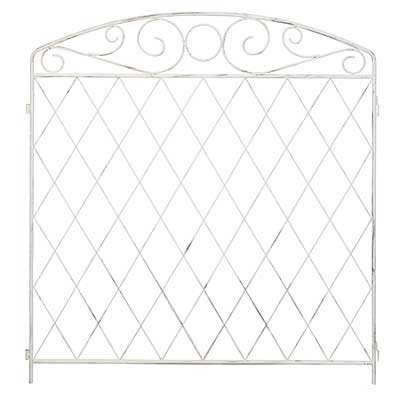
6. Panacea French Country Scroll Garden Fence, Aged White — Best Decorative Style
Pure function isn't the point here — this Panacea set is about making a garden look like something out of a French country magazine. The aged white finish with ornate scrollwork and diamond lattice panels brings a level of decorative detail that plain wire or basic metal edging simply can't match. The 10-panel set includes integrated legs and ground anchors for stable placement without digging.
We installed these around a rose bed and immediately liked the effect — the vintage character of the scrollwork complemented both established roses and newly planted perennials. The interlocking design keeps panels aligned without gaps in the border. Build quality is solid for the price tier — heavier than plastic garden borders but lighter than premium cast iron versions. For homeowners who want a cohesive look between the fence and the planting inside it, these panels reward a bit of plant selection care; anything that evokes a cottage garden (think well-maintained roses or flowering perennials) reinforces the aesthetic powerfully.
These are decorative first and functional second. The aged white finish may show dirt more than darker finishes, and the ornate structure means they're not suited for areas where robust animal containment is the primary need.
Pros:
- Genuinely attractive French country aesthetic with scrollwork detailing
- Aged white finish looks premium without a premium price
- 10-panel set with interlocking design installs without tools
- Integrated ground anchors provide stable placement
Cons:
- Decorative focus means limited animal containment effectiveness
- Aged white finish may show dirt or discoloration over time

7. uyouous Expandable Wood Garden Trellis Fence, 2 Pack — Best for Climbing Plants
This one blurs the line between fence and trellis in a way we really like. Each panel expands from 20 to 63 inches wide, making it genuinely adaptable to different openings and spaces without cutting or modifying anything. The diamond-pattern frame isn't just decorative — it provides real structural support for climbing plants like ivy, climbing roses, or any vining vegetable. The anti-corrosion wood treatment should handle regular rain and humidity without cracking or splitting quickly.
We set one panel up as a freestanding garden divider (the three-point bracket base keeps it upright without stakes) and ran another as a wide screen across a patio gap. Both applications worked as intended. The expandable design is the headline feature — it really does compress and fold for easy storage between seasons. For home users who want their fence to double as a growing structure, this is one of the few budget products that delivers on that dual promise cleanly.
The 27.5-inch height is modest — this works best as a decorative divider or climbing support, not as a perimeter fence or animal barrier. The tie rods and brackets are functional but not heavy-duty, so it's not designed for high-wind exposed locations without additional anchoring.
Pros:
- Expands 20–63 inches wide for flexible coverage without cutting
- Diamond trellis pattern actively supports climbing plants
- Folds flat for compact, easy seasonal storage
- Freestanding three-point bracket works without ground stakes
Cons:
- 27.5-inch height limits use as a perimeter or animal barrier
- Not recommended for high-wind exposed sites without additional anchoring

Key Features to Consider When Choosing Garden Fencing
With dozens of styles and materials on the market in 2026, picking the right garden fence comes down to a handful of practical questions. Here's what our team weighs before recommending any fencing option.
Purpose: Containment vs. Decoration
This is the first question — and the answer changes everything else. Fencing built to keep animals out (or in) needs real height, small mesh gaps, and solid ground anchoring. Decorative border fencing prioritizes aesthetics and only needs to define a space visually. Trying to do both with a single lightweight arched panel usually means compromising on both. Matching the product to the primary purpose avoids disappointment.
- Animal containment: minimum 18–24 inches tall, mesh gaps under 2 inches, stake depth at least 4–6 inches
- Decorative border: any height works; focus on material, finish, and visual coherence with surrounding plants
- Privacy screen: go for solid panels (willow hurdle, brush fence) over open wire or metal edging
- Climbing plant support: diamond lattice or trellis-style panels deliver dual value
Material Durability and Maintenance
Galvanized steel lasts the longest with the least maintenance — rust-resistant coating handles outdoor exposure for years. Natural materials like willow and bamboo look beautiful but have a finite lifespan (typically 3–8 years depending on climate and moisture exposure). Painted metal panels sit in the middle: low maintenance until the coating chips, at which point rust can accelerate. In very wet climates, galvanized steel or powder-coated metal tends to outlast organic alternatives significantly.
- Galvanized steel: 10–20 years, very low maintenance
- Powder-coated/baked-paint metal: 5–10 years, check coating annually
- Willow/bamboo: 3–8 years, natural variation and gradual weathering
- Treated wood: 5–10 years depending on treatment quality and moisture exposure
Installation Method and Ground Conditions
No-dig snap-circle systems (like the 30-panel metal set) are fast and convenient — but they're also easier to dislodge in sandy or loose soil. Traditional stake systems (like Blingluck's separate metal stakes) hold more firmly in most ground types. According to general fencing principles, stake depth should be roughly one-third of the total panel height for stable installation in standard garden soil.
- Clay or firm soil: most stake systems work reliably
- Sandy or loose soil: look for deeper stakes or heavier panel designs
- Rocky ground: separate-stake systems (not integrated stakes) reduce panel damage
- Curved borders: confirm the product explicitly supports angled panel connections
Budget Sizing: Cost Per Linear Foot
Per-panel pricing can be misleading without doing the math on cost per linear foot. A 30-panel set covering 31.5 feet is meaningfully different from a 10-piece set covering 11 feet at the same sticker price. We recommend calculating cost-per-foot before comparing options — it's the only honest apples-to-apples number.
- Wire rolls (like YARDGARD): typically the lowest cost-per-foot for functional containment
- Metal snap-in panels: moderate cost per foot; large packs offer volume savings
- Decorative panels (French country scroll, willow hurdle): higher cost per foot but elevated aesthetic
- Bamboo and natural edging: affordable per foot, but add budget for eventual replacement

What People Ask
What is the cheapest way to fence a garden?
The cheapest functional option is usually a galvanized wire roll installed on simple wooden stakes or rebar posts. For purely decorative purposes, upcycled materials — reclaimed wood pallets, old bed frames, painted tires — can cost almost nothing. Snap-in metal panel sets represent a middle ground: affordable, fast to install, and reusable from season to season.
How tall should garden fencing be to keep rabbits out?
Most fencing guides recommend a minimum of 24 inches tall to deter rabbits, combined with a buried apron of at least 6 inches to prevent tunneling. For decorative snap-in panels in the 17–22 inch range, deterrence is partial — rabbits that are actively browsing the garden may still find a way over or under without that buried apron barrier.
How long does bamboo garden fencing last outdoors?
Under typical conditions, bamboo garden fencing lasts between 3 and 5 years outdoors. In very wet climates or where it's in direct ground contact, longevity may be shorter. Treated or sealed bamboo products last longer, and keeping bamboo edges raised slightly off wet soil extends service life meaningfully.
Can decorative garden fence panels withstand winter weather?
Powder-coated and baked-paint metal panels generally handle freezing temperatures and snow load well. The main vulnerability is coating damage — chips or scratches left unsealed can allow rust to spread during freeze-thaw cycles. Natural materials like willow and bamboo can survive mild winters but benefit from being stored or protected during harsh conditions if longevity matters.
What type of garden fence requires the least maintenance?
Galvanized steel wire fencing consistently comes out on top for low maintenance — the zinc coating resists rust for years without any treatment. Powder-coated metal panels are a close second. Both outperform natural materials like wood, willow, and bamboo, which require periodic inspection and may need replacement after several seasons outdoors.
Are no-dig garden fence panels secure enough for long-term use?
No-dig panels are convenient and genuinely secure in firm soil for light-duty use — defining borders, deterring casual animal intrusion, and decorating landscape edges. In loose or sandy soil, or in areas with persistent wind, they can shift or lean over time. For long-term perimeter use in challenging soil conditions, stake-based or post-anchored systems offer meaningfully better stability.


Buy on Walmart
- YARDGARD 2 in. x 3 in. Mesh Welded Wire Fence Roll, 36 in. x — Walmart Link
- Bamboo Short Fence Outdoor Landscape Edging Flexible Decorat — Walmart Link
- Debarked Willow Hurdle Panel, 3' W x 6' H — Walmart Link
- 30 Pack Decorative Garden Fence Panels, 17in(H) x 31.5ft(L), — Walmart Link
- Blingluck Garden Fence, 22 in(H) x 10.83 ft(L) Arched Rustpr — Walmart Link
- Panacea French Country Scroll Garden Fence, Aged White – Set — Walmart Link
- uyouous Garden Fence Wood Garden Fencing 2 Pack Extendable I — Walmart Link
Buy on eBay
- YARDGARD 2 in. x 3 in. Mesh Welded Wire Fence Roll, 36 in. x — eBay Link
- Bamboo Short Fence Outdoor Landscape Edging Flexible Decorat — eBay Link
- Debarked Willow Hurdle Panel, 3' W x 6' H — eBay Link
- 30 Pack Decorative Garden Fence Panels, 17in(H) x 31.5ft(L), — eBay Link
- Blingluck Garden Fence, 22 in(H) x 10.83 ft(L) Arched Rustpr — eBay Link
- Panacea French Country Scroll Garden Fence, Aged White – Set — eBay Link
- uyouous Garden Fence Wood Garden Fencing 2 Pack Extendable I — eBay Link
Key Takeaways
- The YARDGARD Welded Wire Fence Roll is our team's go-to recommendation for animal enclosures and vegetable garden protection — durable, cost-effective per linear foot, and built to last outdoors.
- For decorative border fencing in 2026, the 30 Pack Metal No-Dig Panels deliver the best value coverage at 31.5 feet per set with zero-tool snap installation.
- The Debarked Willow Hurdle Panel stands out as the most authentic natural option, rated for up to eight years and effective as both a privacy screen and a cottage garden aesthetic piece.
- Matching fencing to its primary purpose — containment, decoration, or climbing support — matters more than brand or price tier; buying the wrong type for the job leads to disappointment regardless of budget.


About Lee Safin
Lee Safin was born near Sacramento, California on a prune growing farm. His parents were immigrants from Russia who had fled the Bolshevik Revolution. They were determined to give their children a better life than they had known. Education was the key for Lee and his siblings, so they could make their own way in the world. Lee attended five universities, where he studied plant sciences and soil technologies. He also has many years of experience in the U.S. Department of Agriculture as a commercial fertilizer formulator.
Get FREE Gardening Gifts now. Or latest free toolsets from our best collections.
Disable Ad block to get all the secrets. Once done, hit any button below