The SunBlaster T5 High Output Fluorescent Strip Light is our top pick for 2026 — it links up to 8 units from a single power cord, making it the most scalable option in this category. If you're growing seedlings, cuttings, herbs, or vegging plants indoors, fluorescent grow lights remain one of the most cost-effective tools you can buy.
T5 fluorescent fixtures deliver full-spectrum light at low heat output. You can hang them just inches above your canopy without burning your plants. That's a major advantage over HID lighting, especially when you're working in a small grow tent, a basement, or a closet setup. If you've ever wondered whether grow lights are even necessary for indoor plants, the answer depends heavily on your light levels — and in most homes, supplemental lighting makes a real difference in yield and plant health.
In 2026, the T5 fluorescent market is more refined than ever. Fixtures are more efficient, bulbs last longer, and daisy-chain designs let you expand coverage without running extra circuits. Whether you're germinating seeds in a seed tray or maintaining a vegetative canopy of 16 square feet, there's a T5 fixture on this list built for your setup. Browse our full gardening reviews for more equipment guides. We tested and researched the top options available — here's what you need to know.

Contents
Best Choices for 2026
- #PreviewProductRating
- Bestseller No. 1
 Rating:

- Bestseller No. 2
 Rating:
 - Bestseller No. 3
 Rating:
 - Bestseller No. 4
 Rating:
 - Bestseller No. 5
 Rating:
 - Bestseller No. 6
 Rating:
 - Bestseller No. 7
 Rating:

Detailed Product Reviews
1. SunBlaster T5 High Output Fluorescent Strip Light — Best for Linking Multiple Units
The SunBlaster T5 is built for growers who want scalability without complexity. The self-ballasted design means there are no separate adaptors to buy — everything you need comes in the box: the ballast, lamp, power cord with roller switch, and mounting hardware. You can flush-mount it to a shelf or hang it with the included clips, giving you flexibility in how you configure your grow space.
What sets it apart is the daisy-chain system. Link up to 8 units from a single wall outlet. That's a 4-foot run of continuous lighting across a substantial bench or rack without adding extra plugs. For propagation stations, seed-starting racks, or multi-tier shelving, this is a serious operational advantage. The 6400K color temperature delivers cool, blue-spectrum light ideal for vegetative growth and seedling development.
Build quality is solid. The silver housing reflects light efficiently, and the unit runs cool enough to position close to your canopy — typically 2 to 4 inches above seedlings. This is the fixture you buy when you're planning to expand your operation over time, not just solve today's problem.
Pros:
- Daisy-chain up to 8 units from one outlet
- Self-ballasted — no extra components needed
- Includes everything: lamp, ballast, cord, mounting hardware
- Roller switch on power cord for easy on/off
- Flush-mount or hanging configuration
Cons:
- Single lamp per fixture limits lumen output compared to multi-lamp units
- Best used in banks — one unit alone covers limited area

2. 4Ft x 24In 8 Lamps 400W T5 Fluorescent Grow Lights — Best for Maximum Coverage
When coverage is the priority, this 8-lamp monster delivers. At a full 4 feet by 2 feet footprint, this fixture puts 400 watts of T5 fluorescent light over a serious canopy area. With 40,000 lumens and a high 1.0 PPF/W efficiency rating, you're getting real photosynthetically useful light — not just raw brightness.
The 6500K color spectrum mimics natural daylight, which is exactly what plants need during the seeding, cloning, and vegetative stages. If you're germinating dozens of trays at once or running a commercial propagation setup, this fixture replaces multiple smaller units with one clean installation. The high lumen output supports faster, more vigorous growth compared to 2- or 4-lamp alternatives.
It's a heavier fixture and requires solid hanging points. But if you're serious about indoor growing and need to cover a 4×2 space efficiently, this is the most cost-effective way to do it with T5 technology in 2026. Pair it with a proper hardening-off process when your seedlings are ready to move outdoors, and you'll get the best results.
Pros:
- Massive 40,000-lumen output across a 4×2 ft footprint
- 400W with 1.0 PPF/W — efficient for the wattage
- 6500K full-spectrum daylight bulbs included
- Excellent for seeding, cloning, and vegging simultaneously
- Replaces multiple smaller fixtures with one unit
Cons:
- Bulky — requires strong, secure hanging points
- Overkill for small setups or single trays
3. Durolux T5 DL824 HO Fluorescent Fixture — Best for Hydroponic Seedlings
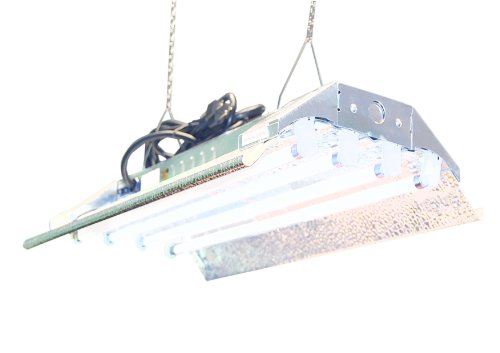
Durolux is a trusted name in hydroponic grow lighting, and the DL824 earns that reputation. This 2-foot, 4-lamp fixture produces 10,000 lumens from a compact form factor, making it ideal for clone chambers and propagation trays where space is tight. The German hammer-tone reflector delivers 95% reflectivity — that's 30% more usable light than comparable fixtures with standard reflectors.
The daisy-chain capability is generous: power up to 12 fixtures from one wall outlet. For serious propagation operations — whether hydroponic or soil-based — that means you can run a whole bank of lights without touching your electrical panel. All accessories are included: four 6500K lamps, hanging hooks and chains, and a power cord. There's also an outlet built directly into the fixture, which reduces cable clutter significantly.
The 2-foot size is deliberate. It fits standard hydroponic trays perfectly, and you can stack multiple fixtures end-to-end to extend coverage as your operation grows. This is a professional-grade fixture at a price point that makes sense for serious hobbyists.
Pros:
- 10,000 lumens from a 2-foot fixture
- 95% reflectivity German hammer-tone reflector
- Power up to 12 fixtures from one outlet
- Outlet built into fixture — less cord clutter
- All accessories included out of the box
Cons:
- 2-foot size limits coverage per unit — need multiples for larger areas
- Slightly higher upfront cost than budget alternatives
4. HTGSupply 4-Foot 2-Tube High-Output T5 Grow Light — Best for Budget Buyers
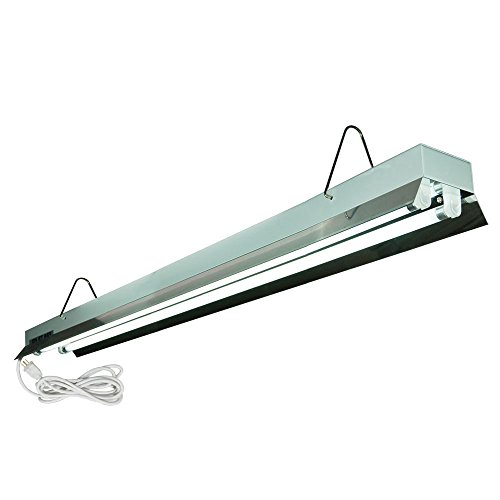
HTGSupply delivers a capable 4-foot T5 fixture without unnecessary extras. At 108 watts and 10,000 lumens initial output, this 2-lamp unit covers a standard 2×4 ft growing area effectively. The digital electronic ballast is multi-voltage capable (120V–240V), which means you can use it in different electrical environments without an adapter. That's a feature you typically see on more expensive fixtures.
The 10-foot power cord is a practical touch — you have real flexibility in where you hang this unit relative to your outlet. It ships with two 4-foot 6400K specialty horticultural T5HO bulbs included, so you're operational the moment you hang it. The grounded NEMA 5-15 plug works with any standard US outlet.
This fixture works well for hobbyist growers who need reliable T5 lighting for a single shelf or propagation area without spending on a multi-lamp commercial unit. It's straightforward, dependable, and backed by a company that has been in the grow light business for decades. For growing herbs indoors, check out our guide on how to grow herbs in pots indoors year-round — proper lighting is the first requirement.
Pros:
- Multi-voltage ballast (120V–240V) — versatile installation
- 10-foot power cord for flexible placement
- Specialty horticultural 6400K bulbs included
- 10,000-lumen initial output
- Simple, no-frills design from a trusted brand
Cons:
- Only 2 lamps — lower lumen density than 4- or 8-lamp alternatives
- No daisy-chain outlet on the fixture itself
5. Jump Start T5 Fixture with Lamp, Reflector, and Timer — Best Beginner Kit
If you're new to indoor growing, the Jump Start kit gives you everything in one purchase. The modular T5 strip light snaps on to a reflector designed to direct light downward, focusing output onto your plants instead of dispersing it into the room. It ships with a 6400K full-spectrum lamp, electronic ballast, hanging hardware, and — critically — a timer. Most fixtures don't include a timer. You get to set a proper photoperiod from day one.
The 2-foot form factor makes this ideal for windowsill seed starting, herb gardens under a kitchen cabinet, or a small propagation area on a workbench. It's genuinely slim and lightweight — you can move it without tools. The highly reflective snap-on reflector is easy to remove for bulb replacement and cleaning.
This is not a commercial unit. It's designed for gardeners starting cuttings, germinating seeds, or keeping herbs alive through winter. If you want to understand the full picture of what grow lighting can do before committing to a larger fixture, start here. According to Wikipedia's overview of grow lights, fluorescent T5 fixtures are among the most efficient options for propagation and early-stage plant growth — and this kit exemplifies that.
Pros:
- Includes timer — photoperiod control out of the box
- Snap-on reflector concentrates light on the canopy
- Super-slim, lightweight, easy to reposition
- 6400K full-spectrum lamp included
- Ideal for seed starting, cuttings, herbs
Cons:
- Single 2-foot lamp — limited to small coverage areas
- Not suitable for large-scale vegetative growth
6. 2-Pack T5 HO Grow Light with Reflector — Best Value Bundle
Getting two complete fixtures in one purchase makes the Durolux 2-pack one of the smartest buys on this list. Each unit is a 2-foot, single-lamp T5 HO fixture with a built-in reflector, and both come ready to use with bulbs included. The daisy-chain capability reaches 15 fixtures from one outlet — the highest limit of any product on this list. If you're building out a multi-tier rack system, this gives you room to grow without replanning your electrical layout.
The 6-foot power cord with rolling switch keeps things tidy and gives you a convenient on/off control without reaching for the wall. These are marketed as cool white vegetative fixtures, which makes them the right choice for seedlings, clones, and non-flowering plants. The 6500K spectrum is confirmed for vegetative-stage performance — exactly what T5 fluorescents do best.
Two units let you cover a wider area or install on two separate shelves simultaneously. For the price of one larger fixture, you're getting flexibility and redundancy. If one bulb fails, the other shelf keeps running. That's a practical advantage in any serious growing environment.
Pros:
- Two complete fixtures for the price of one purchase
- Daisy-chain up to 15 fixtures from one outlet
- Rolling switch on 6-foot cord — convenient daily use
- Reflector included — improves light efficiency
- Plug-and-go setup — no assembly required
Cons:
- Single lamp per fixture — lower output than multi-lamp units
- Best suited to propagation rather than heavy vegetative growth
7. 5 Pack 2Ft 24W T5 Fluorescent Replacement Tubes — Best Replacement Bulbs
T5 fluorescent bulbs degrade over time. After 10,000 to 15,000 hours of use, lumen output drops noticeably even if the lamp still works. That's when you need a reliable replacement pack that matches your existing fixture's specs. These F24T5HO tubes deliver 2,000 lumens each at 6500K — the same full-spectrum daylight output that your original bulbs provided.
Buying 5 at once makes financial sense. You're stocking up for a full rack refresh without paying premium single-unit prices. The 6500K spectrum is confirmed for seeding, cloning, and vegetative stages. These are standard T5HO tubes compatible with virtually any T5 HO ballast-driven fixture — including the Durolux units listed above and most other 2-foot T5 fixtures on the market.
This is not a fixture — it's a consumable that keeps your existing investment performing at full output. Replace your bulbs annually if you're running lights 12–16 hours per day. Don't wait until they burn out. Lumen degradation happens gradually, and your plants will show slower growth before you notice the dimming with your eyes.
Pros:
- 5-pack value — covers a full rack refresh
- 2,000 lumens per tube at 6500K full spectrum
- Standard F24T5HO format — fits most 2-ft T5 fixtures
- High quality with consistent performance
- Great for seeding, cloning, and veg stages
Cons:
- Bulbs only — no fixture included
- 2-foot length only — not compatible with 4-foot fixtures
How to Pick the Best Fluorescent Grow Light
Not every T5 fixture is the right fit for every grower. Here's what to evaluate before you buy in 2026.
Fixture Size and Lamp Count
The size of your fixture directly determines your coverage area. A 2-foot, single-lamp unit covers roughly 1–2 square feet effectively. A 4-foot, 8-lamp fixture covers 8 square feet or more. Match your fixture to your actual growing footprint — don't buy a single-tube strip and expect it to carry a 4×4 tent.
- 1–2 tubes: Single trays, windowsill herb gardens, small propagation areas
- 4 tubes: Clone chambers, 2×2 or 2×4 seedling trays
- 8 tubes: Full 4×2 canopy coverage, commercial propagation racks
Color Temperature and Spectrum
For seedlings, clones, and vegetative growth, you want 6400K to 6500K color temperature. This is the cool, blue-spectrum light that drives leafy, compact growth. Avoid warm white (2700K–3000K) bulbs for T5 grow applications — those are better suited to flowering stages and are not what most T5 fixtures ship with. All products on this list use 6500K or 6400K bulbs, which is exactly correct for propagation and veg.
Daisy-Chain Capacity
Daisy-chain capability matters when you're building a multi-shelf or multi-rack system. The ability to run 8, 12, or even 15 fixtures from one outlet simplifies your wiring and reduces the number of circuits you need. Check this spec before you buy if you plan to expand. Running too many fixtures on one circuit without proper daisy-chain design is a fire risk and will trip breakers regularly.
- SunBlaster: up to 8 units per outlet
- Durolux DL824: up to 12 units per outlet
- 2-Pack Durolux: up to 15 units per outlet
Lumens, PPF, and Efficiency
Lumen output tells you total light produced. PPF (Photosynthetic Photon Flux) tells you how much of that light is actually useful to plants. A high PPF/W ratio means you're getting more plant-usable photons per watt of electricity consumed. The 8-lamp 400W fixture on this list achieves 1.0 PPF/W — a benchmark worth noting. As a general rule, aim for at least 2,000–4,000 lumens per square foot for strong vegetative growth under T5 fluorescents.
Included Accessories and Setup Time
Some fixtures require you to source bulbs, hanging hardware, and timers separately. Others arrive ready to plug in. If you want to be growing within an hour of receiving the package, prioritize fixtures that include lamps, hanging chains, and a power cord. The Jump Start kit even includes a timer — a genuine convenience for beginners. Budget for add-ons if your chosen fixture ships without bulbs or hanging hardware.
Frequently Asked Questions
Are T5 fluorescent grow lights good for plants in 2026?
Yes. T5 fluorescent grow lights remain highly effective for seedlings, clones, and vegetative-stage plants in 2026. They run cool, allow close canopy placement, and deliver full-spectrum light that drives healthy early growth. They are less effective for flowering and fruiting stages, where higher-intensity LEDs or HPS lighting outperforms them.
How far should T5 lights be from plants?
Place T5 fixtures 2 to 6 inches above seedlings and young clones. For established vegetative plants, 4 to 8 inches is appropriate. T5 bulbs run cool enough that close placement does not burn foliage, making them one of the most forgiving light sources for propagation work.
How many hours a day should T5 grow lights run?
Run T5 grow lights 16–18 hours per day for seedlings and clones. Vegetative plants do well on 18 hours of light and 6 hours of darkness. Use a timer to automate your photoperiod — manual switching leads to inconsistent cycles that slow plant development.
How long do T5 fluorescent grow light bulbs last?
T5HO bulbs typically last 10,000 to 20,000 hours before significant lumen degradation. If you run lights 16 hours per day, that's roughly 2 to 3 years. However, lumen output drops well before the bulb burns out. Replace bulbs annually for best performance, especially in commercial propagation settings where consistent growth rates matter.
Can I use T5 grow lights for the flowering stage?
T5 fluorescents can support flowering in small, light-hungry plants like herbs and lettuce. For heavy-flowering crops like tomatoes, peppers, and cannabis, T5 lights do not deliver enough intensity for maximum yield. Switch to higher-intensity LEDs or HPS lighting for the flowering and fruiting stages of those crops.
What's the difference between T5 and T8 grow lights?
T5 and T8 refer to the tube diameter — T5 is 5/8 inch, T8 is 1 inch. T5 bulbs are more efficient and produce more light per linear foot than T8. For grow lighting applications, T5HO (High Output) fixtures are the correct choice. T8 fixtures are primarily designed for office and retail spaces and are not optimized for plant growth.
Buy on Walmart
- SunBlaster T5 High Output Fluorescent Strip Light, 4-Feet, s — Walmart Link
- 4Ft X 24In 8 Lamps 400W T5 Fluorescent Grow Lights with 6500 — Walmart Link
- Durolux T5 Grow Light - 2 FT 4 Lamps - DL824 HO Fluorescent — Walmart Link
- HTGSupply 4-Foot / 2-Tube High-Output T5 Fluorescent Grow Li — Walmart Link
- Jump Start T5 Fixture w/Lamp, Reflector, and Timer, 2 ft — Walmart Link
- 2-Pack T5 HO Grow Light - 1 Bulb Light System - Fluorescent — Walmart Link
- 5 Pack of 2Ft 24W T5 Fluorescent Tube with 2000 Lumens and 6 — Walmart Link
Buy on eBay
- SunBlaster T5 High Output Fluorescent Strip Light, 4-Feet, s — eBay Link
- 4Ft X 24In 8 Lamps 400W T5 Fluorescent Grow Lights with 6500 — eBay Link
- Durolux T5 Grow Light - 2 FT 4 Lamps - DL824 HO Fluorescent — eBay Link
- HTGSupply 4-Foot / 2-Tube High-Output T5 Fluorescent Grow Li — eBay Link
- Jump Start T5 Fixture w/Lamp, Reflector, and Timer, 2 ft — eBay Link
- 2-Pack T5 HO Grow Light - 1 Bulb Light System - Fluorescent — eBay Link
- 5 Pack of 2Ft 24W T5 Fluorescent Tube with 2000 Lumens and 6 — eBay Link
Next Steps
- Check the current price on your top pick — T5 fixture prices fluctuate frequently on Amazon, and deals appear regularly on multi-lamp units.
- Measure your growing area before purchasing — match fixture length and lamp count to your actual footprint to avoid under- or over-buying.
- Add a digital timer to your cart if your chosen fixture doesn't include one — consistent photoperiods are non-negotiable for healthy propagation.
- Order a spare set of replacement T5HO bulbs at the same time — having replacements on hand prevents any downtime when a lamp fails mid-cycle.
- Read our full guide on whether grow lights are necessary for indoor plants to confirm your lighting strategy before you set up your grow space.


About Lee Safin
Lee Safin was born near Sacramento, California on a prune growing farm. His parents were immigrants from Russia who had fled the Bolshevik Revolution. They were determined to give their children a better life than they had known. Education was the key for Lee and his siblings, so they could make their own way in the world. Lee attended five universities, where he studied plant sciences and soil technologies. He also has many years of experience in the U.S. Department of Agriculture as a commercial fertilizer formulator.
Get FREE Gardening Gifts now. Or latest free toolsets from our best collections.
Disable Ad block to get all the secrets. Once done, hit any button below