Can a hand spreader for weed and feed actually deliver the professional results your lawn deserves — or is it just a cheaper substitute for real equipment? The answer will surprise you: for most homeowners, a hand spreader is not a compromise at all. Used with the right technique, it gives you precise, controlled coverage that larger broadcast spreaders can't always match in tight spaces. If you're ready to get the most out of your lawn care routine, our gardening tips section has everything you need to go further.

Weed and feed products combine a granular fertilizer with a broadleaf herbicide — typically targeting common lawn invaders like dandelions, clover, and plantain while nourishing the surrounding grass. That dual function makes precision critical. Too much product in one area burns grass. Too little leaves weeds intact. A hand spreader, when calibrated correctly and walked at a consistent pace, handles both demands well within its operating range.
This guide covers when a hand spreader is the right call, how to choose the best model for the job, how to apply weed and feed without streaking or burning, and how to build a lawn care routine that keeps weed pressure from returning season after season. You'll also find a comparison table of spreader types, troubleshooting fixes for the most common problems, and answers to the questions most homeowners ask too late.
Contents
- When a Hand Spreader for Weed and Feed Actually Makes Sense
- Picking the Right Spreader for the Job
- Step-by-Step Application: Getting It Right the First Time
- Beginner Pitfalls and Pro-Level Techniques
- Fixing Common Weed and Feed Application Problems
- Building a Long-Term Lawn Care Strategy Around Hand Spreading
- Frequently Asked Questions
When a Hand Spreader for Weed and Feed Actually Makes Sense
Ideal Lawn Sizes and Situations
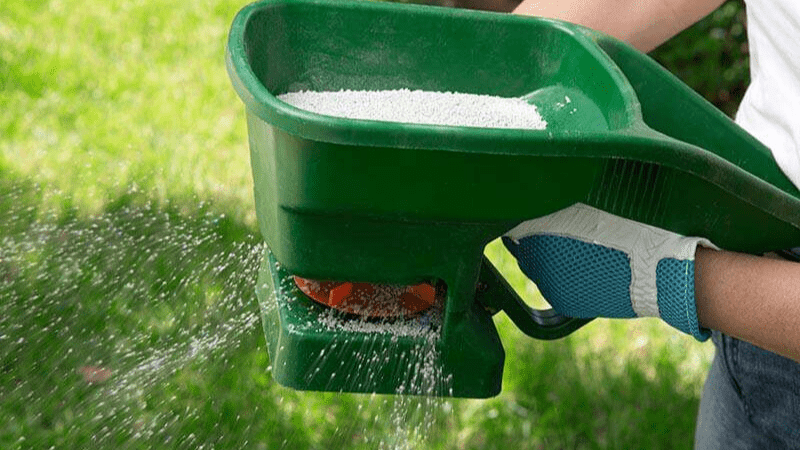
A hand spreader is not a stripped-down version of a "real" spreader. It's the right tool for specific applications. If your lawn is under 5,000 square feet, you'll cover it comfortably in one session without arm fatigue becoming a limiting factor. Beyond that, hand spreaders remain effective — but plan for multiple refills and realistic pacing.
Hand spreaders are especially well-suited for:
- Tight or confined spaces — narrow side yards, strips between garden beds, and around tree bases where a wheeled spreader can't maneuver cleanly
- Sloped or uneven terrain where a push spreader becomes unstable or hard to control at a consistent pace
- Spot treatments targeting concentrated weed patches rather than blanket full-lawn applications
- Homeowners with limited storage space who need a compact, multi-purpose tool
For lawns over 10,000 square feet, a push broadcast spreader will save significant time and deliver more consistent coverage. But for smaller suburban lawns, the hand spreader is not a concession — it's the practical choice.
Spot Treatment vs. Full-Lawn Coverage
One underappreciated advantage of hand spreading is targeted spot treatment. Rather than broadcasting weed and feed across the entire lawn, you can concentrate on zones where weeds are actively growing. This approach reduces total product usage, limits herbicide accumulation in the soil, and protects nearby garden beds from accidental fertilizer contact. If weeds are clustered rather than evenly distributed, spot treatment with a hand spreader is both more efficient and more environmentally responsible than full-lawn application.
Picking the Right Spreader for the Job
Hand Spreader Types Compared
Not every hand spreader handles weed and feed granules equally. The three common designs each have distinct application profiles, and choosing the wrong one leads directly to uneven coverage and frustrated afternoons.
| Spreader Type | Effective Coverage Arc | Best For | Key Drawbacks |
|---|---|---|---|
| Crank-Style Rotary | Up to 6-foot radius | Granular weed and feed, grass seed, full-lawn passes | Requires steady walking pace; edge coverage less precise |
| Handheld Broadcast | 4–8 foot arc | Medium lawns, fertilizer, light-duty spreading | Granule drift in wind; harder to calibrate consistently |
| Drop-Style Hand Spreader | Directly below spreader | Precise edge work, small concentrated patches | Slow coverage; visible seam lines if pass overlap is off |
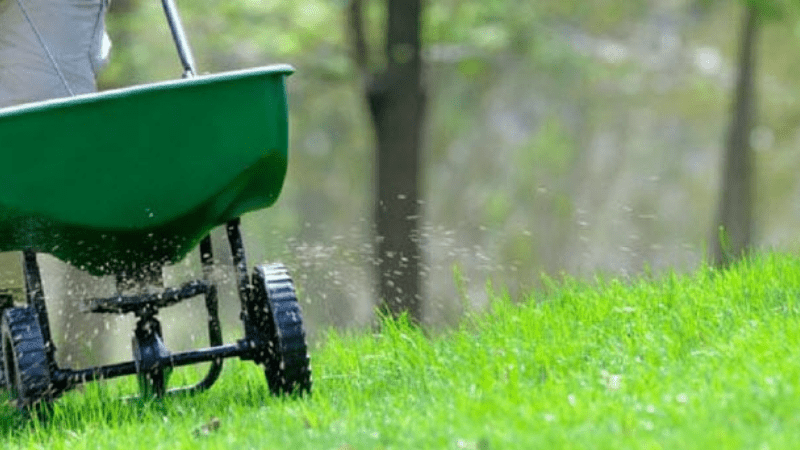
For weed and feed, a crank-style rotary hand spreader is the most practical choice in nearly every scenario. It distributes granules in a broad arc, reduces the number of passes required, and most models feature an adjustable gate dial that lets you match the manufacturer's recommended application rate. Before buying, our guide to the best lawn spreaders for seeds and fertiliser compares the leading models across price points and features.
Calibrating Your Spreader Settings
Every weed and feed product specifies a spreader setting — usually a number on a dial from 1 to 10. This is not a suggestion. An incorrect setting is the single most common reason homeowners end up with burned stripes or surviving weeds. Check the product label for hand spreader settings specifically — they differ from push spreader settings by a significant margin. When uncertain, start at the lower end of the recommended range and make a second light pass rather than risking over-application in a single pass.
Step-by-Step Application: Getting It Right the First Time
Preparation Before You Spread
Granular weed and feed products rely on moisture to adhere to weed leaf surfaces — that's how the herbicide makes contact and enters the plant. Apply to damp grass, not dry. Mow your lawn two days before application. Freshly mowed grass has less surface area for granules to stick to, and mowing immediately after removes the product before it activates.
- Water lightly the evening before, or apply after morning dew has settled on the grass
- Check the forecast: avoid applying before heavy rain — it washes product off before it works — and avoid drought-stressed grass, which can burn under fertilizer load
- Wear gloves and closed-toe shoes; granular herbicides absorb through skin with repeated contact
- Keep pets and children off the treated area for at least 24 hours after application
Pro tip: Apply weed and feed when the air is calm — even a light breeze causes granule drift onto ornamental beds, where the herbicide component can damage non-target plants.
The Spreading Technique That Prevents Streaks
Walk at a consistent pace throughout the entire application. Your walking speed determines coverage density more than almost any other variable — slow down and you're over-applying; speed up and you're leaving gaps. Make overlapping passes so the outer edge of each arc meets the center of the previous one. For most hand spreaders, that means rows about 3–4 feet apart.
Use a cross-hatch pattern for thorough coverage: your first pass north-to-south, your second pass east-to-west at half the original rate. This catches gaps and eliminates streaking. At lawn edges, close the spreader gate or angle your wrist inward to prevent broadcasting product onto sidewalks or driveways. According to EPA guidelines on lawn and garden pest control, keeping herbicide products off hard surfaces is essential to preventing runoff into storm drains and local waterways.
Beginner Pitfalls and Pro-Level Techniques
What Beginners Almost Always Get Wrong
First-time applicators make three predictable mistakes, and each one shows up visibly in the lawn within a week:
- Doubling the dose at pass overlaps — where two arcs cross, the grass receives twice the product. That's where brown stripes appear. Keep overlap minimal and consistent.
- Opening the gate too wide — more product per pass does not mean faster or better weed control. It means burn damage. Respect the dial settings on your spreader.
- Applying at the wrong time of year — weed and feed requires actively growing grass and actively growing weeds to work. Applying to dormant warm-season grass in early spring, or to heat-stressed grass in midsummer, delivers poor results at best and damage at worst.
What Experienced Lawn Keepers Do Differently
Experienced applicators treat weed and feed as a targeted intervention rather than a routine broadcast. They run a basic soil test before committing to a combined product, because if their soil already holds adequate nitrogen, the fertilizer component does more harm than good. They also recognize that sparse weed populations respond better to spot-applied standalone herbicides than full-lawn weed and feed — it's a more precise approach with less chemical load on the soil overall.
For standalone herbicide options that pair well with a separate fertilizing schedule, our roundup of the best weed killers covers selective and non-selective choices across different weed types. Pros also keep an application log: date, product name, spreader setting, weather conditions, and results two weeks later. That record tells you exactly when to reapply and turns every application into data for the next one.
Fixing Common Weed and Feed Application Problems
Brown Streaks and Burn Spots
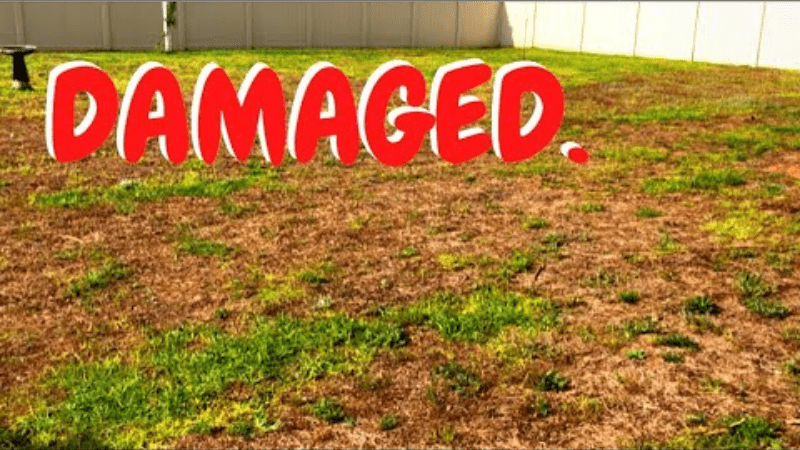
Brown streaks almost always trace back to overlapping passes or a spreader gate that was opened too wide. If you catch the error within 24 hours, water the affected area deeply and thoroughly to dilute the product concentration. Once burn sets in — which happens within 48–72 hours — the damaged grass blades will not recover. The area needs reseeding once the lawn returns to normal health, typically four to six weeks later.
Do not apply more fertilizer to a burned area in an attempt to stimulate recovery. That compounds the nitrogen overload and extends the damage timeline. Let the area rest, keep it watered, and reseed when the soil temperature and grass health support germination.
Weeds Surviving After Application
If weeds are still standing two weeks after your application, work through these causes systematically:
- Product applied to dry grass — granules didn't adhere to leaf surfaces and absorbed directly into the soil instead
- Heavy rain within 24 hours washed granules off before activation
- Product was stored improperly or past its useful shelf life — heat degrades herbicide effectiveness significantly
- Wrong weed type — weed and feed targets broadleaf weeds only. It has no effect on grassy weeds like crabgrass, annual bluegrass, or foxtail. Those require a pre-emergent or grassy weed-specific herbicide.
Wait a full 14-day window before concluding the product failed. Dandelions with deep taproots can take 10–14 days to show visible die-off even when the application was perfect.
Building a Long-Term Lawn Care Strategy Around Hand Spreading
Timing Applications for Maximum Impact
The most effective weed and feed schedule follows the natural growth cycles of both your grass type and your target weeds. Timing is not flexible — it's the difference between a treatment that works and one that wastes your money.
- Cool-season grasses (fescue, bluegrass, ryegrass): apply in early spring and early fall, when the grass is actively growing and temperatures stay below 85°F
- Warm-season grasses (Bermuda, zoysia, St. Augustine): apply in late spring to early summer, after the grass fully greens up but before peak summer heat
- Broadleaf weeds germinate most aggressively in spring and fall — timing your application to coincide with their active uptake phase maximizes herbicide absorption at the leaf surface
One well-timed application outperforms two poorly timed ones. Resist the urge to apply early just to "get ahead" of weeds — product applied to soil that's too cold delivers minimal results and leaves chemical residue without benefit.
Integrating Weed Control into Overall Soil Health
Persistent weed pressure is often a symptom of soil and turf problems, not just an invasive species issue. Compacted, thin, or nutrient-depleted soil creates exactly the conditions weeds exploit. A dense, healthy lawn is your most effective long-term weed barrier — grass that grows thick enough simply outcompetes most broadleaf weeds for light, moisture, and rooting space.
Build your hand spreader into a broader annual lawn care plan. Aerate annually if compaction is recurring. Overseed thin or bare areas each fall. Raise your mowing height — most homeowners cut too short. Keeping grass at 3–4 inches creates natural shading at soil level that suppresses weed seed germination before it starts. Use your hand spreader across multiple applications through the season: standalone fertilizer in early spring, weed and feed when weeds are actively present, and overseeding mix in fall. That rotation keeps your lawn on the front foot against weed pressure year after year.
Frequently Asked Questions
Can I use a hand spreader for weed and feed on a large lawn?
You can, but practicality drops off above 10,000 square feet. Multiple refills, arm fatigue, and the time required to maintain a consistent walking pace all become real obstacles at that scale. For large lawns, a push broadcast spreader delivers faster, more uniform coverage. Reserve your hand spreader for edge work and tight areas even on large properties — it excels there where push spreaders struggle.
How often should I apply weed and feed with a hand spreader?
Most granular weed and feed products are formulated for no more than two applications per year — once in spring and once in fall. Never exceed the label's recommended frequency. Over-application builds up herbicide residue in the soil, inhibits grass growth, and can damage earthworm populations and beneficial soil microbes. More is not better here — the label's schedule is the correct schedule.
Do I need to water after applying granular weed and feed?
For most granular weed and feed products, you do not water immediately after application. The granules need to sit on moist grass blades to adhere and allow the herbicide to make contact with weed leaves. Wait 24–48 hours before watering, then irrigate lightly to help the fertilizer component move down into the root zone. Always check your specific product's label — timing recommendations vary by formulation.
Will a hand spreader work on slopes and uneven terrain?
Yes, and it often handles slopes more safely than wheeled spreaders, which can tip on steep grades or accelerate downhill at an uneven pace. Keep your walking speed steady and compensate for slope angle by directing your spreading arc slightly uphill to account for granule drift. On very steep sections, close the gate and distribute product by gloved hand in small, controlled amounts for the most precise application.
What's the difference between weed and feed and a standalone fertilizer?
A standalone fertilizer feeds the grass only — no herbicide component is included. Weed and feed combines fertilizer with a broadleaf herbicide designed to kill weeds like dandelions, clover, and plantain while nourishing the surrounding turf. Use standalone fertilizer when your lawn is mostly weed-free and you want to build grass density and color. Use weed and feed when weeds are actively present and you want to treat both problems in a single application pass.
The right tool used with discipline will always outperform the best tool used carelessly — and for most lawns, a hand spreader and the knowledge to use it is all the equipment you will ever need.


About Lee Safin
Lee Safin was born near Sacramento, California on a prune growing farm. His parents were immigrants from Russia who had fled the Bolshevik Revolution. They were determined to give their children a better life than they had known. Education was the key for Lee and his siblings, so they could make their own way in the world. Lee attended five universities, where he studied plant sciences and soil technologies. He also has many years of experience in the U.S. Department of Agriculture as a commercial fertilizer formulator.
Get FREE Gardening Gifts now. Or latest free toolsets from our best collections.
Disable Ad block to get all the secrets. Once done, hit any button below