Regular LED lights and LED grow lights might look nearly identical on the shelf, but they serve completely different purposes — and swapping one for the other will stall your plants or waste your electricity budget. LED grow lights for plants are engineered to emit the precise wavelengths that fuel photosynthesis, while standard LEDs are built to produce white light optimized for human eyes. If you're exploring indoor cultivation more broadly, the gardening tips section covers a wide range of techniques to support your setup.
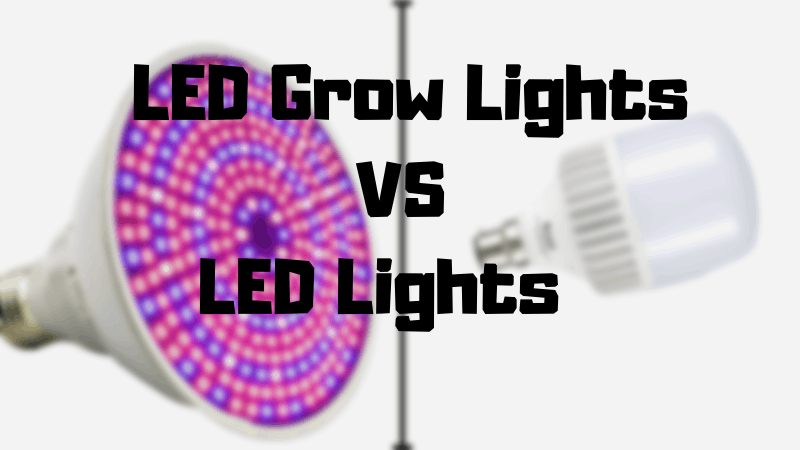
The confusion is understandable. Both use light-emitting diodes. Both are more efficient than older fluorescent or incandescent alternatives. But their spectral output — the actual mix of wavelengths they produce — is fundamentally different. One feeds your plant; the other just helps you see the room.
Understanding that difference helps you avoid buying the wrong gear, explains why seedlings stretch and weaken under standard bulbs, and shows you how to actually get results from your indoor garden. Here's what you need to know.
Contents
- The Core Difference Between LED Lights and LED Grow Lights
- When to Use LED Grow Lights for Plants (and When You Don't)
- Common Myths About LED Grow Lights, Cleared Up
- What LED Grow Lights Actually Cost Compared to Regular LEDs
- Small Adjustments That Deliver Immediate Results
- Best Practices for Using LED Grow Lights for Plants
- Frequently Asked Questions
- Key Takeaways
The Core Difference Between LED Lights and LED Grow Lights
Regular LED bulbs produce white light calibrated for human vision. They output across the visible spectrum — roughly 400nm to 700nm — but most of their energy clusters around green wavelengths near 550nm. That happens to be exactly what plant leaves reflect rather than absorb. Healthy foliage looks green to us precisely because plants aren't using those wavelengths effectively.
LED grow lights redistribute that energy toward the wavelengths chlorophyll actually absorbs. Chlorophyll-a peaks in the red range (~660nm) and the blue range (~430nm). A quality grow light concentrates output there, often adding far-red (~730nm) to promote flowering and stem elongation. According to Wikipedia's overview of photosynthetically active radiation, plants use light between 400–700nm for photosynthesis — but efficiency varies dramatically across that range. Grow lights are built around plant biology, not human perception.
What Regular LED Lights Are Built For
Standard LEDs are evaluated by lumens (total light output) and CRI (color rendering index) — both metrics describing how well light appears to human eyes. A high-CRI bulb makes your kitchen look bright and natural. That same bulb sitting above a seedling tray does very little to drive germination or vegetative growth, because the spectral distribution simply isn't matched to what plants need to photosynthesize efficiently.
What LED Grow Lights Are Designed to Do
Grow lights are evaluated in PPFD — photosynthetic photon flux density — measured in micromoles per square meter per second (μmol/m²/s). That number represents the actual quantity of photons reaching your plant canopy in usable wavelengths. A standard LED bulb might deliver 50–100 μmol/m²/s. A mid-range grow panel targets 400–800 μmol/m²/s depending on crop type and stage. That gap in usable light output is why one cannot substitute for the other in any serious growing setup.
When to Use LED Grow Lights for Plants (and When You Don't)
Not every plant situation calls for a purpose-built grow light. The right choice depends on what you're growing, how much natural light reaches your space, and what results you actually want from your indoor garden.
Indoor Growing Setups That Need Grow Lights
Any enclosed growing environment — a grow tent, a basement corner, a converted cabinet — demands proper spectrum and intensity. If you're building your first indoor space, the step-by-step grow tent guide covers light placement, airflow, and equipment setup comprehensively. For a more budget-conscious starting point, making a cheap grow box lets you test an indoor setup before committing to more expensive gear.
Seedlings are especially sensitive to light quality. Without adequate blue-spectrum light, young plants stretch upward hunting for better illumination — a process called etiolation. Those spindly, elongated stems rarely develop into strong productive plants. If you're aiming to grow vegetables indoors year-round, this guide to growing tomatoes indoors with lights covers the specific lighting requirements and scheduling for that crop.
When Regular LEDs Can Fill the Gap
Low-light houseplants — pothos, ZZ plants, peace lilies — can survive and even stay healthy under a bright LED desk lamp placed close to the foliage. The key word is "close." Light intensity drops off sharply with distance. A standard bulb two feet away provides a fraction of what a grow panel delivers at the same distance.
If you're maintaining rather than actively pushing growth, a regular LED can hold a plant in good shape. But the moment you want flowering, fruiting, or vigorous vegetative expansion without access to natural light, a purpose-built grow light is the right tool. The distinction matters in practice, not just on paper.
Common Myths About LED Grow Lights, Cleared Up
The grow light market has grown rapidly, and with that growth comes a steady stream of misleading claims. A few myths in particular keep circulating — and acting on them leads to real, avoidable mistakes.
Myth: Any LED Labeled "Grow Light" Works for All Plants
Not all grow lights perform equally. Older "blurple" panels — heavy on red and blue with almost no other wavelengths — dominated the market for years. More recent research shows that full-spectrum white light supplemented with targeted red peaks outperforms blurple designs for most crops. The spectral distribution chart matters more than any label on the box. Always request PPFD data at your growing distance from the manufacturer before purchasing, and be skeptical of any brand that only advertises watt ratings or lumen counts.
Myth: More Watts Always Means Better Growth
Wattage measures how much electricity a fixture consumes — not how much plant-usable light it produces. Two 200W grow lights from different manufacturers can deliver dramatically different PPFD values depending on diode quality, driver efficiency, and optical design. A well-engineered 150W unit will outperform a cheap 300W panel in actual plant performance every time.
Before buying any grow light, ask for the PPFD measurement at your intended canopy distance — that single number reveals more about real-world performance than wattage, lumens, or price combined.
What LED Grow Lights Actually Cost Compared to Regular LEDs
The price gap between regular LEDs and grow lights is real but narrower than most people expect — and the value calculation shifts significantly when you factor in actual plant performance.
Upfront Investment
Standard LED bulbs run $2–$10 each. Entry-level grow panels start around $30–$60 for small single-plant setups or propagation trays. Mid-range full-spectrum grow lights land between $80–$200, which covers most home growers' needs for a standard tent or grow box. High-end commercial fixtures can exceed $500, but those are built for dense, high-production environments — not a home herb shelf or a spare bedroom.
| Light Type | Typical Price Range | PPFD Output (approx.) | Best Use Case |
|---|---|---|---|
| Standard LED Bulb | $2–$10 | 50–100 μmol/m²/s | Low-light houseplants, supplemental |
| Entry-Level Grow Panel | $30–$60 | 150–300 μmol/m²/s | Seedlings, small herb trays |
| Mid-Range Grow Light | $80–$200 | 400–700 μmol/m²/s | Vegetables, most indoor crops |
| High-End Grow Light | $250–$600+ | 800–1500+ μmol/m²/s | Dense canopy, fruiting crops |
Long-Term Value
The real cost comparison isn't the purchase price — it's what you get from your setup over time. A $40 regular LED running 16 hours a day that produces stretched, underperforming plants is more expensive in practice than a $120 grow light delivering consistent, dense harvests. Running costs are comparable since both technologies use LEDs, though a proper grow array may draw more total watts because you'll need adequate coverage across your canopy area.
Heat management is also part of the equation. Grow lights that run warm require proper ventilation to prevent heat stress. Pairing your setup with a quality inline duct fan keeps temperatures in the right range and prevents the kind of heat buildup that undermines even a well-planned lighting setup.
Small Adjustments That Deliver Immediate Results
If you already own a grow light but aren't seeing the plant performance you expected, the problem is often setup rather than the light itself. A few practical changes can make a significant difference without any additional purchases.
Getting the Hanging Distance Right
Most LED grow lights come with a recommended hanging distance — typically 18–24 inches above the canopy for vegetative growth, dropping to 12–18 inches during flowering. Position the fixture too far and your plants etiolate, stretching toward the light source. Too close and you risk light bleaching, where leaves turn pale or white from excess photon intensity. Check your specific fixture's PPFD chart at multiple distances and use an adjustable ratchet hanger so you can raise or lower the light as your plants grow through different stages.
Light Schedules That Match Your Plants
Most vegetables and herbs do best on an 18/6 cycle — 18 hours of light, 6 hours of darkness — during vegetative growth. Photoperiod flowering plants shift to a 12/12 schedule to trigger reproductive growth. Autoflowering varieties are less sensitive to day length and produce well under 18/6 or even 20/4. A simple plug-in outlet timer eliminates guesswork, keeps your plants on a consistent cycle, and prevents the accidental light interruptions during the dark period that can confuse photoperiod plants.
Best Practices for Using LED Grow Lights for Plants
Consistent results from LED grow lights come down to two things: matching the light to your plant's current stage, and making sure the surrounding environment supports what the light is trying to do.
Choosing the Right Spectrum for Each Growth Stage
Blue-dominant light (5000–7000K color temperature) drives compact, leafy vegetative growth with tight internodal spacing. Red-dominant light (2700–3000K) encourages the hormonal shifts that trigger flowering and fruit development. Many modern full-spectrum grow lights include a veg/bloom toggle or independent dimmer channels, letting you shift the spectral balance without swapping fixtures. If yours doesn't, a supplemental red LED bar during the flowering stage is an affordable upgrade that delivers measurable results.
Some growers also add far-red LEDs (~730nm) at the end of each light period to take advantage of the Emerson enhancement effect, which can accelerate flowering and improve overall photosynthetic efficiency. It's an advanced technique, but worth understanding as your setup matures.
Keeping the Rest of Your Grow Space Healthy
Your light is one component of a system. Temperature, humidity, CO₂ levels, and airflow all determine how effectively your plants convert that light into growth. Without adequate air exchange, CO₂ concentrations drop inside your grow space and photosynthesis slows — regardless of how dialed-in your lighting is. A carbon air filter is a practical addition to any enclosed grow environment. The guide to building a carbon air filter for your grow tent covers the process step by step.
The most impactful habit you can develop is monitoring your grow environment as a whole rather than adjusting only the light when results disappoint. Temperature swings, low humidity, and poor air circulation are often the actual cause behind underwhelming plant growth, even when the lighting setup looks correct on paper.
Frequently Asked Questions
Can I use a regular LED bulb to grow plants indoors?
You can maintain low-light houseplants under a bright LED lamp positioned close to the foliage, but standard bulbs lack the spectrum and intensity that vegetable crops, seedlings, and flowering plants require. For any active growing — not just keeping a plant alive — a purpose-built grow light will produce noticeably better results.
How close should LED grow lights be to my plants?
Most LED grow lights perform best at 18–24 inches above the canopy during vegetative growth and 12–18 inches during flowering. Always consult your specific fixture's PPFD chart — optimal distance varies significantly between models, wattages, and optical designs.
Are LED grow lights more energy-efficient than older grow light technologies?
Yes. Modern LED grow lights are substantially more efficient than HPS, MH, or T5 fluorescent fixtures, delivering more usable photons per watt of electricity consumed. Quality LED panels can match or exceed the PPFD output of equivalent HPS setups while using 40–60% less electricity and generating significantly less heat.
What is the difference between full-spectrum and blurple grow lights?
Full-spectrum grow lights produce broad-wavelength white light similar to sunlight, often with supplemental red and blue peaks engineered for photosynthesis. Blurple lights output primarily red and blue wavelengths, which can support plant growth but typically result in less efficient photosynthesis than modern full-spectrum designs based on current research.
How many hours of grow light do plants need per day?
Most vegetables and herbs thrive on 16–18 hours of light daily during active vegetative growth. Photoperiod flowering plants need a 12/12 light-to-dark cycle to initiate blooming. Autoflowering varieties are largely unaffected by day length and produce well under 18–20 hours of daily light.
Key Takeaways
- Regular LED bulbs are optimized for human vision, while LED grow lights for plants are tuned to the red and blue wavelengths that chlorophyll actually absorbs — making them fundamentally different tools despite looking similar.
- Always evaluate grow lights by PPFD (μmol/m²/s) at your canopy distance, not wattage or lumens, which measure power consumption and human-visible brightness respectively.
- Your grow light is only as effective as the environment around it — temperature, humidity, CO₂ levels, and airflow all determine how well your plants can use the light you provide.
- Mid-range full-spectrum LED grow lights in the $80–$200 range are sufficient for most home vegetable and herb growers, while entry-level panels around $30–$60 handle seedlings and propagation trays reliably.


About Lee Safin
Lee Safin was born near Sacramento, California on a prune growing farm. His parents were immigrants from Russia who had fled the Bolshevik Revolution. They were determined to give their children a better life than they had known. Education was the key for Lee and his siblings, so they could make their own way in the world. Lee attended five universities, where he studied plant sciences and soil technologies. He also has many years of experience in the U.S. Department of Agriculture as a commercial fertilizer formulator.
Get FREE Gardening Gifts now. Or latest free toolsets from our best collections.
Disable Ad block to get all the secrets. Once done, hit any button below