Have you ever walked out ready to mow only to hear that hollow click of a battery that won't engage? If your lawnmower battery dying how to fix it is the pressing question right now, the answer is usually closer than you think — and cheaper than a full replacement. Most battery failures trace back to a handful of predictable causes: poor storage, corroded terminals, a failing charging system, or simple overuse. This guide breaks down every one of them, with practical steps you can follow today. For more outdoor maintenance guides like this one, browse our gardening tips category.
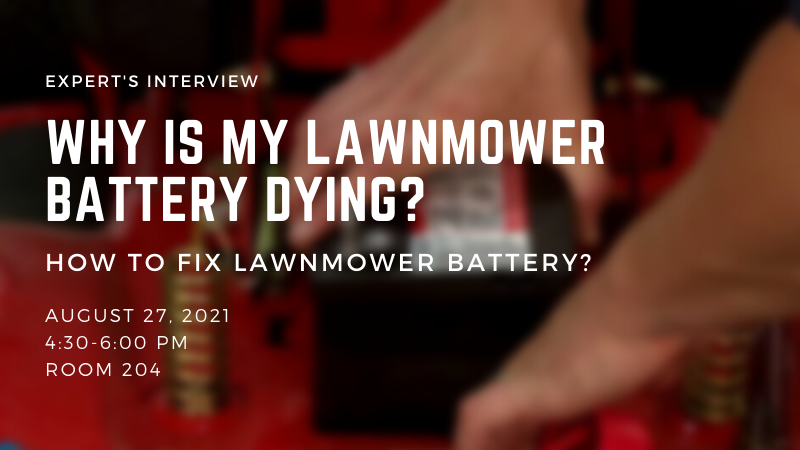
Lawnmower batteries are typically lead-acid batteries — the same fundamental technology used in most automobiles. They're built to last, but they're sensitive to charging habits, storage conditions, and electrical load. A battery that appears completely dead may just need a proper charge cycle, clean terminals, or a minor electrical repair.
Whether you're working with a riding mower, a zero-turn, or a battery-powered push mower, the diagnostic principles here apply. Work through the sections in order — the step-by-step fix and cost breakdown can save you a significant amount over dealer repair rates.
Contents
- Understanding How Your Lawnmower Battery Works
- Battery Myths That Are Costing You Money
- Everyday Habits That Drain Your Battery
- When a Dying Battery Is Actually a Warning Sign
- Real Scenarios: What's Actually Happening to Your Battery
- Lawnmower Battery Dying: How to Fix It Step-by-Step
- Repair vs. Replace: Breaking Down the Costs
- Frequently Asked Questions
Understanding How Your Lawnmower Battery Works
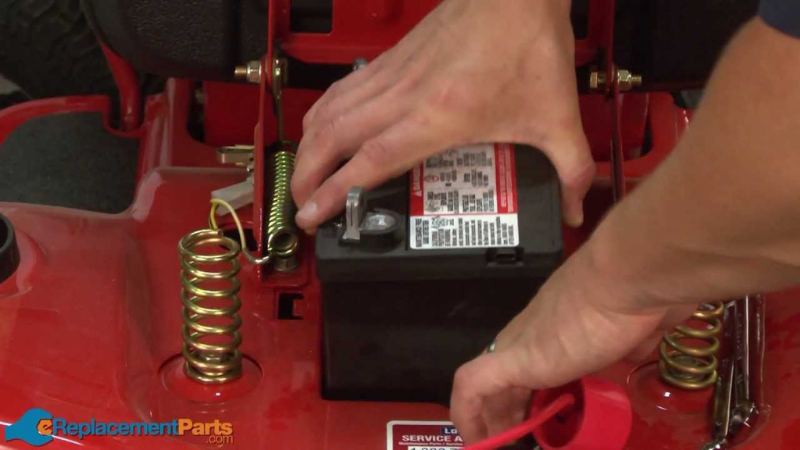
Before you can diagnose the problem, it helps to understand what you're actually dealing with. Most riding mowers and zero-turn mowers use a 12-volt battery to start the engine. Once the engine is running, a stator or alternator recharges the battery during operation — similar to how a car's charging system works.
Battery Types Used in Mowers
The type of battery in your mower affects how you should charge and store it:
- Flooded lead-acid (FLA) — the most common type; cells are filled with liquid electrolyte and may occasionally need distilled water top-offs
- AGM (Absorbed Glass Mat) — sealed and maintenance-free; handles vibration well but is especially sensitive to overcharging
- Lithium-ion — found in newer battery-powered push mowers; lighter, longer-lasting, and more expensive to replace
Using the wrong charger for your battery type can damage the cells or cut the lifespan short significantly. Check your owner's manual if you're unsure which type you have.
How the Charging System Works
While the engine runs, the stator generates AC current that gets converted to DC and fed back to the battery. If the stator or voltage regulator fails, the battery never fully recharges during operation. Over multiple mowing sessions, it gradually loses capacity. A brand-new battery will still die quickly if the charging system is faulty — this is why diagnosing the full system matters, not just the battery itself.
Battery Myths That Are Costing You Money
There's a lot of bad advice floating around about lawnmower batteries — outdated forum posts, neighbor recommendations, and guesswork passed off as fact. Believing the wrong things can lead you to spend more than necessary, or discard a battery that was still salvageable.
Myth: A Dead Battery Is Always Gone
This is probably the most damaging misconception. A battery reading 0 volts isn't necessarily finished. Lead-acid batteries can suffer from deep discharge — they've dropped below the threshold where a standard charger will recognize them and engage. A smart charger with a recovery or desulfation mode can sometimes bring them back within 24–48 hours.
Pro insight: Before spending money on a replacement, try a smart charger with a "recondition" or "recovery" mode — it can rescue a deeply discharged battery that a standard charger simply won't detect.
Myth: Trickle Charging Is Always Safe
An old-fashioned trickle charger left connected indefinitely can actually overcharge the battery. Excess heat generated by overcharging degrades the internal plates over time. Modern smart chargers automatically switch to a float or maintenance mode once the battery is full — they're a much safer choice.
- Overcharging is particularly damaging to AGM batteries
- Heat buildup accelerates plate degradation significantly
- If you must use a basic charger, set a timer and disconnect after 8–12 hours
Everyday Habits That Drain Your Battery
You might be shortening your battery's life without realizing it. These are the habits homeowners fall into most often — and most of them are easy to change once you know what to look for.
Storage Mistakes
- Storing the mower without disconnecting the battery — small electrical loads (safety circuits, clocks) continue drawing power even with the key out
- Storing a partially charged battery — lead sulfate crystals form on the plates and permanently reduce capacity
- Leaving the battery in an unheated space during cold months — low temperatures accelerate self-discharge
- Skipping a battery maintainer during the off-season — a $20–30 maintainer can add multiple seasons to a battery's useful life
Warning: Storing a discharged battery in freezing conditions accelerates sulfation dramatically — always top up the charge before putting the mower away for the season, even if you don't plan to use a maintainer.
Electrical Drain Sources
Small continuous draws add up quickly over days and weeks. Common culprits include:
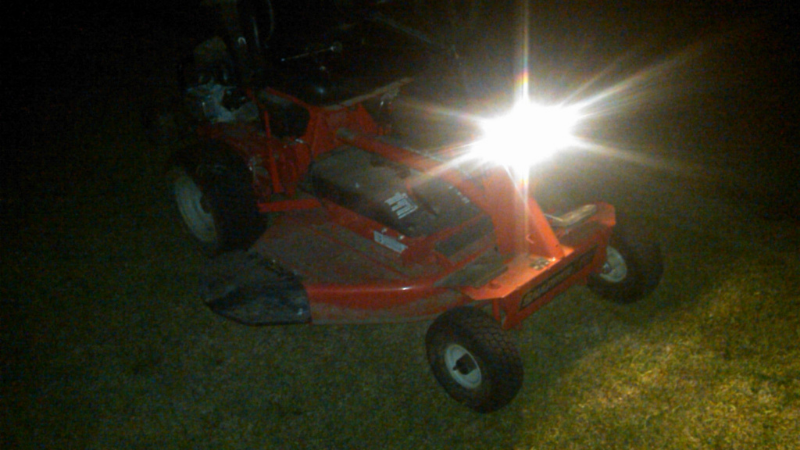
- Leaving the headlights on after mowing — even for an hour
- Accessories (USB chargers, auxiliary lights) left connected
- A faulty seat safety switch keeping a circuit energized
- An hour meter or clock wired directly to the battery without a shutoff relay
When a Dying Battery Is Actually a Warning Sign
Sometimes the battery isn't the root problem — it's a symptom of something else. If you replace the battery and it dies again within a few mowing sessions, something in the mower's electrical system is either draining it or failing to recharge it properly.
A Faulty Charging System
The stator generates electricity while your engine runs. If it's failing, the battery gradually depletes over the course of several mowing sessions rather than staying topped off. Test the charging system before assuming the battery is the problem. With the engine running, a healthy system should read 13.5–14.5 volts at the battery terminals using a multimeter.
If you're also noticing other starting problems alongside a dying battery, it may be worth reading about why your lawn mower spark plug is wet — a wet plug and a dying battery together often point to a deeper ignition or fuel system issue rather than just a battery problem.
Parasitic Electrical Drain
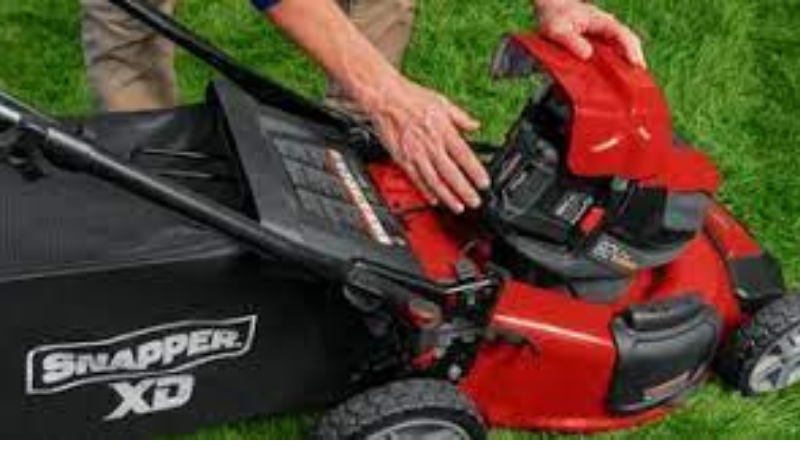
A parasitic drain is any current being pulled from the battery while the mower sits idle. To check for one:
- Turn off the mower and remove the key
- Disconnect the negative battery cable
- Set your multimeter to DC milliamps (mA)
- Connect the meter in series between the negative terminal and the negative cable
- A reading above 50 mA indicates a parasitic drain
- Pull fuses one at a time to isolate which circuit is responsible
Real Scenarios: What's Actually Happening to Your Battery
Abstract causes are easier to act on when you see them mapped to real situations. These are the scenarios homeowners encounter most often when a lawnmower battery keeps dying.
Seasonal Failure
You stored the mower at the end of the season with a half-charged battery and no maintainer connected. By spring, the battery has self-discharged past the recovery threshold. Lead sulfate has crystallized on the plates. A standard charger reads nothing and won't engage. This is the single most common cause of a lawnmower battery dying after off-season storage.
The fix: connect a smart charger in recovery or desulfation mode and leave it for 24–48 hours. Many batteries in this state will recover enough capacity to last another full season of use.
Loose or Corroded Connections
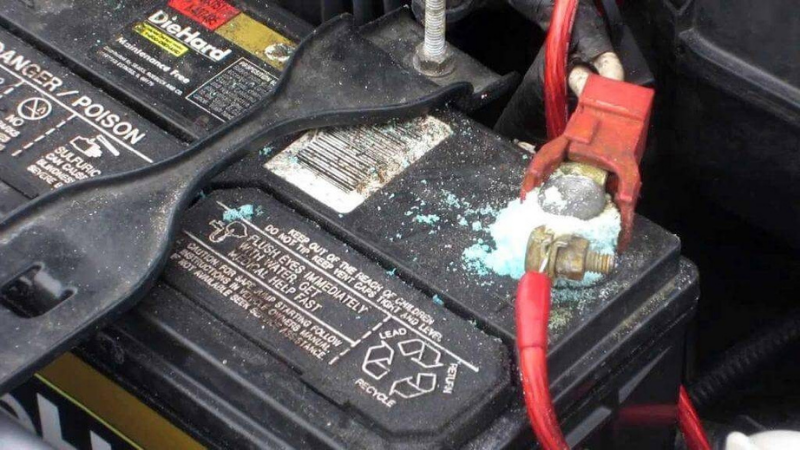
Corrosion on the battery terminals creates resistance that prevents the battery from accepting a full charge or delivering full current to the starter. You may notice:
- The mower cranks slowly even with a recently charged battery
- The battery reads 12.5–12.7V at rest but the mower still won't start
- Visible white or blue-green crust on the terminal posts or cable clamps
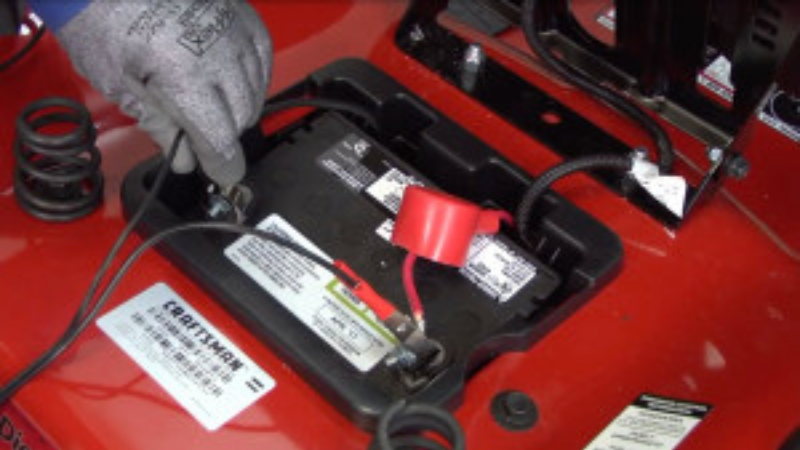
The fix is simple: mix baking soda with water to neutralize the corrosion, scrub with a wire brush, rinse, dry completely, then apply dielectric grease before reconnecting.
Lawnmower Battery Dying: How to Fix It Step-by-Step
Work through these steps in sequence before you decide to buy anything. Most battery problems are resolved before you ever reach the replacement stage.
Test the Battery First
- Use a multimeter set to DC voltage and check the resting voltage:
- 12.6–12.8V = fully charged, look elsewhere for the problem
- 12.0–12.4V = partially discharged, charge and retest
- Below 11.8V = deeply discharged, needs recovery mode charging
- Below 10.5V = likely sulfated, still worth attempting recovery
- Inspect the terminals for visible corrosion or crust buildup
- Wiggle the cable clamps — loose connections cause intermittent starting failures
- Check the battery casing for cracks or swelling (replace immediately if found)
Charge, Clean, and Verify
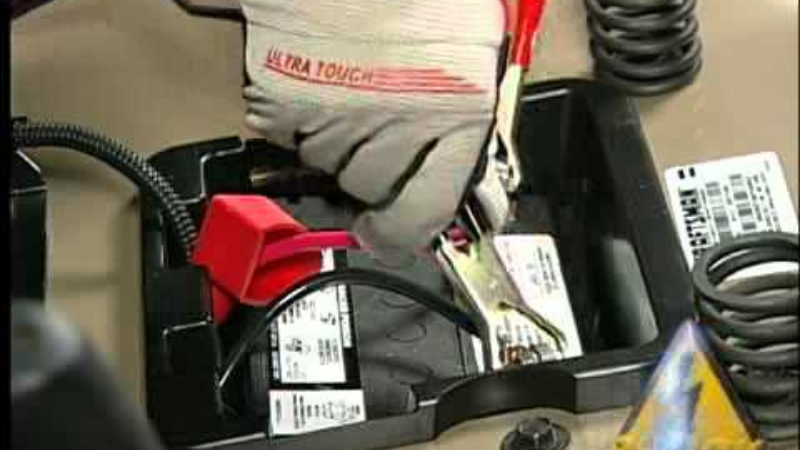
- Clean the terminals — baking soda solution plus a wire brush, then coat with dielectric grease before reconnecting
- Charge the battery — use a smart charger and allow a full charge cycle, typically 4–8 hours
- If the charger won't engage, switch to recovery or desulfation mode and leave it for 24–48 hours
- Retest the resting voltage — it should read 12.6V or above after a full charge
- Start the mower and measure voltage at the battery terminals while the engine runs — healthy output is 13.5–14.5V
- If charging system output is low, have the stator and voltage regulator tested before replacing the battery again
- If the battery won't hold a charge after recovery attempts, confirm with a free load test at most auto parts stores
If you're also struggling to get the engine started at all during this process, the guide on how to start a lawn mower without a primer bulb covers workarounds that can help when the starting system isn't cooperating.
Tip: Always test the charging system output before buying a new battery — confirming the stator is healthy first means you won't spend money on a replacement that dies again within a month.
Repair vs. Replace: Breaking Down the Costs
One of the most practical questions when your lawnmower battery is dying is whether to fix it or replace it — and what either option actually costs. Here's a realistic breakdown.
DIY Repair Costs
In most cases, the tools required for repair cost less than a replacement battery — and they're reusable for future seasons:
| Item | Estimated Cost | Notes |
|---|---|---|
| Smart battery charger (with recovery mode) | $25–$60 | Works on AGM and FLA; reusable for years |
| Battery maintainer (float/trickle) | $20–$35 | Use during off-season to prevent discharge |
| Multimeter | $15–$40 | Essential for diagnosing charging system output |
| Terminal brush + dielectric grease | $5–$10 | Prevents future corrosion buildup |
| Stator or voltage regulator repair (shop) | $60–$150 | Only if the charging system is confirmed faulty |
New Battery Costs
If the battery genuinely can't be recovered, replacements are available at most hardware and auto parts stores:
- Standard FLA battery (12V, U1 size) — $30–$60; the most common and affordable option
- AGM upgrade — $60–$100; worth the premium if you store the mower long-term each season
- Lithium-ion (compatible push mowers) — $100–$300+ depending on brand and amp-hour rating
- Shop installation fee — typically $20–$40 if you prefer not to do it yourself
Bottom line: if your battery is under three years old, always attempt recovery and terminal cleaning before replacing it. The repair tools pay for themselves across multiple seasons and multiple machines.
Frequently Asked Questions
How long should a lawnmower battery last?
Most 12-volt lead-acid lawnmower batteries last between three and five years under normal use. Proper off-season storage with a battery maintainer and avoiding repeated deep discharge cycles can extend that closer to five to seven years. AGM batteries tend to outlast standard flooded units by a year or two on average.
Can a completely dead lawnmower battery be recharged?
Often, yes. A battery reading 0 volts may be in deep discharge rather than truly failed. A smart charger with a recovery or desulfation mode can revive many batteries that a standard charger won't even recognize. Connect it and leave it on the recovery cycle for 24 to 48 hours before drawing any conclusions about the battery's condition.
Why does my new lawnmower battery keep dying?
If a recently installed battery keeps dying, the charging system is the most likely cause. A faulty stator or voltage regulator won't replenish the battery during operation, so each mowing session drains it further. Test the output voltage at the battery terminals while the engine runs — it should read 13.5 to 14.5 volts. Readings below that range point to a charging system problem, not a battery problem.
What voltage should a lawnmower battery read?
A fully charged 12-volt lawnmower battery should read 12.6 to 12.8 volts at rest. Anything below 12.0 volts means the battery needs a charge. Below 11.8 volts is considered deeply discharged and requires a recovery charge cycle. A resting reading below 10.5 volts typically indicates significant sulfation has occurred on the plates.
Is it safe to jump-start a lawnmower battery from a car?
You can use a car battery to jump-start a lawnmower, but you should never do it with the car engine running. A running car's alternator outputs significantly more current than the mower's small electrical circuits are designed to handle. Instead, connect the jumper cables with both engines off, wait a few minutes for charge to transfer, then try starting the mower on its own.
How do I keep my lawnmower battery from dying during storage?
Connect a battery maintainer or float charger before putting the mower away for the season. Make sure the battery is fully charged first. If you won't be using a maintainer, disconnect the negative battery cable to eliminate any slow parasitic drain. Store the mower somewhere that stays above freezing, and check the battery charge level at least once during a long off-season.
A lawnmower battery that keeps dying is almost never just a battery problem — it's a system problem, and the fix starts with understanding that system before reaching for your wallet.


About Lee Safin
Lee Safin was born near Sacramento, California on a prune growing farm. His parents were immigrants from Russia who had fled the Bolshevik Revolution. They were determined to give their children a better life than they had known. Education was the key for Lee and his siblings, so they could make their own way in the world. Lee attended five universities, where he studied plant sciences and soil technologies. He also has many years of experience in the U.S. Department of Agriculture as a commercial fertilizer formulator.
Get FREE Gardening Gifts now. Or latest free toolsets from our best collections.
Disable Ad block to get all the secrets. Once done, hit any button below