A lawnmower carburetor leaking gas is not just a nuisance — it's a fire hazard you need to fix immediately. The practical answer to how to fix a lawnmower carburetor leak starts with identifying the source: a stuck float, worn needle valve, cracked bowl gasket, or degraded fuel line. Once you know which part has failed, most repairs cost less than $15 in parts and take under an hour. For broader gardening tips and lawn care guidance, our full resource hub has everything you need.

Your carburetor meters the precise air-to-fuel mixture your engine needs to run cleanly. When it starts leaking, raw fuel escapes before combustion — wasting gas, fouling the engine, and creating genuine safety risks. The good news is that this is overwhelmingly a DIY-fixable problem. You do not need a repair shop for the vast majority of carburetor leaks.
This guide walks you through the complete process: step-by-step diagnosis and repair, the best maintenance practices to prevent recurrence, a realistic cost breakdown comparing DIY versus professional repair, and the most persistent myths that lead homeowners to waste time on the wrong fix.
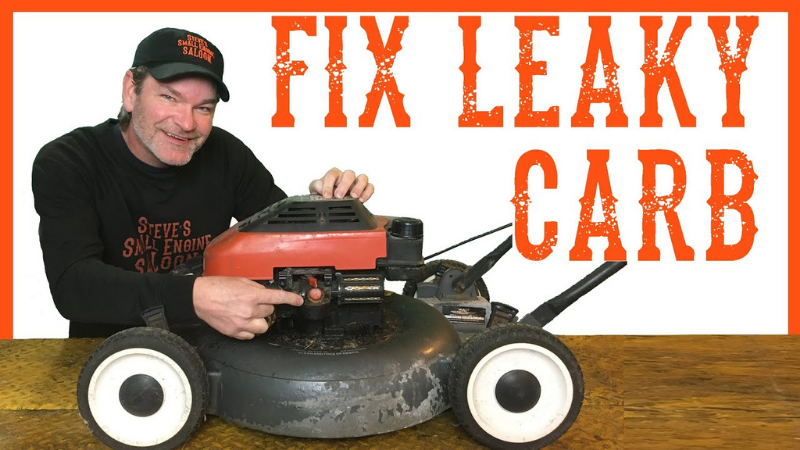
Contents
How to Fix a Lawnmower Carburetor Leak: Step-by-Step
Resist the urge to start pulling the carburetor apart without knowing where the fuel is actually coming from. A systematic diagnosis takes five minutes and saves you from replacing parts that aren't the problem.
Step 1: Diagnose the Source of the Leak
Wipe the entire carburetor and surrounding area dry with a clean rag, then open the fuel valve and watch closely. The location of the leak tells you exactly what's wrong:
- Leaking from the bowl drain screw — The O-ring or gasket around the screw is worn. Replace just the seal.
- Leaking from the seam where the bowl meets the carb body — The bowl gasket has failed. A rebuild kit fixes this.
- Fuel overflowing from the air intake or primer bulb area — Your float is stuck open, letting too much fuel into the bowl.
- Dripping from a fuel line connection — The line has cracked or the clamp has loosened over time.
- Leaking at the intake manifold junction — The mounting gasket between the carb and the engine has deteriorated.
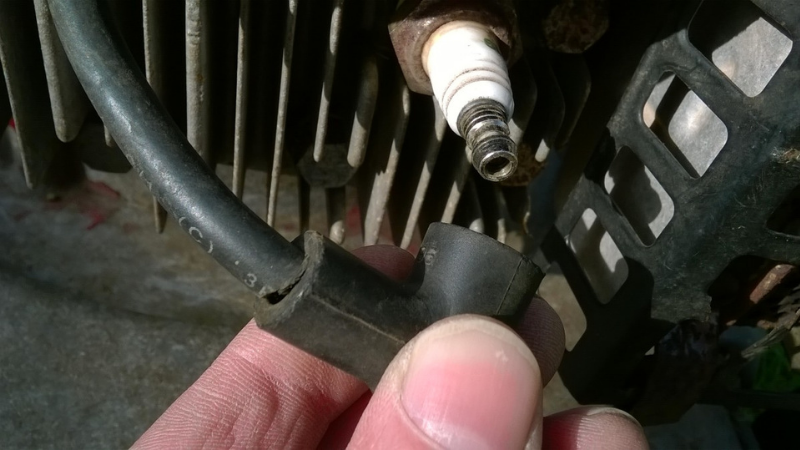
A wet spark plug often accompanies a carburetor leak — it confirms that excess fuel is flooding the engine, which directly points to a float or needle valve failure. Check the plug while you're doing your diagnosis.
Step 2: Rebuild or Replace the Carburetor
For most homeowner push mowers, a carburetor rebuild kit costs $8–$15 and includes every gasket, O-ring, and needle valve you'll need. Here's how to complete the rebuild:
- Turn off the fuel valve and disconnect the spark plug wire before touching anything.
- Remove the air filter housing to expose the carburetor body.
- Disconnect the fuel line, throttle linkage, and choke linkage from the carburetor.
- Unbolt the carburetor from the engine — typically two bolts.
- Remove the float bowl, secured by a single center bolt or small screws.
- Inspect the bowl gasket. If it's flattened, cracked, or shrunken, it's your primary suspect.
- Remove the float and needle valve. Look for grooves or wear marks on the needle tip.
- Install the new needle valve, float, and bowl gasket from your rebuild kit.
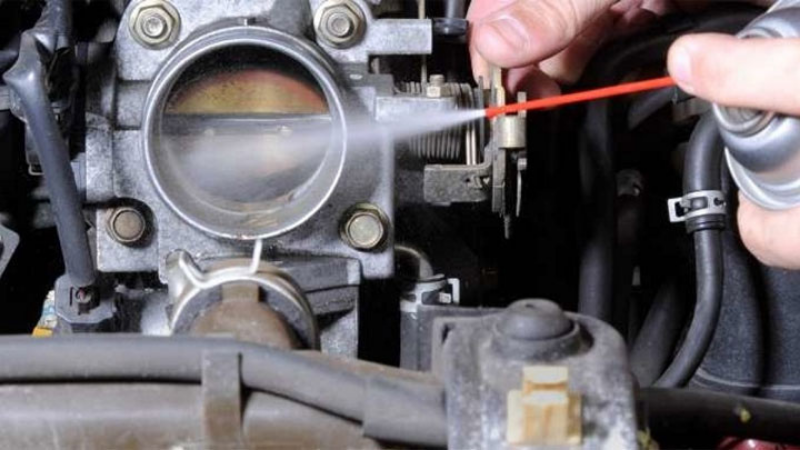
- Spray all internal passages with carburetor cleaner and let dry completely.
- Reassemble in reverse order, reconnect the fuel line, and test with the fuel valve open — watch for any drips.
If the carburetor body itself is cracked or heavily corroded, skip the rebuild and replace the whole unit. An aftermarket carburetor for a standard push mower runs $15–$45 — far less than shop labor. Our detailed guide on lawnmower carburetor leaking fuel covers additional diagnostic scenarios worth reviewing.
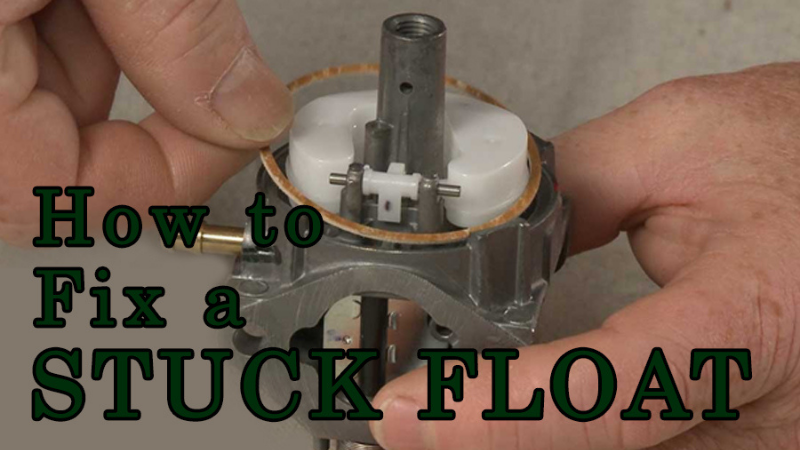
Step 3: Free or Replace a Stuck Float
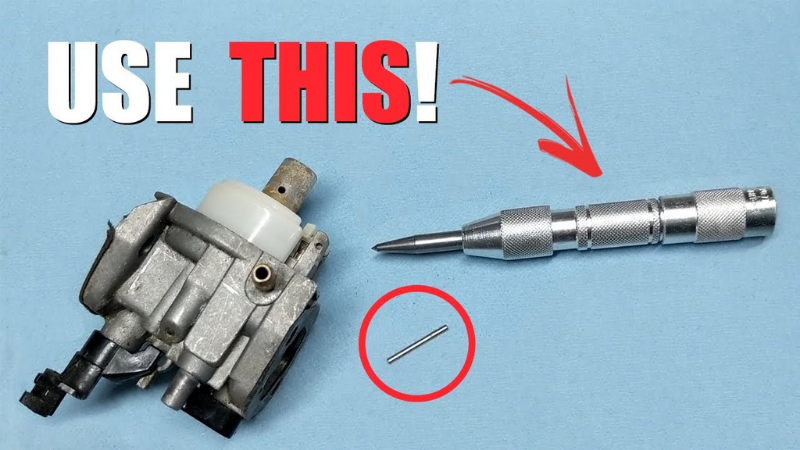
The float is a small hollow component — usually plastic or brass — that rises with the fuel level and shuts off the needle valve when the bowl is full. When it sticks in the open position, fuel keeps pouring in and overflows. Here's how to address it:
- With the bowl removed, locate the float. It looks like a small boat or pontoon sitting on a pivot pin.
- Gently tap the hinge pin sideways with a small screwdriver to dislodge a stuck float.
- Shake the float near your ear. Any sloshing means it has absorbed fuel and is waterlogged — replace it immediately.
- Inspect the needle valve seat for varnish buildup. Clean with carb cleaner on a cotton swab.
- Check that the float moves freely through its full range before reinstalling.
- If the float is cracked or deformed, replace the entire float and needle assembly as a matched set.
Pro tip: Always replace the needle valve and seat together — a worn seat will cause a new needle to leak just as quickly as the old one did.
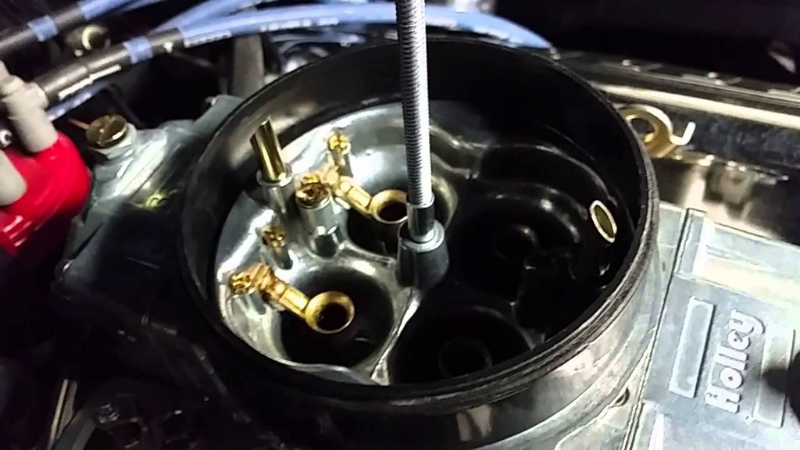
Common Causes and Best Practices to Prevent Carburetor Leaks
Understanding why your carburetor failed is the key to making sure it doesn't happen again. Most leaks aren't random — they follow predictable patterns tied to fuel choice, storage habits, and how often you maintain the machine.
What Actually Causes Carburetor Leaks
Here are the root causes ranked by frequency:
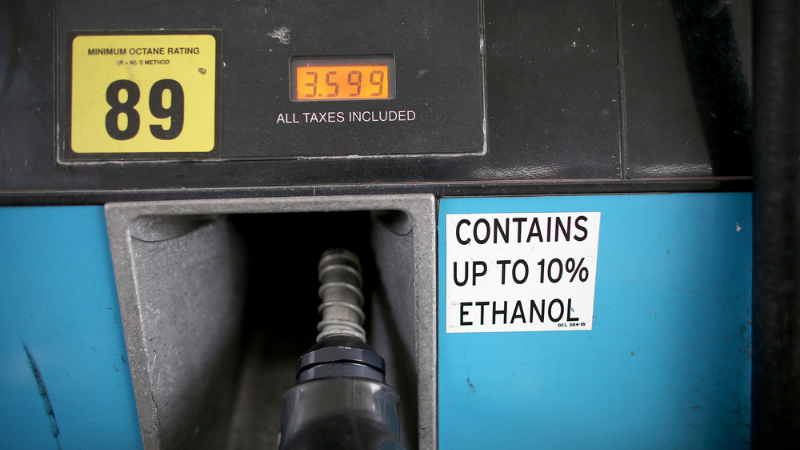
- Ethanol fuel degradation — E10 and higher blends absorb moisture and attack rubber gaskets, diaphragms, and plastic components. This is the number-one cause of carburetor failures in modern small engines.
- Stale fuel left sitting in the carb — Gas degrades within 30 days without a stabilizer. The byproduct is varnish that clogs the needle valve and prevents the float from seating.
- Stuck float — Debris or varnish buildup prevents the float from rising and shutting off the fuel flow, causing an overflow.
- Worn bowl gasket — Heat cycling and age flatten the gasket over time until it can no longer seal the bowl joint.
- Cracked fuel line — UV exposure and age cause fuel lines to harden and crack, especially at the connection clamps.
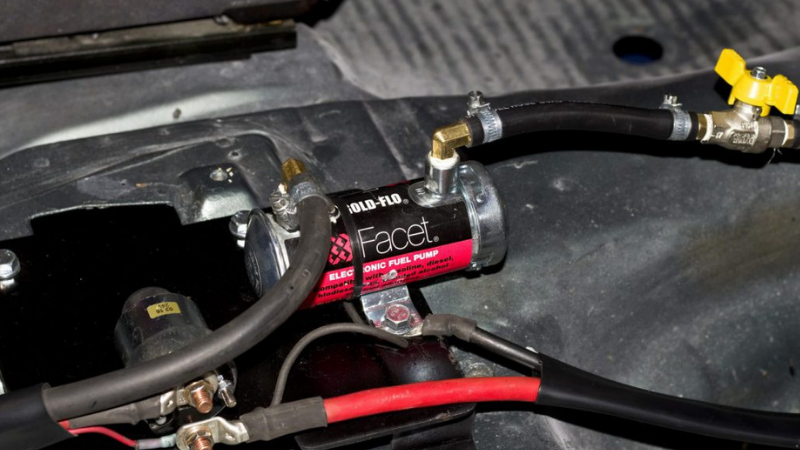
- Vapor lock — Engine heat causes fuel in the line to vaporize and expand, pushing liquid fuel past weakened seals.
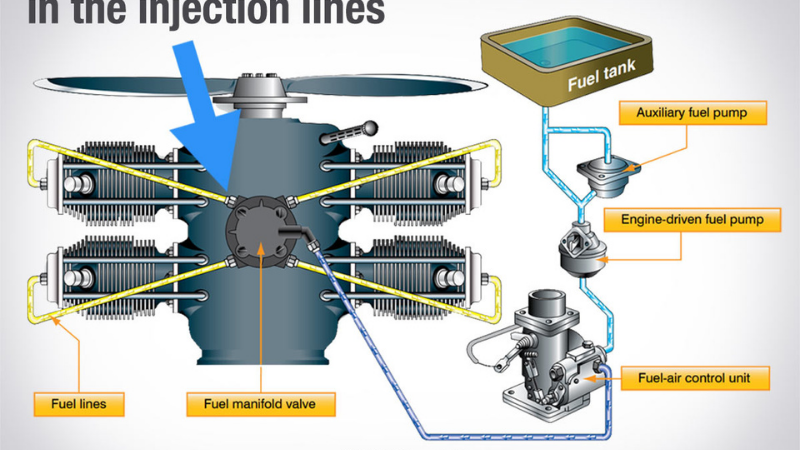
Ethanol's effect on small engines is well-documented. According to Wikipedia's overview of ethanol fuel, ethanol is hygroscopic — it actively absorbs water from surrounding air, accelerating corrosion and gasket breakdown in small engines not built for high-ethanol blends.
Fuel Choice and Storage Best Practices
Prevention is far cheaper than repair. Build these habits and you'll rarely deal with a carburetor leak again:
- Use fuel labeled E10 or less — or ethanol-free, available at marinas and many hardware stores.
- Add a fuel stabilizer such as Sta-Bil to every tank, not just when storing for the season.
- Run the carburetor dry before storing the mower for more than 30 days: close the fuel valve, then run the engine until it stalls from fuel starvation.
- Replace fuel lines every 2–3 seasons, or immediately if you see cracking or stiffness at the connection points.
- Inspect and replace the bowl gasket annually — it costs under $2 and takes five minutes.
- Keep the fuel cap tightly sealed at all times to limit moisture contamination.
The fuel you choose has a direct impact on how long your carburetor lasts. Our guide on lawn mower gas vs car gas breaks down exactly which blends are safe for small engines and which to avoid.
What It Costs to Fix a Leaking Carburetor
Cost depends almost entirely on whether you do the job yourself or hand it to a shop. The actual parts are inexpensive — it's the shop's hourly rate that makes professional repair feel disproportionate to the problem.
DIY Repair Cost Breakdown
| Repair Type | Parts Needed | Estimated DIY Cost |
|---|---|---|
| Bowl gasket replacement only | Single gasket or O-ring | $2–$8 |
| Float and needle valve replacement | Rebuild kit | $8–$20 |
| Full carburetor rebuild | Rebuild kit + carb cleaner | $12–$28 |
| Full carburetor replacement (aftermarket) | New carb + mounting gasket | $15–$50 |
| Fuel line replacement | New line + clamps | $5–$15 |
| Professional shop repair (all-in) | Labor + parts | $75–$160 |
If your mower is more than 10 seasons old and the repair cost approaches half its replacement value, weigh your options carefully. A carburetor repair on a mower worth under $150 is a judgment call — not always the financially obvious choice.
When to Call a Professional
There are specific situations where a shop visit makes sense:
- You've replaced the bowl gasket and needle valve and the leak continues.
- The carburetor body is visibly cracked or corroded through the casting.
- The mower has compounding issues — rough idle, hard starting, backfiring — suggesting a deeper engine problem.
- You're not comfortable working around raw fuel near an ignition source.
If the engine is hard to restart after your repair, our guide on starting a lawn mower without a primer bulb walks through alternative starting approaches that bypass a faulty primer system entirely.
Carburetor Leak Myths You Need to Stop Believing
Bad advice spreads fast in DIY forums and neighborhood Facebook groups. These myths consistently lead homeowners to waste time and money — or worse, ignore a hazard they should be addressing right now.
Warning: Never run a mower with a known carburetor leak. Even a small drip of raw fuel onto a hot exhaust manifold can ignite instantly — stop the machine and fix it first.
Myth: Tightening the Bowl Bolt Will Stop the Leak
This is the single most common dead-end repair attempt. When the bowl gasket has worn flat or cracked, tightening the bolt further compresses a gasket that has no material left to compress. You're not creating a seal — you're risking cracking the bowl itself. A failed gasket requires replacement, not torque. Tightening is a temporary delay at best, and structural damage at worst.
Myth: Fresh Gas Dissolves Varnish Deposits on Its Own
Fresh fuel does not clean varnish. Those oxidized hydrocarbon deposits bond to metal surfaces and require a dedicated carburetor cleaner to dissolve. Running fresh gas through a varnished carburetor means your new fuel is flowing past a restricted needle valve and clogged passages — the leak source remains entirely intact. You still need to physically clean the carburetor.
This misdiagnosis also causes people to chase phantom electrical issues. When an engine won't start due to a carburetor blockage or overflow, it's sometimes mistaken for a battery problem. A dying lawnmower battery can behave similarly to a fuel-flooded engine — know the difference before replacing parts unnecessarily.
Myth: Spraying Carb Cleaner Into the Air Intake Fixes Everything
Spraying cleaner into the air intake can temporarily improve a rough idle by dissolving light deposits in the carburetor throat. It does nothing for a leaking gasket, stuck float, or worn needle valve. A physical leak requires a physical fix — and spraying cleaner at a running engine while fuel is pooling underneath is genuinely dangerous. Use carb cleaner as a diagnostic and cleaning tool, not a substitute for actual repair.
Frequently Asked Questions
Is it safe to run a lawnmower with a leaking carburetor?
No — stop using the mower immediately. Raw fuel dripping onto a hot engine block or exhaust manifold can ignite instantly. This is not a "monitor it" situation. Make the repair before running the machine again, even for short tasks.
Why does my carburetor only leak when the mower has been sitting overnight?
This points directly to a faulty needle valve. When the valve fails to fully seat, fuel slowly bypasses it while the engine is off — the bowl fills past capacity and overflows. Replacing the needle valve and seat assembly as a matched set resolves it completely.
How long does a carburetor rebuild take for a push mower?
Most homeowners complete a full push mower carburetor rebuild in 30–60 minutes. Having the correct rebuild kit on hand before starting is the biggest factor. Riding mower carburetors may take longer due to more complex access and linkage routing.
Can I use any carburetor rebuild kit or does it need to match my mower?
It must match your specific engine model. Rebuild kits are not universal — gaskets, floats, and needle valves are sized to the exact carburetor bore and fuel bowl geometry. Find your engine model number stamped on the engine block and match it to the kit before ordering. A mismatched gasket will not seal correctly.
Key Takeaways
- The most common causes of a lawnmower carburetor leak are a stuck float, worn needle valve, and degraded bowl gasket — all fixable with an $8–$20 rebuild kit.
- Learning how to fix a lawnmower carburetor leak yourself saves $75–$150 in shop labor on a repair that takes most homeowners under an hour.
- Ethanol-blend fuels and stale gas are the primary drivers of gasket and seal degradation — use E10 or ethanol-free fuel and add a stabilizer to every tank to prevent future leaks.
- Never operate a mower with an active carburetor leak; raw fuel near a hot exhaust is an immediate fire hazard that demands a full stop before any further use.


About Lee Safin
Lee Safin was born near Sacramento, California on a prune growing farm. His parents were immigrants from Russia who had fled the Bolshevik Revolution. They were determined to give their children a better life than they had known. Education was the key for Lee and his siblings, so they could make their own way in the world. Lee attended five universities, where he studied plant sciences and soil technologies. He also has many years of experience in the U.S. Department of Agriculture as a commercial fertilizer formulator.
Get FREE Gardening Gifts now. Or latest free toolsets from our best collections.
Disable Ad block to get all the secrets. Once done, hit any button below