Can the smell from your indoor vegetable garden really become a problem — even when you're growing nothing more exotic than tomatoes or peppers? If you've been wondering whether you need a carbon filter grow tent vegetables setup, the short answer is: it depends. Some growers never bother with one and have no issues at all. Others call it the single best upgrade they ever made to their indoor garden. The real answer lives somewhere in the middle, and by the end of this guide you'll have a clear picture of exactly where your setup falls. Check out our gardening tips section for more practical indoor growing advice.

Indoor growing has exploded in popularity, and with that growth comes a flood of conflicting advice. Carbon filters are one of those topics where you'll find growers who swear by them for vegetables and others who call them complete overkill. Rather than telling you what to think, this guide lays out the actual use cases, the real costs, and the honest trade-offs so you can make the right call for your specific situation.
Whether you're working in a compact 2×2 tent or a larger grow tent setup, air quality management is a core part of successful indoor growing. Getting your filtration decision right from the start saves you money and headaches later — so let's walk through everything you need to know.
Contents
- What a Carbon Filter Actually Does for Your Grow Tent
- Separating Fact From Fiction on Carbon Filters
- When a Carbon Filter in Your Vegetable Grow Tent Makes Sense
- The Real Advantages and Drawbacks
- Carbon Filter vs. Other Air Control Options
- What You'll Actually Spend
- Frequently Asked Questions
- Next Steps
What a Carbon Filter Actually Does for Your Grow Tent
How Activated Carbon Traps Odors
Before you can decide whether you need one, it helps to understand what a carbon filter actually does. Activated carbon — sometimes called activated charcoal — is a highly porous material with a remarkably large surface area packed into a small volume. According to Wikipedia's overview of activated carbon, a single gram of activated carbon can have a surface area exceeding 3,000 square meters. That enormous surface area is the key: when air passes through the carbon bed, odor molecules physically bond to the carbon surface through a process called adsorption. The air that exits the filter is significantly cleaner than the air that entered it.
This isn't a masking process — it's not like an air freshener that simply adds a competing scent. The odor compounds are genuinely removed from the air. That distinction matters when you're trying to decide whether a carbon filter will actually solve your odor concerns or just cover them up temporarily.
The Airflow Connection
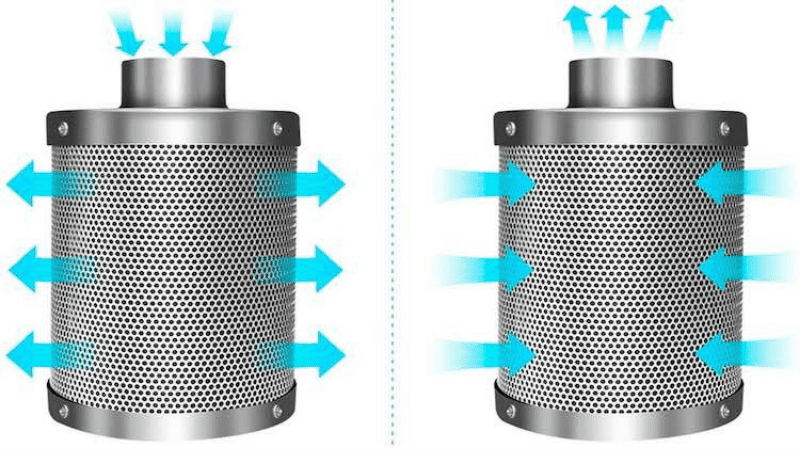
A carbon filter doesn't work in isolation. It connects to an inline fan that pulls air through the filter and pushes it out through ducting. The fan does the mechanical work; the carbon filter handles the chemistry. Your fan's cubic feet per minute (CFM) rating needs to match your filter's capacity — if you pair a high-powered fan with a small filter, you'll overwhelm the carbon bed before it can do its job. If you're still choosing your fan, our roundup of the best exhaust fans for grow tents covers the key specifications to look for and which models perform well at different tent sizes.
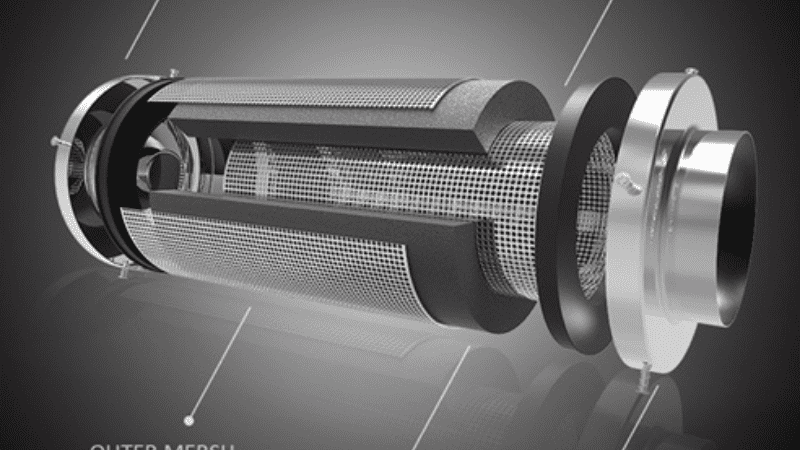
The filter itself can live inside or outside the tent. Inside placement keeps the entire ducting run sealed and limits odor leakage at connection points. Outside placement preserves headroom inside the tent and makes swapping filters easier. Both approaches work. The more important variable is that your setup maintains negative air pressure inside the tent — meaning air is always being pulled out, not pushed in — so any leaks in the tent walls draw in fresh air rather than leaking odors out.
Separating Fact From Fiction on Carbon Filters
Myth: Vegetables Don't Smell Enough to Matter
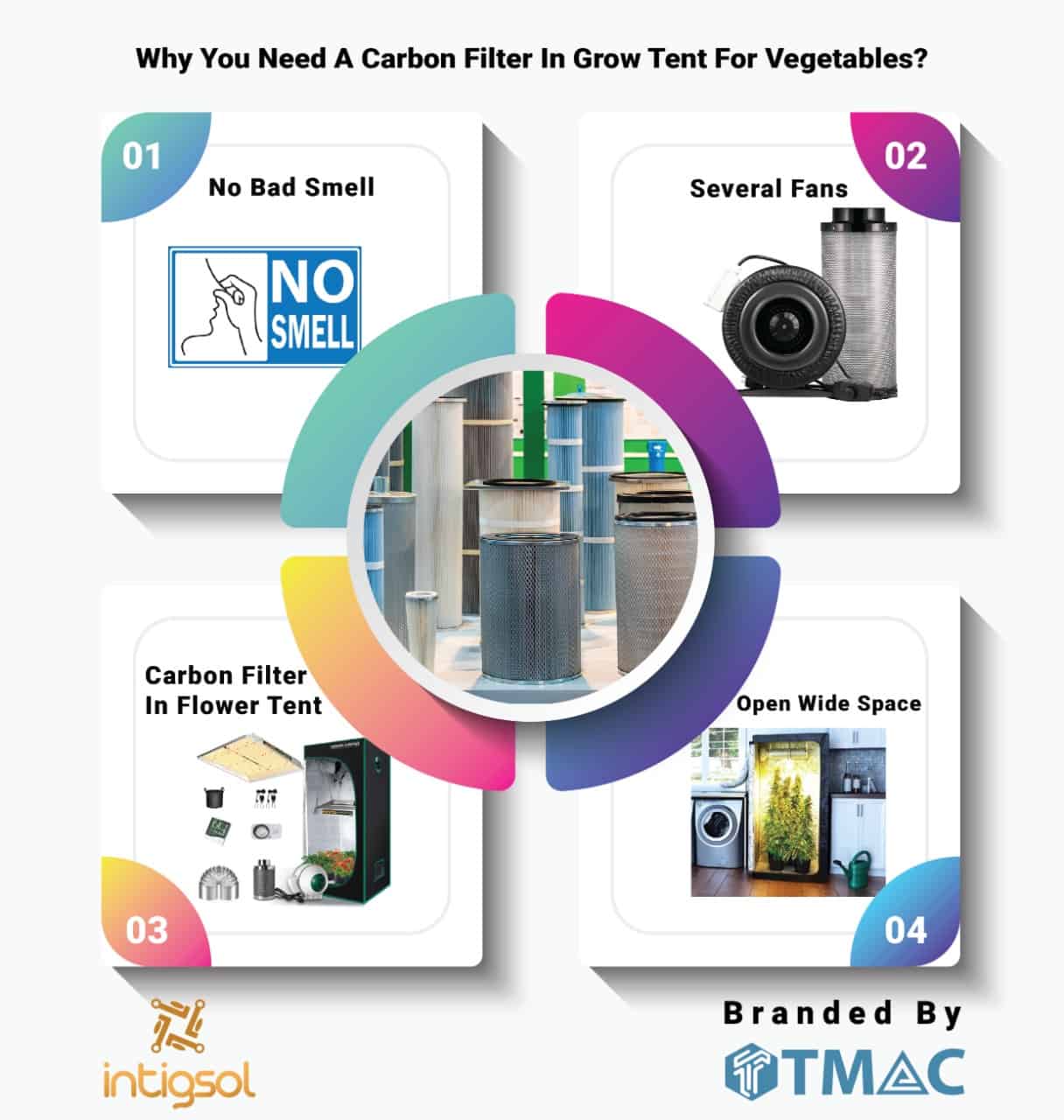
This is the most common argument against carbon filters for vegetable growers, and it contains a kernel of truth. Yes, most vegetables smell far milder than cannabis. But milder doesn't mean odorless, and the comparison sets a misleading bar. Tomato plants in flower produce a distinctive earthy-sweet scent. Peppers — especially hot varieties — release a sharp, spicy aroma that builds noticeably in an enclosed space. Brassicas like kale, broccoli, and Brussels sprouts generate sulfur compounds that become very noticeable after even a few hours of accumulation. If your grow tent is in a bedroom, home office, or shared living space, those smells will find their way out.
The smell may not bother you during a quick check-in, but it compounds over days and weeks. Visitors to your home will notice it before you do — you've simply acclimated. That's worth factoring into your decision.
Myth: Carbon Filters Restrict Airflow and Hurt Plants
A properly sized carbon filter does create a pressure drop, but that's entirely manageable with the right fan. The problem only becomes significant when growers pair a high-powered fan with an undersized filter, forcing the fan to work against resistance it wasn't designed for. The fix is straightforward: match your filter's CFM rating to your fan, or go slightly larger on the filter side. A correctly matched system won't restrict airflow enough to affect plant health. In fact, the consistent air exchange a filtered system promotes is beneficial — plants grow better with steady CO2 replenishment and reduced humidity buildup.
When a Carbon Filter in Your Vegetable Grow Tent Makes Sense
Apartments and Shared Living Spaces
If you're growing in an apartment, condo, or any shared-wall space, a carbon filter is close to mandatory. Even mild vegetable smells can feel invasive when neighbors share ventilation stacks or hallways. Beyond basic courtesy, there's a practical concern: if you're growing anything with broad, leafy foliage and strong smells, it can draw the kind of attention you'd rather avoid. Our post on whether police can detect grow tents covers some of the detection methods used and why odor management matters beyond just neighborly relations.
Strong-Smelling Vegetable Crops
Not all vegetables are equal when it comes to smell intensity. The crops that benefit most from carbon filtration are the ones that generate either sulfur compounds or strong volatile organic compounds during growth. Broccoli, kale, Brussels sprouts, garlic, and onions all fall into the high-benefit category. Tomatoes and hot peppers sit in the moderate range — you'll notice them, but they're not as aggressive. Lettuce, spinach, and most other leafy greens produce very little smell, making them the best candidates for filter-free setups. If your grow list leans heavily toward the high-benefit crops, a filter pays for itself quickly in quality-of-life improvements alone.
Humidity and Temperature Management
If your tent already runs warm or humid, you're likely moving significant volumes of air just to keep those numbers in check. When you're already running a fan for climate reasons, adding a carbon filter is a comparatively small incremental cost — the ventilation infrastructure is already there. For complementary strategies that work alongside filtration, our guide to cheap ways to lower humidity in a grow tent covers several approaches that pair well with an active exhaust system.
The Real Advantages and Drawbacks
What You Gain
Running a carbon filter in your vegetable grow tent delivers several genuine benefits beyond odor control. Consistent air exchange is the biggest secondary advantage — the fan-and-filter system ensures your plants always have access to fresh, CO2-rich air. This directly reduces the risk of mold and mildew, which thrive in the warm, stagnant air that builds up in sealed tents. It also helps regulate temperature more effectively, particularly if you're running powerful grow lights. If you're investing in quality lighting like the options in our guide to the best LED lights for 4×4 grow tents, proper ventilation helps dissipate the heat those lights generate before it stresses your plants.
Pro tip: Run your carbon filter and inline fan 24/7, not just during lights-on periods. Odors accumulate fastest when air isn't moving, and continuous low-speed operation actually extends your filter's usable life compared to high-speed intermittent use.
What You Give Up
No piece of equipment is without trade-offs. A carbon filter adds upfront cost, occupies meaningful space inside or outside the tent, and needs replacement every 12–18 months under continuous operation. The filter body itself is bulky — a 4-inch unit is manageable in most tents, but a 6-inch filter in a small tent can feel intrusive. There's also some noise from the inline fan, though modern fans have gotten significantly quieter. If you're running a very small setup — a 2×2 tent for lettuce, for example — the case for a carbon filter weakens considerably. The costs and complexity start to outweigh the marginal benefit.
Carbon Filter vs. Other Air Control Options
Side-by-Side Comparison
Before committing to a carbon filter, it's worth knowing what else is on the table. Several alternatives exist, each with different effectiveness levels, costs, and suitability for active growing environments. Here's how they compare directly:
| Method | Odor Control | Upfront Cost | Maintenance | Best For |
|---|---|---|---|---|
| Carbon Filter + Inline Fan | Excellent | $75–$150 | Filter replacement every 12–18 months | Any setup; essential for strong-smelling crops |
| Inline Fan Only (No Filter) | None — just moves air | $30–$80 | Very low | Low-odor crops in well-ventilated rooms |
| Ozone Generator | Good | $40–$120 | Low | Empty rooms between grows — NOT with living plants |
| Negative Ion Generator | Moderate | $25–$80 | Very low | Supplemental use only |
| Odor Absorber Gels or Bags | Low | $10–$30 | Replace every 1–3 months | Mild odors, small spaces, temporary use |
One important note on ozone generators: they're genuinely effective at neutralizing odors, but ozone at concentrations high enough to destroy odor molecules is also harmful to plants and to you. Most experienced growers avoid running them in any tent with active plants. They're better suited for treating an empty tent or room between grow cycles, not as an ongoing air management tool.
Sizing Your Carbon Filter
Choosing the right filter size matters more than most beginners expect. The general rule is to match — or slightly exceed — your fan's CFM rating with your filter's rated capacity. Going larger on the filter gives the carbon more contact time with the air, which improves efficiency and extends the filter's life.
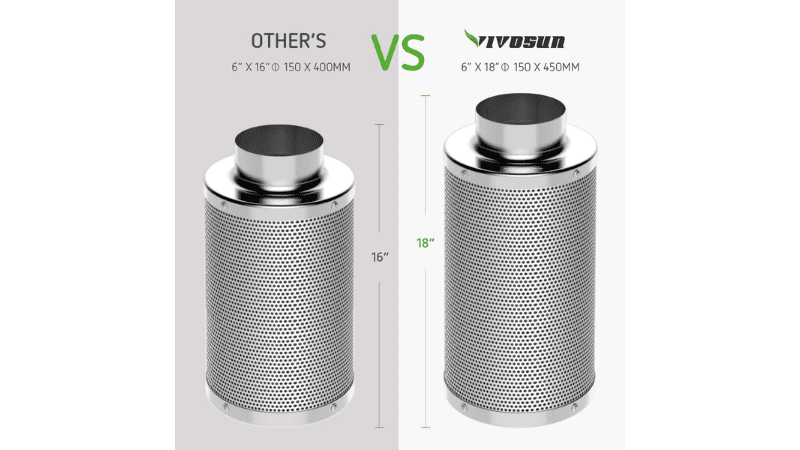
For a standard 4×4×6.5-foot tent (roughly 104 cubic feet), you want to exchange the air every one to three minutes. That means your fan and filter combination should be rated for at least 35–100 CFM at minimum — though most growers in this tent size use a 4-inch or 6-inch setup rated at 200–400 CFM to ensure the filter itself is never the limiting factor in your airflow system.
What You'll Actually Spend
Upfront Costs
Carbon filter setups are one of the more affordable components of a grow tent build, which makes the decision easier for most growers. A basic 4-inch carbon filter runs $25–$45. Pair it with a compatible 4-inch inline fan ($40–$70) and the appropriate ducting and clamps ($10–$20), and your complete setup comes in at $75–$135. Stepping up to a 6-inch system for a larger tent typically runs $120–$200 all in. Brands like AC Infinity, Vivosun, and iPower dominate this space and offer reliable quality at mid-range prices. If you're already budgeting for a climate control unit — our review of the best portable AC units for grow tents is a useful reference — a filtration system is a comparatively small addition to that total.
Long-Term Costs
Replacement filters are where the ongoing cost lives. Most manufacturers recommend swapping the carbon bed every 12–18 months under continuous operation, though this varies with your tent's humidity levels and how hard the filter runs. High-humidity environments saturate the carbon faster, so if you're also battling moisture, you may need to replace the filter closer to the 12-month mark. A replacement filter cartridge costs roughly the same as the original unit — $25–$45 for a 4-inch, $40–$70 for a 6-inch. Add in the small additional electricity draw from running your inline fan continuously, and you're looking at a total annual operating cost of around $35–$60 for a 4-inch setup. For most growers, that's a straightforward expense relative to the benefits delivered.
Frequently Asked Questions
Do vegetables actually smell enough to require a carbon filter?
It depends entirely on what you're growing and where. Leafy greens like lettuce and spinach produce very little odor and often don't need filtration. Strong-smelling crops like broccoli, kale, peppers, onions, and garlic can produce noticeable smells in an enclosed tent — especially in shared or small living spaces where odors accumulate quickly. If you're unsure, err on the side of installing a filter; it's much easier to have one and not need it than to deal with odor complaints after the fact.
Does the carbon filter have to be installed inside the grow tent?
No — carbon filters can be mounted inside or outside the tent. Inside placement keeps the entire air path sealed, which minimizes any odor leakage at connection points. Outside placement preserves headroom and makes it easier to swap filters without working inside the tent. Both approaches are effective as long as your fan-and-filter combination maintains negative air pressure inside the tent, meaning air is always being drawn out rather than leaking out.
How long does a carbon filter last in a vegetable grow tent?
Most carbon filters last between 12 and 18 months under continuous operation. High humidity significantly shortens this lifespan because moisture saturates the carbon bed and reduces its adsorption capacity. If your grow tent runs consistently above 70% relative humidity, plan on replacing the filter closer to the 12-month mark. Running the filter continuously at lower fan speeds, rather than at maximum speed intermittently, also helps extend its life.
Can I run a carbon filter without an inline fan?
Not effectively. Activated carbon requires airflow to work — the air has to physically pass through the carbon bed for adsorption to occur. Without a fan forcing air movement, a carbon filter sitting in your tent does essentially nothing. The fan and filter are a paired system. Some growers use passive filters (small carbon-packed bags) for supplemental odor management, but these are not a substitute for an active fan-and-filter setup in an enclosed grow tent.
What size carbon filter do I need for a 4×4 grow tent?
For a standard 4×4×6.5-foot tent, a 4-inch or 6-inch carbon filter paired with a matching inline fan is the typical recommendation. Look for a fan-and-filter combination rated at 200–400 CFM. This ensures complete air exchange every one to three minutes, which is the standard target for active grow tent ventilation. Going slightly larger on the filter side (pairing a 6-inch filter with a 4-inch fan, for example) is a common strategy to extend the filter's life and improve odor capture efficiency.
Next Steps
- Audit your crop list. Go through every vegetable you plan to grow and categorize each one by odor intensity — high (brassicas, alliums, hot peppers), moderate (tomatoes, herbs), or low (leafy greens). If more than half your crops fall into high or moderate, prioritize getting a carbon filter before your next grow cycle starts.
- Calculate your tent's cubic footage (length × width × height in feet) and use that number to shop for a fan-and-filter combination rated to exchange that volume of air every one to three minutes. Write the number down before you start browsing so you aren't guessing at the retailer.
- Decide on filter placement — inside or outside the tent — based on your available headroom and how often you anticipate swapping filters. If headroom inside your tent is already tight, plan for an external mount and order the appropriate ducting length at the same time.
- Set a filter replacement reminder in your phone or calendar for 12 months from the day you install the filter. Carbon filters degrade gradually, so you won't notice the decline until odors start escaping — a reminder removes that guesswork entirely.
- Check your tent's existing seals and zipper integrity before installing a carbon filter. A filter works by maintaining negative pressure inside the tent, so any significant gaps or leaks will allow unfiltered air to escape regardless of how good your filter is. Seal problem areas with grow tent tape before running your system.


About Lee Safin
Lee Safin was born near Sacramento, California on a prune growing farm. His parents were immigrants from Russia who had fled the Bolshevik Revolution. They were determined to give their children a better life than they had known. Education was the key for Lee and his siblings, so they could make their own way in the world. Lee attended five universities, where he studied plant sciences and soil technologies. He also has many years of experience in the U.S. Department of Agriculture as a commercial fertilizer formulator.
Get FREE Gardening Gifts now. Or latest free toolsets from our best collections.
Disable Ad block to get all the secrets. Once done, hit any button below