Can Police Detect a 600-Watt Grow Light? Heat Signature Detection Explained
by Lee Safin
A friend once called me in a panic after his neighbor commented on unusual warmth radiating from a shared wall. He'd been running a 600-watt HPS light through winter to grow tomatoes and hadn't given a second thought to heat management. The experience raised a question worth answering directly: can police detect a 600 watt grow light? Yes — under certain conditions they can. Understanding the science behind thermal detection is the foundation of smart, responsible indoor growing. For more indoor gardening guidance, browse our gardening tips section.

The issue isn't the light itself — it's the heat it generates. A 600-watt fixture running 12 to 18 hours a day produces a substantial thermal load, and that heat has to go somewhere. Whether you're cultivating tomatoes, herbs, or tropical houseplants, poor heat management creates problems on two fronts: plant stress and a detectable thermal signature that can attract unwanted attention.
This guide breaks down exactly how detection works, where beginners go wrong versus what experienced growers do differently, and the practical steps you can take to manage heat effectively in any indoor grow space.
Contents
Can Police Detect a 600 Watt Grow Light Using Thermal Cameras?
Yes — and the two most reliable methods are forward-looking infrared (FLIR) cameras and utility bill analysis. Neither requires physically entering your property, which makes both methods legally accessible and routinely used.
Infrared Cameras and What They See
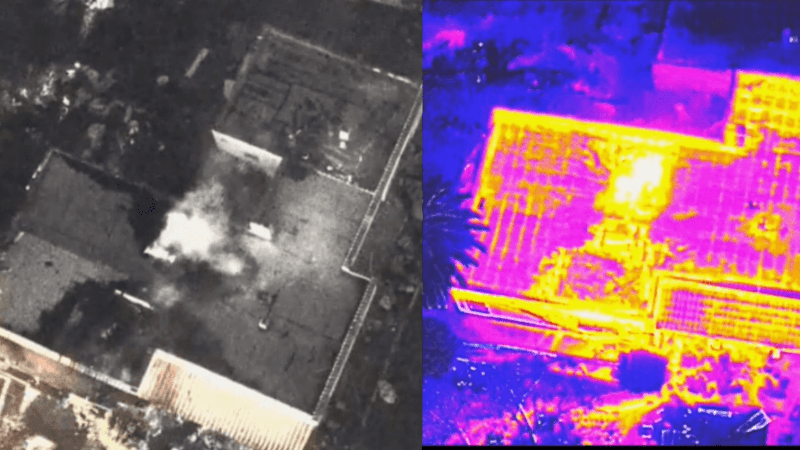
FLIR cameras detect infrared radiation — the heat emitted by objects — not visible light. A 600-watt HID fixture running for 18 hours generates enough thermal output to create a measurable hotspot on your roof, ceiling, or exterior walls. When police fly a thermal-equipped drone or helicopter over a neighborhood, that hotspot stands out clearly against cooler surroundings, particularly on cold nights when the temperature differential is greatest.
According to Wikipedia's entry on thermographic cameras, modern FLIR units can detect temperature differences as small as 0.1°C — precise enough to distinguish a grow room from adjacent rooms in the same house. Blacking out your windows does nothing here. You're not hiding visible light, you're trying to manage heat transfer through your building's entire envelope — walls, ceiling, and all.
It's worth knowing that aerial thermal surveillance in the U.S. typically requires a warrant under the Kyllo v. United States Supreme Court ruling. But the detection capability itself is real and widely deployed, which makes active heat management a practical necessity for any serious indoor grower — not just a legal precaution.
Utility Bill Analysis
The second detection method is far more mundane: your electricity usage. A 600-watt light running 18 hours a day draws roughly 10.8 kWh daily — approximately 324 kWh per month for the light alone. Add exhaust fans, climate control equipment, and a water pump, and total consumption can jump by 400 to 600 kWh per month compared to a similar household without a grow space. Utility companies can flag accounts showing this kind of spike, especially when it doesn't align with seasonal patterns like heating or air conditioning demand.
The Fastest Ways to Cut Your Heat Signature Right Now
You don't need to rebuild your grow space to reduce your thermal footprint. A few targeted upgrades deliver immediate, measurable results without major expense or downtime.
Ventilation as Your First Line of Defense
A properly sized exhaust system pulls hot air out before it can saturate your walls and ceiling. This is the single highest-impact step you can take. Choosing the right exhaust fan for your grow tent is critical — undersized fans let heat accumulate, while correctly sized units maintain negative pressure and prevent thermal buildup from the start.
A functional ventilation setup should include:
- An inline fan sized to exchange your tent's air volume every 1 to 3 minutes
- Carbon filtration on the exhaust path to seal the airflow system
- Rigid or semi-rigid ducting routed away from exterior walls
- A fan speed controller to reduce power consumption during lights-off periods
Pro tip: Run your exhaust fan 24/7, not just during the light cycle. Heat accumulates between cycles too, and continuous airflow keeps temperatures stable and your thermal footprint consistently smaller.
Insulation That Actually Makes a Difference
Thermal mass slows heat transfer through your walls and ceiling. Even basic 2-inch foam board panels on interior surfaces facing exterior walls reduce the amount of heat that migrates outward. If you're using a quality grow tent, the reflective interior liner already contains much of the radiant heat — but you still need active exhaust to remove it, not simply reflect it back at your plants. Insulation and ventilation work together; neither is effective without the other.
First-Timer Mistakes vs. Seasoned Grower Strategies
Common Beginner Errors
Most new indoor growers underestimate how much heat a 600-watt light produces. The most frequent mistakes that lead to both detection exposure and poor plant performance are predictable — and entirely avoidable:
- Running HID lights without an air-cooled reflector hood
- Placing the grow space directly against an exterior wall with no insulation buffer
- Skipping temperature monitoring entirely and flying blind on heat levels
- Leaving gaps around ducting penetrations where hot air escapes through walls
- Using a single oscillating fan rather than a dedicated exhaust system
These aren't just detection problems — they're plant health problems. High ambient temperatures stress plants, reduce yields, and leave your crop vulnerable to pest and disease pressure. If heat stress has already opened the door to insect infestations, check our guide to the best insecticides for indoor plants before the problem escalates.
What Advanced Growers Do Differently
Warning: Switching to LED does not eliminate your heat signature — it reduces it. A 600-watt LED still generates significant heat that demands active thermal management, not passive ventilation alone.
Experienced growers treat thermal management as a complete system, not an afterthought. The comparison below shows how the same challenges get handled at different skill levels:
| Challenge | Beginner Approach | Advanced Approach |
|---|---|---|
| Ventilation | Box fan or oscillating fan | Inline carbon-filtered exhaust with speed controller |
| Light type | HPS or HID without air-cooling | Air-cooled HID or high-efficiency LED fixture |
| Heat monitoring | None or occasional manual checks | Digital min/max thermometer with humidity sensor |
| Wall insulation | None | 2-inch foam board on exterior-facing surfaces |
| Active cooling | Open door or window | Portable AC unit for consistent temperature control |
| Power management | Always-on fixtures | Smart plugs with usage tracking and cycle automation |
A dedicated portable AC for your grow tent decouples room temperature from light-cycle heat spikes. That consistency keeps your thermal profile flat and your plants performing at their peak — two outcomes that reinforce each other directly.
When a 600-Watt Setup Actually Gets Flagged
Thermal Imaging in Practice
A 600-watt grow setup registers most clearly in aerial thermal surveys under three specific conditions:
- Poor insulation allows heat to migrate freely through the roof or exterior walls
- The grow room is located in an attic or loft with minimal thermal mass above it
- The light cycle runs during cold nighttime hours, maximizing the temperature contrast between the structure and the outside air
Cold nights are your highest-exposure window. The greater the differential between your grow space and the outdoor temperature, the more distinctly a hotspot registers on a thermal camera. A well-insulated, actively ventilated grow room inside a heated house is far harder to distinguish from ambient structural temperature than an uninsulated attic conversion with a bare bulb running into a cold roof deck.
Utility Anomaly Patterns
Utility anomaly flags tend to activate when consumption increases 40 to 60 percent or more without a clear seasonal explanation. A single 600-watt light won't spike your bill dramatically on its own — but combine it with exhaust fans, a climate control unit, and supplemental lighting, and the numbers accumulate fast. Running consistently high usage twelve months a year, rather than just summer or winter peaks, is exactly the pattern that draws attention.
Switching to a more efficient fixture cuts wattage consumption by 30 to 50 percent for equivalent output. If you're unsure whether supplemental lighting is even necessary for your specific crops, our overview of whether grow lights are actually necessary for indoor plants is a useful starting point before you invest in additional equipment.
Keeping Your Thermal Footprint Low Over Time
Routine Equipment Checks
Heat management is not a set-it-and-forget-it task. Build a monthly inspection into your grow room schedule and treat it as non-negotiable:
- Inspect all ducting connections for gaps, disconnections, or compression kinks that restrict airflow
- Check inline fan bearings — worn fans run hotter and move less air
- Verify that speed controllers are functioning correctly and holding their set points
- Review your min/max thermometer log for unexpected temperature spikes during lights-on or lights-off
- Check reflector hoods and light seals for damage that could direct excess heat toward walls or ceilings
Just as you'd routinely inspect your pruning shears for dull blades before a major garden task, your grow room equipment deserves the same scheduled attention. Deferred maintenance always costs more in the end — in yield losses, in rising energy bills, and in avoidable risk.
Upgrading as Your Setup Grows
Adding a second 600-watt light doesn't just double your heat output — it can overwhelm your existing ventilation capacity entirely. Plan your exhaust and insulation upgrades before you scale your lighting, not after the fact. The same logic applies to climate control: a system sized for one light will struggle to keep pace with two, and that failure shows up first as plant stress, then as a much more visible thermal signature. Scale your infrastructure in step with your lighting, and you stay ahead of both problems at once.
Frequently Asked Questions
Can police detect a 600 watt grow light without entering your property?
Yes. Police can use FLIR thermal cameras mounted on aircraft or drones to detect heat signatures radiating through your roof and walls. They can also request utility records showing unusual electricity consumption — both methods are available without setting foot on your property.
What is the most common way indoor grow setups get detected?
Utility bill anomalies are the most common initial trigger. A consistent, unexplained spike in electricity usage — particularly one that doesn't align with seasonal heating or cooling demand — can prompt closer scrutiny from utility companies and, in some cases, law enforcement.
Does switching to LED eliminate the heat signature from a 600-watt grow light?
No, but it significantly reduces it. A 600-watt LED produces less heat per watt than an HID fixture and converts more energy into usable light. You still need active ventilation and thermal management — LED simply gives you a smaller problem to manage from the start.
How much does a 600-watt grow light add to a monthly electricity bill?
Running at 18 hours per day, a 600-watt light consumes roughly 324 kWh per month. At an average rate of $0.13 per kWh, that's approximately $42 per month for the light alone — before factoring in fans, AC, irrigation, or any other grow room equipment.
Do thermal cameras require a warrant to use for home surveillance?
In the United States, yes. The Supreme Court's Kyllo v. United States ruling established that using thermal imaging technology to scan a private home constitutes a search under the Fourth Amendment and requires a warrant. Legal requirements vary by jurisdiction outside the U.S.
What is the single most effective step to reduce heat detection risk?
Install a properly sized, carbon-filtered inline exhaust system. Active ventilation removes heat from your grow space before it can saturate walls and ceilings — which is the primary pathway through which thermal cameras identify indoor grow operations. Everything else builds on this foundation.
Final Thoughts
Knowing whether police can detect a 600 watt grow light comes down to understanding heat physics — and once you do, managing your grow space responsibly becomes straightforward. Start with a properly sized exhaust system, add insulation where your structure is weakest, and upgrade to an efficient LED fixture when your budget allows. Head over to our full range of gardening tips to keep building on what you've learned here and take your indoor growing to the next level.


About Lee Safin
Lee Safin was born near Sacramento, California on a prune growing farm. His parents were immigrants from Russia who had fled the Bolshevik Revolution. They were determined to give their children a better life than they had known. Education was the key for Lee and his siblings, so they could make their own way in the world. Lee attended five universities, where he studied plant sciences and soil technologies. He also has many years of experience in the U.S. Department of Agriculture as a commercial fertilizer formulator.
Get FREE Gardening Gifts now. Or latest free toolsets from our best collections.
Disable Ad block to get all the secrets. Once done, hit any button below