A lawnmower that revs up and down instead of running at a steady speed is almost always dealing with a fuel or air delivery problem — and the good news is that the lawnmower revs up and down fix is something most homeowners can handle themselves with basic tools and a little patience. That rhythmic hunting and surging happens when the engine can't sustain a consistent fuel-air mixture, so it oscillates between running too rich and too lean. Whether you see it at idle, under load, or both, the cause is almost always traceable. For broader lawn care guidance alongside equipment troubleshooting, the gardening tips section on this blog is a good resource to bookmark.

The technical name for this problem is idle surge or engine hunting. Your engine speeds up, slows down, speeds up again — on a repeating loop. It can feel alarming, but in most cases it points to a carburetor clogged with varnish deposits, a restricted fuel supply, a dirty air filter, or a governor issue. Understanding which one you're dealing with is the key to a clean, efficient repair.
This guide walks you through the main causes of surging, a step-by-step repair sequence, mistakes that commonly make things worse, an honest look at DIY versus professional repair, and a few myths worth clearing up. By the end, you'll know exactly where to start.
Contents
What's Actually Making Your Lawnmower Rev Up and Down
Engine surging has a consistent signature: RPMs climb, then drop, then climb again in a predictable cycle. The engine is hunting for the correct mixture because something in the delivery system is preventing it from finding equilibrium. Here are the primary causes to investigate, starting with the most common.

Carburetor Blockages
The carburetor is where most surge problems originate. Inside it are small passages — the idle jet, main jet, and emulsion tube — that can become clogged with varnish deposits left behind when old fuel evaporates. When these passages are partially blocked, the engine alternates between getting too much and too little fuel, producing the classic hunting pattern. A dirty carburetor is the leading cause of idle surge in small engines by a significant margin.
If you've also noticed your lawnmower carburetor leaking gas, that can compound the surge — a float valve that isn't seating properly floods the bowl and makes the mixture inconsistent. Both issues often need to be addressed at the same time.
Fuel Supply Problems
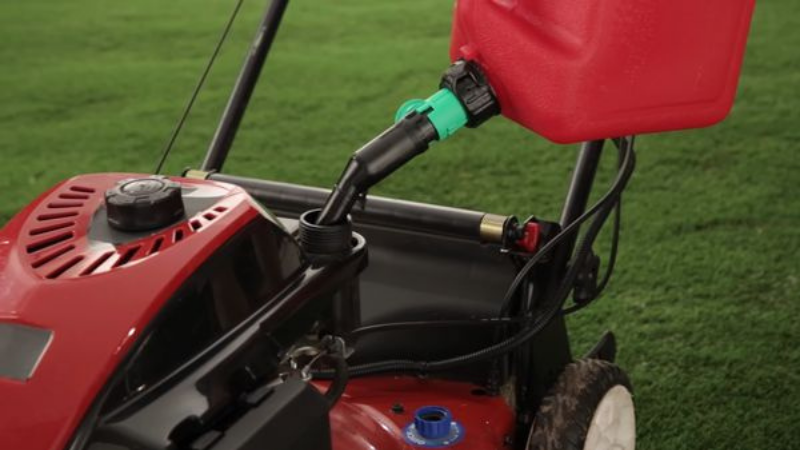
If the carburetor looks clean, check what's feeding it. A clogged fuel filter, a kinked fuel line, or a gas cap with a blocked vent can all restrict fuel delivery. When the engine demands more fuel than the system can supply, it bogs and surges rather than cutting out cleanly.
Pro tip: If the surging disappears when you loosen the gas cap slightly, the cap's vent is clogged — a two-dollar replacement that many people overlook entirely.
Old or contaminated fuel is another significant factor. Gasoline degrades quickly, and ethanol-blended fuel absorbs moisture over time, which separates out and disrupts combustion. Our lawn mower gas guide covers fuel types, ethanol content, and storage practices in detail.
Air Filter and Mixture Screw
A partially clogged air filter restricts airflow and leans out the mixture, which can produce the same surging pattern as a dirty carburetor. Pull the filter out and hold it to the light — if it's visibly gray, oil-soaked, or packed with debris, replace it. It's one of the cheapest and quickest checks on the list.
The idle mixture screw on the carburetor controls how rich or lean the engine runs at low RPM. If it's been bumped out of adjustment by vibration — or if a previous owner adjusted it incorrectly — the idle circuit will deliver the wrong ratio and cause surging. This can often be resolved with minor adjustment alone.
How to Fix Idle Surge: A Step-by-Step Repair Sequence
Work through these steps in order. Start with the least invasive and cheapest fixes first. You'll often find the problem before you ever need to touch the carburetor.

Step 1 — Fresh Fuel and Fuel Filter
- Drain the tank completely — don't just top it off with fresh fuel
- Refill with fresh gasoline; use fuel with 10% ethanol or less if available
- Replace the inline fuel filter if it hasn't been changed in the past season
- Inspect the fuel line for cracks, kinks, or softening at the ends
- Try loosening the gas cap and starting — if it runs smoothly, replace the cap
Step 2 — Air Filter and Spark Plug
- Remove and inspect the air filter; replace if dirty or oil-coated
- Pull the spark plug and look for heavy carbon deposits, fouling, or a wet electrode
- A wet plug may signal flooding — see why your lawn mower spark plug is wet for more
- Install a new plug gapped to the manufacturer's specification (typically 0.030")
Step 3 — Carburetor Service
If fresh fuel, a new filter, a clean air filter, and a new plug don't resolve the surge, you're looking at the carburetor. Cleaning it yourself is absolutely manageable — it just requires patience and attention to small parts.
- Disconnect the throttle linkage, fuel line, and mounting bolts; remove the carburetor
- Spray all passages thoroughly with carburetor cleaner — focus on the idle jet and main jet
- Use a fine wire or carburetor needle tool to open any blocked ports
- If cleaning doesn't hold, a rebuild kit (usually $5–$15) replaces the float, needle valve, and gaskets
- Reinstall and set the idle mixture screw to factory baseline — commonly 1 to 1.5 turns out from lightly seated
Warning: Never force the idle mixture screw — it's soft brass and very easy to damage. A ruined seat turns a simple cleaning job into a full carburetor replacement.
Step 4 — Governor and Ignition Check
The governor maintains consistent engine speed by mechanically or pneumatically regulating the throttle. If its spring is stretched, misrouted, or broken, it can't hold a steady RPM — which produces surge that cleaning won't fix. Inspect the governor linkage and spring for visible wear, and compare what you see to the parts diagram for your specific engine model.
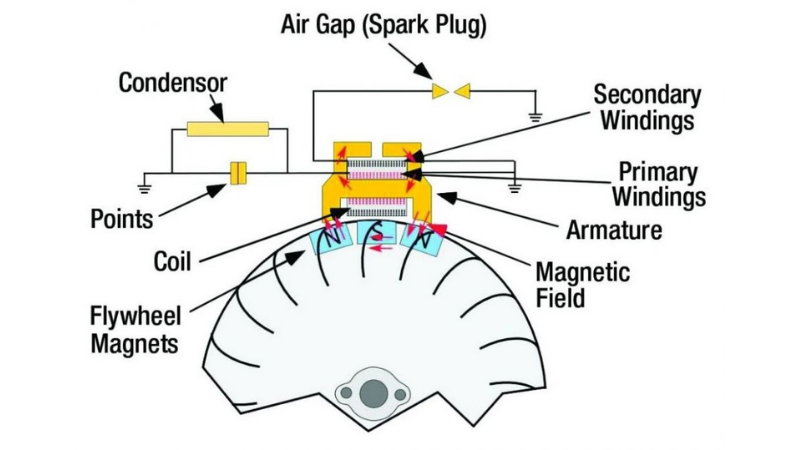
A weakening ignition coil is less common but worth checking if all else fails. A degraded coil can produce an inconsistent spark that mimics carburetor surge. Check the coil air gap (typically 0.010") and test spark strength with an inline tester. If the mower is also producing unusual sounds, the article on why your lawnmower is making loud noise can help you connect the symptoms.
| Component | Surge Symptom | DIY Friendly? | Typical Part Cost |
|---|---|---|---|
| Carburetor (dirty jets) | Surge at idle or part throttle | Yes | $5–$15 (cleaner + kit) |
| Fuel filter | Surge under load, fuel starvation | Yes | $5–$10 |
| Air filter | Lean surge, possible black smoke | Yes | $5–$12 |
| Gas cap vent | Surge clears when cap loosened | Yes | $3–$8 |
| Governor spring | Uncontrolled RPM swings at all speeds | Intermediate | $5–$20 |
| Ignition coil | Surge combined with misfire | Intermediate | $15–$40 |
| Carburetor (worn body) | Surge after cleaning, air leaks | Partial | $20–$60 |
Mistakes That Make the Surging Worse
Replacing Parts Without Diagnosing
The most expensive mistake is swapping parts at random without confirming the cause. People replace carburetors, spark plugs, and fuel filters in sequence without isolating which one was the actual problem — and end up spending three times what a targeted repair would cost. Always start with the simplest, cheapest check first: fuel freshness, gas cap vent, air filter. These cost almost nothing and solve a surprising number of cases.
If your mower has been cutting out entirely in addition to surging, those symptoms may share a root cause. The guide on why your lawnmower is cutting out covers vapor lock and fuel delivery issues that frequently overlap with surge behavior.
Over-Adjusting the Idle Mixture Screw
The mixture screw is sensitive. Turning it without a reference point makes things worse rather than better. Always return to a factory baseline first — lightly seat the screw (don't overtighten), then back it out the number of turns specified for your carburetor model. From there, make fine adjustments in quarter-turn increments and let the engine stabilize for 30 seconds between each change.
Tip: If you've lost track of the original screw position, lightly seat it and start at 1.5 turns out — that's close enough to factory on most small-engine carburetors to get running again.
Ignoring Fuel Quality
Running last season's gasoline is one of the most common reasons mowers start surging in spring. Old fuel degrades, leaves behind gum and varnish, and — especially with ethanol blends — absorbs atmospheric moisture. Drain the tank completely at the end of each cutting season, or add a quality fuel stabilizer if the mower will sit for more than a month. This single habit prevents a significant portion of the surge problems people deal with every year.
If you're also having trouble getting your mower started before you can even diagnose the surge, the article on how to start a lawn mower without a primer bulb covers priming techniques that may help you get the engine running enough to assess what's happening.
DIY Fix or Professional Repair? Weighing Your Options
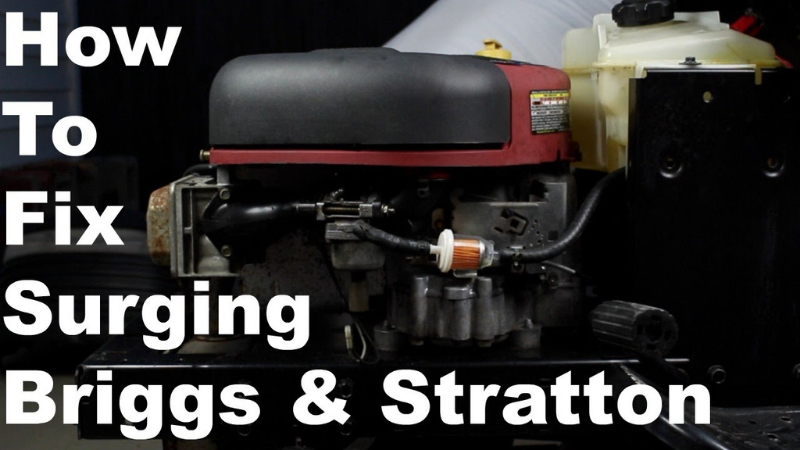
Most idle surge problems are within reach of a careful DIYer. But understanding where the line is — between a home fix and a shop visit — can save you real time and frustration.
When DIY Makes Sense
- The mower is relatively new and has been maintained reasonably well
- You can identify a single clear cause — dirty air filter, stale fuel, or a blocked idle jet
- You're comfortable with basic disassembly and have a clean workspace
- Replacement parts for your engine model are readily available and inexpensive
The cost advantage of DIY is real. A carburetor rebuild kit runs $5–$15. A repair shop will charge $60–$120 in labor just to clean a carburetor, before parts. For a straightforward diagnosis, doing it yourself is almost always the better financial choice — and you'll understand your equipment better for the next time.
When to Call a Professional
- The surge continues after cleaning the carburetor, replacing the fuel filter, air filter, and spark plug
- You've found internal engine damage — scored cylinder walls, a bent governor shaft, or crankshaft seal failure
- You're working on a riding mower with a twin-cylinder engine, where governor systems are significantly more complex
- You're uncomfortable working around small engine fuel systems or carburetors with many small components
According to the Wikipedia overview of carburetor design, the idle and main circuits function almost independently — which means surge at idle specifically often points to the idle jet, not the main jet or float. Knowing that distinction helps you target your cleaning efforts and communicate more accurately with a technician if you do need outside help.
Common Misconceptions About Engine Surging
Myth: Surging Means the Engine Is About to Fail
Engine surging feels alarming — the mower sounds like it can't decide whether to run or quit. But in most cases it's a maintenance issue, not a sign of imminent mechanical failure. An engine can hunt and surge for a long time without sustaining serious internal damage. That said, don't ignore it indefinitely; running lean puts extra heat stress on engine components over time. Diagnose it, fix it, and move on.
Myth: Premium Gasoline Will Fix the Surge
Octane rating controls resistance to knock, not fuel delivery quality or carburetor cleanliness. Premium fuel does nothing to clean a varnished idle jet or correct a lean mixture. Small engines designed for regular fuel run no better on premium — you're spending more for zero benefit. Fresh regular gasoline stored properly is the correct answer, not higher octane.
Myth: You Need to Replace the Entire Carburetor
This is the most common and most costly myth. The vast majority of carburetors that cause surging can be cleaned and rebuilt for under $15. Full replacement is only necessary when the carburetor body is cracked, the throttle shaft is worn to the point of allowing an uncontrolled air leak, or the passages are too corroded to open. Before spending $40–$80 on a new carb, try a thorough cleaning with a rebuild kit. The success rate is high.
If you've noticed a clicking sound alongside the surge when you try to start or run the mower, that's a separate problem worth diagnosing on its own — see why your lawnmower is clicking for the common causes and fixes.
Frequently Asked Questions
Why does my lawnmower rev up and down only when it's at idle?
Idle-specific surging almost always points to the idle circuit inside the carburetor — a small passage that operates separately from the main jet. When that circuit is partially blocked with varnish, the engine can't sustain a steady mixture at low RPM. Cleaning that specific passage with carburetor cleaner and a fine wire typically resolves it without replacing anything.
Can I fix carburetor surge without removing the carburetor?
Sometimes. If the surge is mild and the carburetor is accessible, spraying carburetor cleaner directly into the air intake while the engine is running can loosen light deposits. More often, though, you'll need to remove the carburetor to properly clean the idle jet and main jet passages. Removing it isn't difficult and gives you full access to the problem areas.
How do I know if the governor is causing the surge and not the carburetor?
Governor-related surge tends to be more erratic and less rhythmic than carburetor surge. It also often persists even after cleaning the carburetor and replacing the fuel system components. Inspect the governor linkage and spring for visible damage — a stretched or disconnected spring is usually easy to spot. If the surge disappears when you hold the throttle linkage manually at a fixed position, the governor system is likely the culprit.
Can a dirty or worn spark plug cause engine surging?
A fouled or weak spark plug can contribute to misfiring that resembles surging, but true idle surge is usually a fuel and air delivery problem rather than an ignition one. That said, replacing the plug as part of your diagnostic process is worthwhile — it's inexpensive and rules out a variable. If the plug is wet with fuel, flooding is occurring and that should be addressed first.
Final Thoughts
If your lawnmower is hunting and surging, start with the basics before spending money on parts: drain the old fuel, inspect the gas cap vent, swap the air filter, and clean the carburetor's idle circuit. Those four steps resolve the problem in the majority of cases. Work through the repair sequence in this guide, check the carburetor for fuel leaks while you have it off, and you'll likely have a smooth-running engine again without a shop visit. Take that first step today — fresh fuel costs almost nothing, and it's the most common fix people overlook.


About Lee Safin
Lee Safin was born near Sacramento, California on a prune growing farm. His parents were immigrants from Russia who had fled the Bolshevik Revolution. They were determined to give their children a better life than they had known. Education was the key for Lee and his siblings, so they could make their own way in the world. Lee attended five universities, where he studied plant sciences and soil technologies. He also has many years of experience in the U.S. Department of Agriculture as a commercial fertilizer formulator.
Get FREE Gardening Gifts now. Or latest free toolsets from our best collections.
Disable Ad block to get all the secrets. Once done, hit any button below