You cannot grow asparagus from stem cuttings — and that's not a minor caveat, it's the plant's biology. Asparagus stalks and fern fronds don't form adventitious roots when severed from the plant, so inserting a cut piece into soil produces nothing viable. That said, if your goal is to grow asparagus from cuttings of an existing plant, crown division is the one method that actually works: splitting a mature crown's root mass into sections that each carry growth buds and sufficient root tissue to establish independently. For more vegetable-growing guides like this one, visit our gardening tips section.
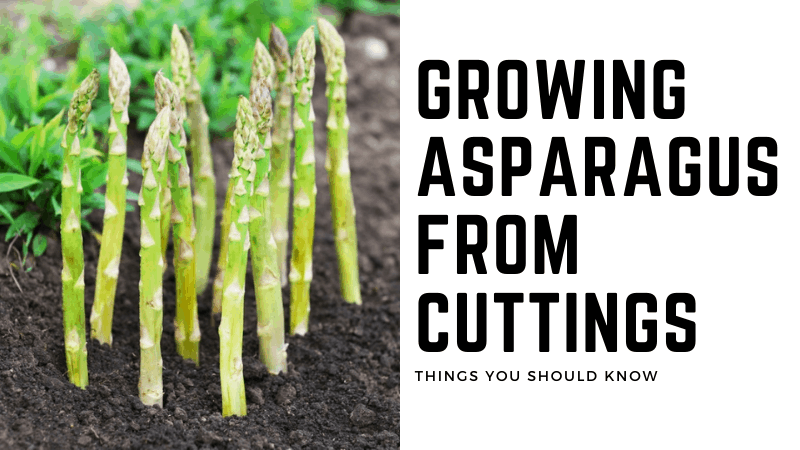
Asparagus officinalis is a perennial that produces reliably for 15 to 25 years from a single planting. Your propagation decision carries more weight here than with almost any other vegetable — a wrong call can delay your first harvest by a full growing season or more. Getting the fundamentals right at the start is the difference between a productive bed for two decades and a frustrating one.
Three paths exist for establishing asparagus: planting bare-root crowns, growing from seed, and dividing established crowns. Each carries a distinct cost, timeline, and success rate. This guide compares all three with enough specificity to help you decide confidently. If you're newer to vegetable gardening in general, the soil preparation and bed setup principles in our 32 gardening tips for beginners guide apply directly to asparagus.
Contents
- Why You Can't Grow Asparagus from Cuttings — And What You Can Do Instead
- Crowns, Seeds, and Division: A Side-by-Side Comparison
- The Real Trade-offs of Each Propagation Method
- When Crown Division Works — and When to Walk Away
- Breaking Down the True Cost of Propagating Asparagus
- Mistakes That Set Your Asparagus Bed Back by Years
- Frequently Asked Questions
- Key Takeaways
Why You Can't Grow Asparagus from Cuttings — And What You Can Do Instead
The Biology Behind Asparagus Growth
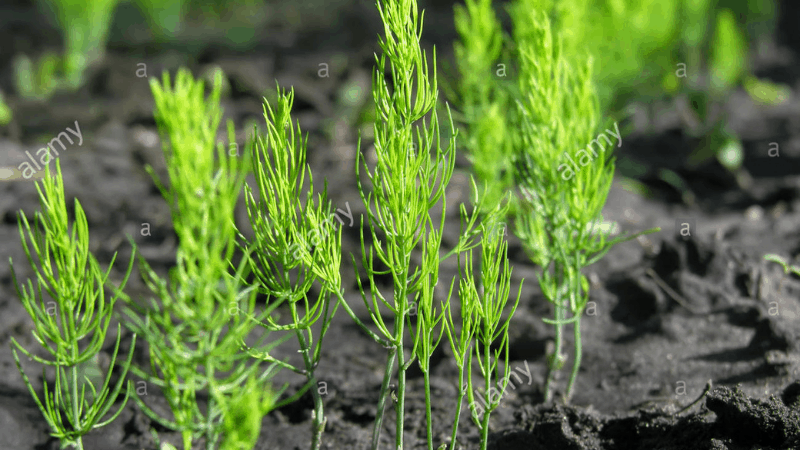
Asparagus is a crown-based perennial, not a stem-rooting plant. The crown — a dense mass of fleshy storage roots and rhizomes — is the engine of the entire plant. Every spring spear you eat emerges directly from that crown. The feathery fern you see through summer exists only to photosynthesize and push energy back down into the roots for the following season's growth.
This structure explains precisely why stem cuttings fail. A severed stalk or frond has no meristematic tissue capable of generating new roots. It's not analogous to a rose or a willow, where rooting hormone and moisture coax roots from a node. With asparagus, you need the crown tissue itself — the storage roots and attached growth points — for any vegetative propagation to succeed.
Asparagus does produce viable seed inside its small red berries, and it can be multiplied through crown division. Those are the only two routes worth your time. Understanding this upfront saves you weeks of failed experiments and at least one growing season.
What "Cuttings" Can Actually Mean for Asparagus
When gardeners ask how to grow asparagus from cuttings, they usually mean one of three things:
- Stem cuttings — cutting a spear or fern frond and attempting to root it. This does not work, full stop.
- Crown division — splitting a mature crown (3+ years old) into sections, each carrying storage roots and buds. This works well when done correctly at the right time of year.
- Offset separation — removing small satellite crowns that occasionally form at the perimeter of an established plant. This works but produces fewer divisions than full crown splitting.
Crown division is the closest functional equivalent to what most growers mean by "taking a cutting." Treat it as the standard method when you want to multiply an existing planting without buying new stock. Done in early spring before spears emerge, it gives each division the full growing season to establish its root system before winter dormancy sets in.
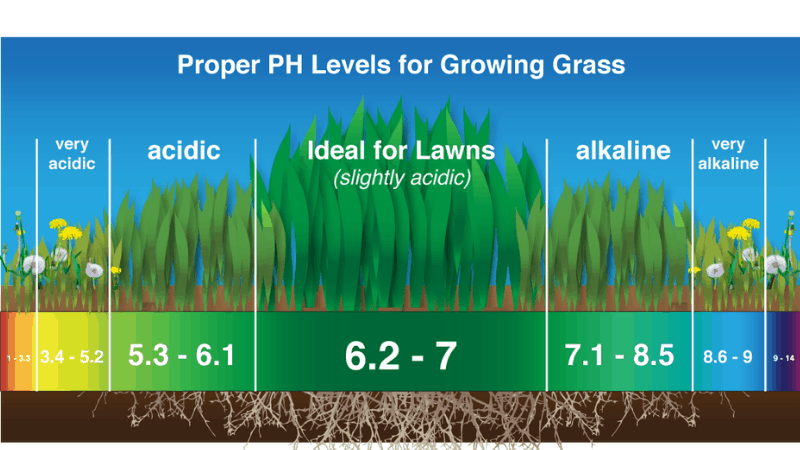
Pro tip: Asparagus demands a soil pH of 6.5 to 7.0 — test your bed before planting any crown or division. A pH correction with lime or sulfur costs almost nothing and takes minutes; correcting it after an established bed is in place means disturbing roots you've spent years growing.
Crowns, Seeds, and Division: A Side-by-Side Comparison
The Three Methods at a Glance
Before committing to any approach, compare the core variables. Time to first harvest and establishment success rate are the two numbers that matter most for a long-lived crop like asparagus — every season you delay eating is a season you can't recover.
| Method | Time to First Harvest | Approx. Cost Per Plant | Success Rate | Best For |
|---|---|---|---|---|
| Bare-Root Crowns (1-year) | 2 years after planting | $1–$3 each | Very high | New beds, most home growers |
| Growing from Seed | 3–4 years after sowing | $0.10–$0.30 per seed | Moderate (60–75%) | Large-scale, budget-first plantings |
| Crown Division | 1–2 years after division | Near $0 (from your own plant) | High (when done correctly) | Expanding an existing bed for free |
| Stem Cuttings | Never — does not work | N/A | 0% | Not applicable |
What Experienced Growers Actually Use
Commercial asparagus operations plant bare-root crowns because they're predictable, fast to establish, and the failure rate is low. Home gardeners who want to expand an existing bed without spending money use crown division — it's essentially free propagation once you have a mature plant producing reliably. Seed growing suits large-scale plantings where per-unit cost matters more than speed to harvest.
The practical takeaway: buy crowns for your first bed, divide for expansion. Seeds are for the patient grower or the large-acreage operation. There is no scenario in which stem cuttings belong on this list.
The Real Trade-offs of Each Propagation Method
Pros and Cons of Crown Planting
Bare-root crowns are the industry standard for good reason. A healthy 1-year crown already carries an established root system and multiple buds, giving it a meaningful head start over anything you'd start from seed or division.
- Pros: Fastest path to harvest (2 years from planting), predictable yield, widely available from nurseries and online suppliers, minimal growing skill required at setup
- Cons: $1–$3 per crown adds up quickly — a 25-plant family bed costs $25–$75 in crowns alone; limited to whatever cultivars your supplier stocks; crowns can desiccate in transit if shipping conditions are poor
When you receive crowns, inspect every single one before planting. Healthy crowns are firm, pale tan to cream in color, and have multiple visible growing points. Shriveled, mushy, or moldy crowns should be discarded. Don't plant them hoping for the best — it won't pay off.
Pros and Cons of Growing from Seed
Seed propagation offers the widest cultivar selection and the lowest per-plant cost, but you pay for those advantages in time. Most asparagus grown from seed takes 3 to 4 years from sowing to first harvest — a commitment that many home gardeners underestimate at the outset.
- Pros: Cheapest per-plant cost by a significant margin; access to rare and all-male hybrid varieties not sold as crowns; full control over growing conditions from germination forward
- Cons: Germination is slow (2–4 weeks at 70–80°F); mixed male/female plants reduce long-term productivity; the 3–4 year wait before harvesting tests most gardeners' patience
One critical note: all-male cultivars like Jersey Knight and Jersey Giant significantly outperform mixed-sex seed-grown beds because male plants don't divert energy into seed production. If you grow from seed, sourcing all-male varieties pays dividends across the decades of the bed's productive life.
Pros and Cons of Crown Division
Crown division is the practical answer to how to grow asparagus from cuttings using material you already own. A healthy 4–6 year old crown can be split into 3–5 viable sections, each capable of producing spears within 1–2 growing seasons.
- Pros: Essentially free from your own plant; preserves the exact genetics of a productive cultivar you've already vetted; faster to harvest than seed
- Cons: Requires a mature, established plant of at least 3 years; temporarily stresses the parent crown; divisions are more vulnerable than purchased crowns in the first season after splitting
When Crown Division Works — and When to Walk Away
Ideal Conditions for Dividing Asparagus Crowns
Timing and plant health determine whether division succeeds or fails. The window is narrow and the conditions are specific — miss either and your divisions struggle to establish or die outright.
Divide in early spring, just as the soil becomes workable and before any spears emerge. At this point, the crown holds maximum stored energy from the prior season's photosynthesis but hasn't yet committed that energy to top growth. You're catching the plant at full strength.
Conditions that favor successful division:
- Crown is at least 3 years old — 4 to 6 years is the ideal range for robust divisions
- Parent plant produced pencil-width or thicker spears in the previous harvest season
- Soil temperature at planting depth is 50–55°F
- No history of crown rot, fusarium wilt, or other soil-borne disease in that bed
- Replanting site has been prepared to 12–18 inches depth with compost incorporated
To divide, dig up the entire crown carefully with a garden fork, working outward from the center to avoid slicing roots. Use a sharp, clean knife or spade to cut through the crown mass, ensuring each section carries at least 2–3 fleshy storage roots and 1–2 visible growth buds. Dust cut surfaces with powdered sulfur to reduce infection risk, then plant immediately — divisions desiccate faster than you expect.
Warning: Never divide a crown that produced thin, weak spears in the prior season — thin spears signal a stressed or depleted plant, and dividing it further will likely kill every section rather than produce viable new growth.
When You Should Avoid Division
Division is not always the right call. Skip it entirely when any of the following apply:
- Your crown is fewer than 3 years old — the root mass is too immature to split and sustain viable sections through the establishment period
- The bed has a history of crown rot or fusarium — you'll distribute the pathogen directly into new planting sites
- It's mid-summer or fall — divisions planted outside the early spring window face far lower establishment rates and typically don't survive their first winter
- You need a large-scale expansion — division doesn't produce enough plants efficiently at scale; purchasing crowns is the faster and more reliable path
When thin spears appear from a plant you're not intending to divide, that's a signal of overcrowding or nutrient depletion — not a cue to dig and split, but to feed and assess. An underfed asparagus bed recovers faster with targeted fertilization than with root disturbance.
Breaking Down the True Cost of Propagating Asparagus
Asparagus has an unusual economics profile compared to most vegetables: higher upfront cost, then very low ongoing cost once established. Understanding the full financial picture helps you budget correctly and avoid surprises in the establishment years.
Ongoing Care Costs You Need to Budget For
Initial planting costs for a 25-plant bed — enough for a family of four:
- Crowns: $25–$75 (bare-root 1-year crowns at $1–$3 each)
- Seed: $5–$15 per packet, but you need 2–3 seeds per desired plant to account for germination failure
- Division: Near $0 if you already have a productive bed — your only cost is labor and time
- Bed preparation: $20–$60 for compost and soil amendments, regardless of method
Ongoing annual costs are modest once the bed matures. Asparagus feeds heavily in spring before and during harvest, then benefits from a second application after the harvest window closes and fern development begins. Grass clippings applied as mulch around established crowns serve double duty — moisture retention and slow-release nitrogen. Our guide on whether grass clippings make good fertilizer covers application rates and nitrogen content in practical detail.
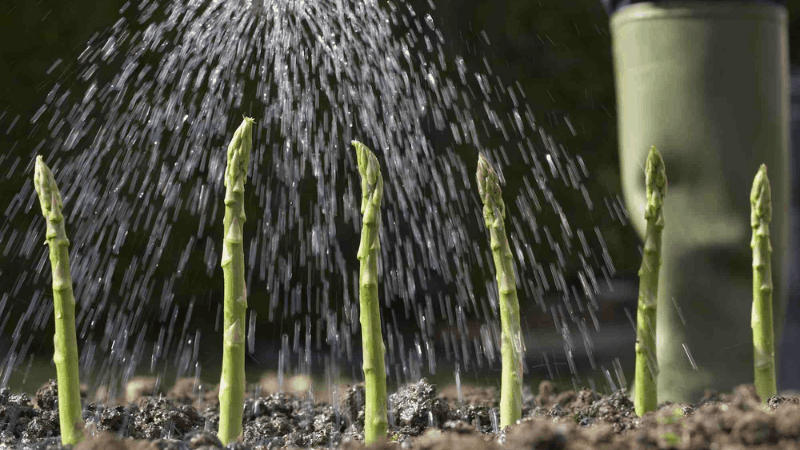
Established asparagus needs 1–2 inches of water per week during the growing season. In dry climates, drip irrigation at the root zone is both water-efficient and disease-reducing — surface moisture sitting on crowns invites fungal problems. In humid regions, natural rainfall typically handles most of this requirement during peak season.
The long view reframes the cost entirely. A mature 25-plant bed produces 5–8 pounds of spears per season for two decades with minimal annual inputs. Divide your establishment cost by 20 years and the per-pound economics are exceptional — more so than almost any other vegetable you could plant in the same footprint.
Mistakes That Set Your Asparagus Bed Back by Years
Soil and pH Errors
Asparagus has specific soil requirements that most gardeners underestimate when first planting. Getting these wrong at establishment is difficult to correct after the fact — and correcting them means disturbing crowns you've spent years growing.
The non-negotiable soil standards:
- pH must be 6.5–7.0. Below 6.0, asparagus loses access to phosphorus and iron even if those nutrients are present in the soil. Above 7.5, the same deficiencies appear through different mechanisms.
- Drainage is essential. Crowns rot in waterlogged soil. In heavy clay, raise beds by 6–8 inches above grade — this single adjustment saves more asparagus beds than any other intervention.
- Work the soil to at least 12 inches deep, preferably 18. Asparagus roots extend deep, and compacted soil below the planting trench limits root expansion and caps long-term productivity.
- Incorporate 3–4 inches of compost before planting. Asparagus is a hungry feeder, and starting with organically rich soil reduces fertilization demands through the critical establishment years.
Soil testing before planting takes 10 minutes and costs $15–$25 for a mail-in kit, or nothing at many county extension offices. It's the cheapest insurance available in vegetable gardening — use it.
Harvest Timing Mistakes
The most damaging mistake new asparagus growers make is harvesting too aggressively in the first two seasons. The spears look ready, they smell right, and you've waited long enough. But premature or excessive harvest destroys long-term bed productivity in ways that aren't immediately visible.
Follow this timeline without exception:
- Year 1 from crowns: Harvest nothing. Let every spear develop into fern — all of that photosynthesis goes straight into building crown mass for future seasons.
- Year 2: Harvest lightly for 2–3 weeks only. Stop immediately when spears begin emerging thinner than a pencil — that's your clear signal that the crown's reserves are running low.
- Year 3 and beyond: Full harvest window of 6–8 weeks. Cut spears at soil level when they reach 6–9 inches tall with tight, closed tips.
Thin spears late in the harvest season are your signal to stop — every day you continue past that threshold weakens the following season's production. Stop harvesting, let the fern develop fully, feed the bed, and let the crown rebuild. Missing one or two additional weeks of harvest is nothing compared to a diminished bed the following season.
Weed competition during establishment matters more than most growers anticipate. Weeds compete aggressively for water and nutrients during years one and two, and hand-weeding around young crowns or fresh divisions is painstaking but non-optional. Deep-rooted perennial weeds are especially damaging because aggressive removal risks disturbing the crown tissue you've just planted.
Frequently Asked Questions
Can you root asparagus cuttings in water?
No. Asparagus stems and fern fronds do not form roots in water or in soil. The plant lacks the stem tissue structure that enables cuttings to generate new root growth. No amount of rooting hormone or optimal water temperature changes this — crown division is the only vegetative propagation method that works reliably.
How long does it take asparagus to grow from crown division?
Divisions taken from healthy, mature crowns typically produce harvestable spears within 1–2 growing seasons. If you divide a strong 5-year-old crown in early spring, you can expect a light harvest the following year and a full harvest window the year after that, assuming the divisions were planted into well-prepared soil.
What is the best time of year to divide asparagus crowns?
Early spring — specifically just as the soil becomes workable and before any spears emerge. Dividing at this point gives each section the full growing season to establish its root system before winter dormancy. Divisions planted in summer or fall have significantly lower survival rates.
Can you grow asparagus from the spears bought at the grocery store?
No. Store-bought spears are harvested vegetables — they have no crown tissue, no roots, and no growing points. They cannot regenerate into plants regardless of how they are treated or planted. Any advice suggesting otherwise is incorrect and will cost you time and effort with nothing to show for it.
How many divisions can you get from one asparagus crown?
A mature 4–6 year old crown typically yields 3 to 5 viable divisions, depending on its overall size and health. Each division must carry at least 2–3 fleshy storage roots and 1–2 growth buds to have a realistic chance of establishing. Larger, older crowns sometimes produce more sections, but splitting into too many small pieces reduces the viability of each individual division.
Key Takeaways
- You cannot grow asparagus from stem cuttings — crown division is the only vegetative propagation method that works, splitting a mature root mass into sections that each carry viable storage roots and growth buds.
- Bare-root crowns are the fastest path to harvest (2 years) and the right choice for new beds; seed suits large-scale, budget-first plantings; division is free expansion once your existing plant is at least 3 years old.
- Divide in early spring before spears emerge, ensure each section has at least 2–3 fleshy roots and 1–2 growth buds, and never divide a crown that produced thin or weak spears the prior season.
- Soil pH (6.5–7.0), good drainage, and harvest restraint in the first two years are the factors that determine whether your asparagus bed produces abundantly for two decades or struggles from the start.


About Lee Safin
Lee Safin was born near Sacramento, California on a prune growing farm. His parents were immigrants from Russia who had fled the Bolshevik Revolution. They were determined to give their children a better life than they had known. Education was the key for Lee and his siblings, so they could make their own way in the world. Lee attended five universities, where he studied plant sciences and soil technologies. He also has many years of experience in the U.S. Department of Agriculture as a commercial fertilizer formulator.
Get FREE Gardening Gifts now. Or latest free toolsets from our best collections.
Disable Ad block to get all the secrets. Once done, hit any button below