You're halfway through the yard, engine humming, and then it just stops dead. If you've been searching for answers on why your lawn mower stops running after a few minutes of use, the culprit almost always falls into one of a handful of diagnosable categories: fuel starvation, vapor lock, carburetor fouling, or airflow restriction. Every one of those problems is fixable with basic tools and costs under $20 in most cases. This guide covers every major cause, maps the fastest diagnostic path, and walks you through the exact repairs. For more hands-on lawn care guidance, visit the gardening tips section of this site.

The timing of the stall gives you the diagnosis before you open the hood. A mower that dies within five minutes usually has a vented gas cap problem or vapor lock. One that runs fine when cold but stalls as the engine warms points directly to the carburetor or choke. A machine that surges then cuts out signals a dirty air filter or restricted fuel flow. Track the pattern — it is your most reliable diagnostic tool.
Lawn mower engines are fundamentally simple: they need fuel, air, spark, and compression in the right ratios at the right moment. Disrupt any one of those four inputs and the engine stalls. The sections below map every common disruption to its fix, starting with the causes most likely to be sitting in your mower right now.

Contents
- Why Lawn Mower Stops Running: The Most Common Causes
- Fuel System Failures That Stall Your Engine
- Carburetor and Air Filter Problems
- Fast Fixes When Your Mower Dies Mid-Mow
- Preventive Maintenance That Keeps Your Mower Going
- Mistakes That Guarantee Your Mower Stalls
- DIY Repair vs. Calling a Technician
- Frequently Asked Questions
- Key Takeaways
Why Lawn Mower Stops Running: The Most Common Causes
Before isolating individual components, it helps to see all the major stall triggers in one place. The table below maps each cause to its symptom pattern and the first fix to attempt.
| Cause | Symptom Pattern | First Fix |
|---|---|---|
| Old or degraded gasoline | Starts fine, stalls within minutes | Drain tank, refill with fresh fuel |
| Faulty gas cap / vapor lock | Stalls after 5–10 min, restarts fine when cool | Loosen cap to test; replace if confirmed |
| Clogged carburetor | Surges, idles rough, then dies under load | Clean jets with carb cleaner or rebuild |
| Dirty air filter | Power loss, then stall under cutting load | Clean foam or replace paper element |
| Choke left on after warm-up | Runs briefly, floods, stalls | Move choke fully to run position |
| Overfilled oil | White smoke, then engine cuts out | Drain to correct dipstick level |
| Worn spark plug | Intermittent misfires, then stall | Replace with OEM-spec plug |
| Packed deck blockage | Engine bogs under load | Clear grass from deck and discharge chute |
| Compression loss | Hard start, weak power, stalls repeatedly | Compression test; valve work or rebuild |
Fuel-Related Stalls
Fuel problems are the single most common reason a lawn mower stops running. Ethanol-blended gasoline degrades in as little as 30 days, leaving behind varnish deposits that coat fuel lines and carburetor jets. If your mower sat with fuel in the tank over winter without stabilizer, that fuel is your first suspect — not the carburetor, not the spark plug.
Airflow and Ignition Problems
A restricted air filter starves the engine of oxygen, causing it to run rich, bog down under load, and eventually stall. A fouled spark plug produces inconsistent ignition — the engine misfires under demand and cuts out as the plug overheats. Both are inexpensive fixes that most owners skip until a stall forces the issue.
Mechanical Failures
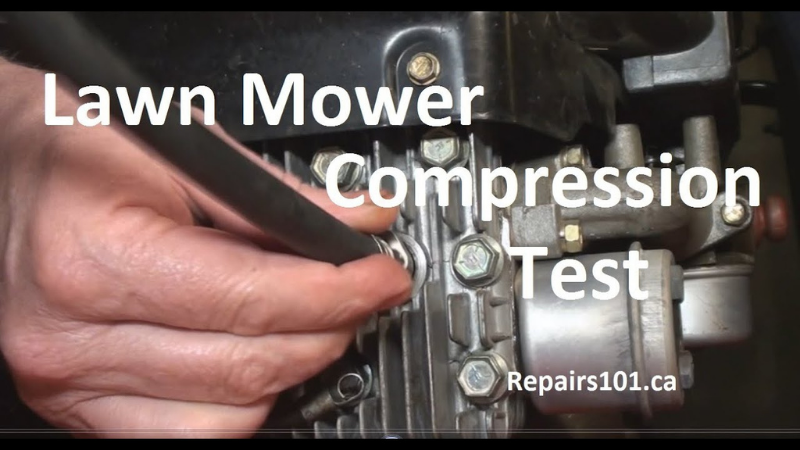
Compression loss from worn piston rings, a damaged head gasket, or bent valves prevents the engine from sustaining combustion. These are a minority of stall cases but require the most labor. According to Wikipedia's overview of four-stroke engines, these engines depend on precisely timed combustion cycles — any loss of compression collapses that timing and kills the engine.
Fuel System Failures That Stall Your Engine
Fuel system issues account for the majority of "starts then stalls" complaints. The fix is usually a drain, a clean, and fresh fuel — no special equipment required.
Old or Contaminated Gasoline
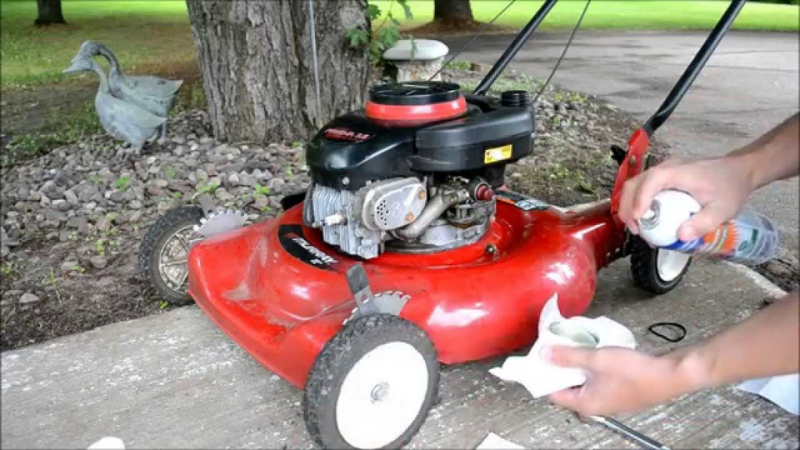
Gasoline oxidizes and phase-separates when ethanol content exceeds 10%. The result: sticky varnish coats the inside of the carburetor and fuel lines, partially blocking fuel flow. The mower starts because the float bowl holds enough residual fuel, but once that supply is consumed, the clogged lines can't keep up and the engine dies.
- Drain the tank completely — never add fresh fuel on top of old fuel.
- Use a turkey baster or siphon to remove residue from the bottom of the tank.
- Refill with fresh fuel containing no more than 10% ethanol (E10 is fine; E15 is not recommended for small engines).
- Add a fuel stabilizer if you plan to store the mower for more than 30 days.
Faulty Gas Cap and Vapor Lock
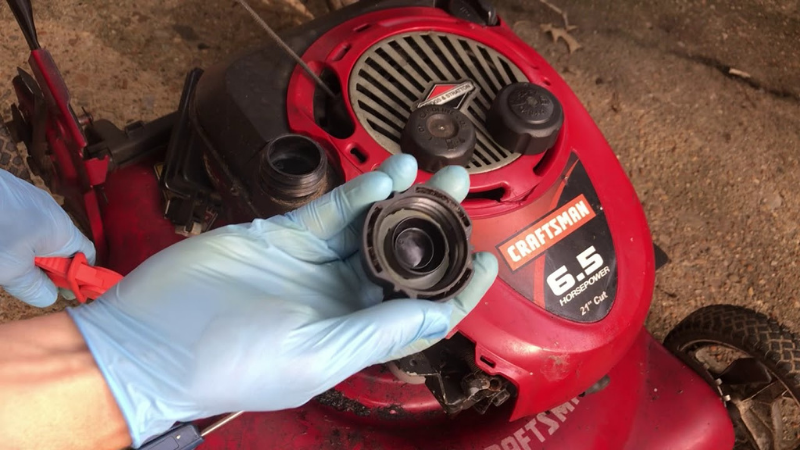
The gas cap contains a tiny vent hole that equalizes pressure as fuel drains from the tank. When that vent clogs, a vacuum forms above the fuel and prevents it from flowing to the carburetor — this is vapor lock. The telltale sign is a mower that stalls after 5–10 minutes but restarts fine after you remove the cap and let it sit for a minute.
Test it by loosening the cap slightly while the mower is running. If performance immediately improves, the cap vent is blocked. A replacement cap costs under $5 at any hardware store and solves the problem permanently.
Carburetor and Air Filter Problems
The carburetor meters fuel and air into the engine. The air filter protects both. When either component is compromised, the air-fuel ratio breaks down and the engine cannot sustain combustion under any load.
Clogged Carburetor Jets
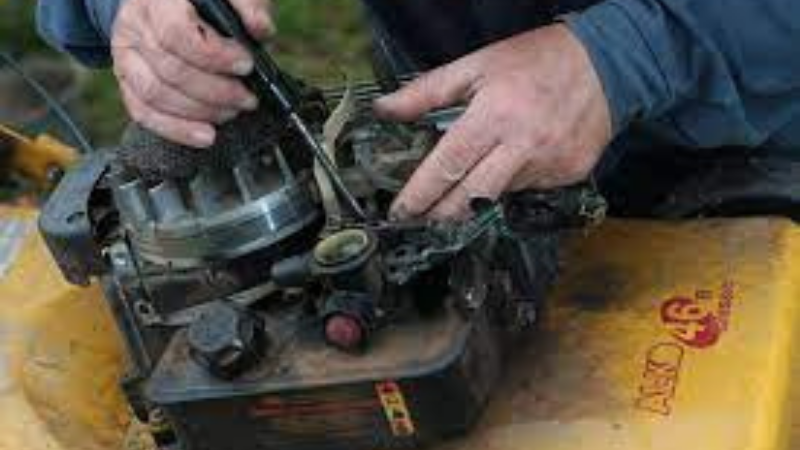
Fuel varnish from old gasoline collects inside the carburetor's main jet and emulsion tube. The needle-thin passages that meter fuel get partially blocked, and the engine runs lean — too much air, not enough fuel. It often idles acceptably because idle circuits are less affected, but stalls the moment any cutting load is applied.
- Spray carburetor cleaner directly into the throat with the air filter removed — this clears light deposits without disassembly.
- For heavy buildup, remove the carburetor bowl, soak the jets in carb cleaner for 20 minutes, and clear passages with compressed air or a thin wire.
- If cleaning doesn't resolve the issue, a full rebuild kit costs $8–$15 and includes new jets, gaskets, and float needle.
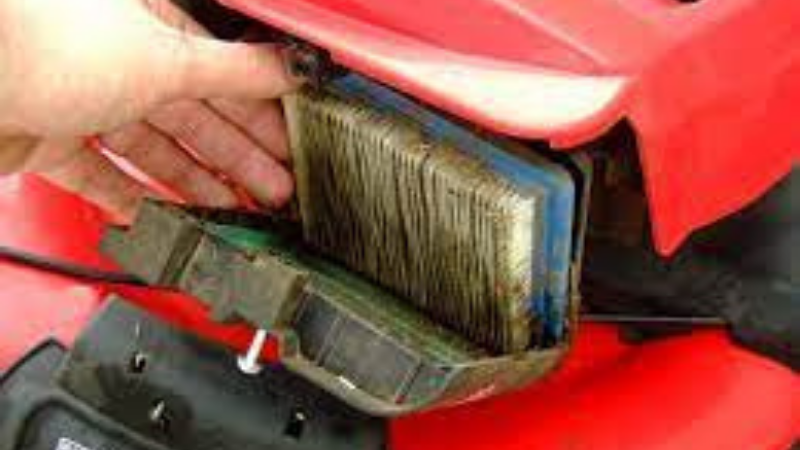
Dirty or Blocked Air Filter
A foam filter clogged with grass clippings and dust restricts airflow severely. The engine runs rich — too much fuel, not enough air — producing dark exhaust and losing power under any cutting resistance before stalling. Clean or replace the air filter every 25 hours of operation or at the start of every mowing season, whichever comes first.
Foam filters: wash with warm soapy water, dry completely, and re-oil lightly before reinstalling. Paper elements: replace outright — washing degrades the filtration media and leaves microscopic gaps that allow debris into the engine.
Choke Position Errors
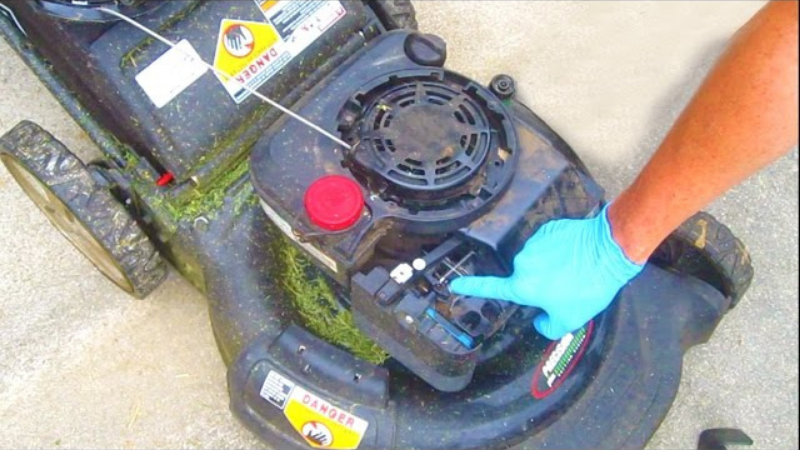
The choke enriches the fuel mixture for cold starts. Leaving it partially closed once the engine reaches operating temperature floods the combustion chamber with fuel — the engine loads up and dies within two to three minutes. If your mower starts well but stalls shortly after, verify the choke lever is fully in the "run" position. This mistake is more common than most owners admit.
Fast Fixes When Your Mower Dies Mid-Mow
Sometimes you don't have time for a full diagnostic session. These rapid checks address the majority of field stalls in under three minutes, without tools.
The Three-Minute Field Checklist
- Check the fuel level — an improperly seated float gauge fools owners far more often than you'd expect.
- Loosen the gas cap slightly and try restarting — this confirms or eliminates vapor lock in 30 seconds.
- Pull and inspect the air filter — if it's visibly clogged, clean or replace it before continuing.
- Check under the deck for packed grass — a blocked discharge chute creates serious blade drag that stalls the engine under load.
- Check the spark plug lead — a loose connection causes intermittent ignition failure that closely mimics fuel starvation.
If none of those produce a fix, the problem is deeper in the fuel or ignition system. The detailed guide on why your lawnmower keeps cutting out and how to fix vapor lock walks through the full fuel system diagnostics step by step.
Resolving Vapor Lock on the Spot
When the mower dies from vapor lock mid-mow, let it cool for 5–10 minutes with the gas cap removed. The vacuum equalizes, fuel flow resumes, and the engine starts normally. This confirms vapor lock as the cause. Replace the cap before your next session — a cap with a blocked vent will create the same stall every single time.
Preventive Maintenance That Keeps Your Mower Going
The majority of mower stalls are preventable. A consistent service routine eliminates the three most common causes — dirty carburetors, fouled filters, and degraded fuel — before they strand you in the middle of the lawn.
End-of-Season Storage Protocol
Damage from sitting with old fuel accounts for more carburetor rebuilds than any other single factor. Before storing your mower at the end of the season:
- Run the fuel tank completely dry, or add fuel stabilizer to a full tank and run for 5 minutes to circulate it through the carburetor.
- Change the oil — used oil contains acids that corrode engine internals during long storage periods.
- Remove, clean, and re-gap the spark plug. Replace it if the electrode is eroded or the porcelain is cracked.
- Clean the underside of the deck and sharpen the blade — a sharp blade reduces engine load and improves cut quality every time you mow.
If your mower is also losing speed under load rather than stalling outright, the detailed guide on why your lawnmower is running slow covers RPM loss and power delivery problems in full.
Regular Service Intervals
This is the minimum cadence that keeps most push mowers running without incident across multiple seasons:
- Every 25 hours: clean or replace air filter, check oil level
- Every 50 hours or annually: change oil, inspect and gap spark plug, sharpen blade
- Every season start: fresh fuel, inspect fuel lines for cracks, test primer bulb firmness
- Every 2 seasons: rebuild or replace carburetor if the mower has a history of intermittent stalling
Mistakes That Guarantee Your Mower Stalls
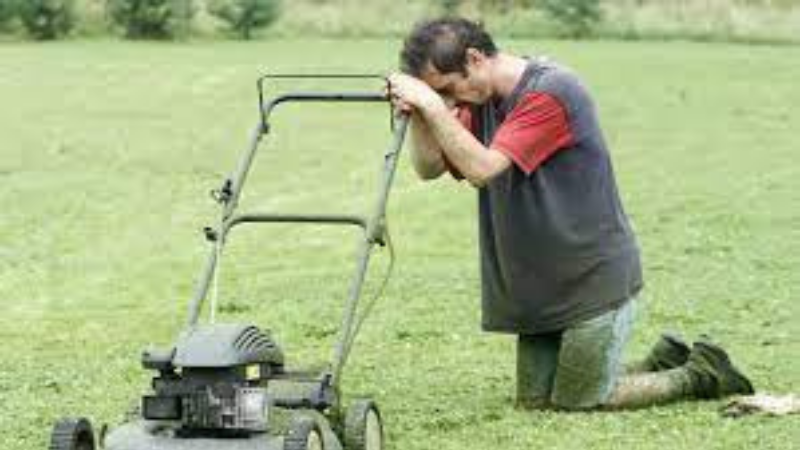
Some habits reliably destroy mower reliability. These are the actions that send otherwise healthy engines into repeated stalling — and most owners don't realize they're making them until the damage is already done.
Overfilling the Oil
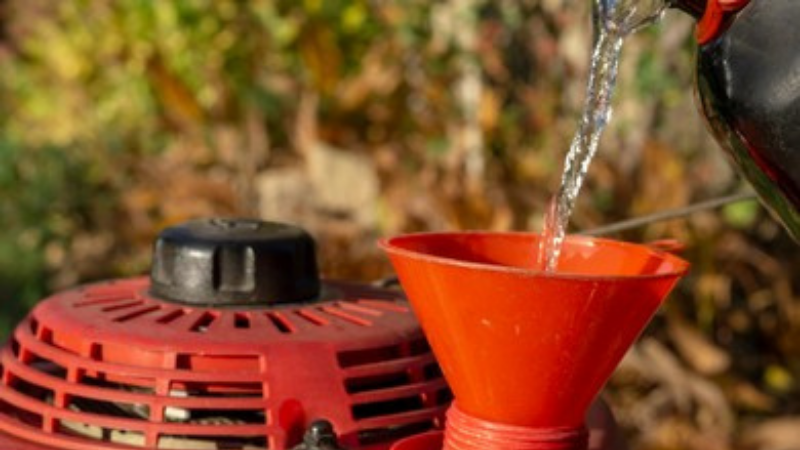
More oil is not better. Overfilling pushes oil into the crankcase breather tube, which feeds back into the air filter housing and carburetor inlet. The engine ingests oil vapor, runs heavily rich, produces white smoke, and stalls within minutes. Always check the oil level with the dipstick on a flat surface before each use. If you're above the upper mark, drain to the correct level before starting.
Ignoring Deck Blockages and Old Fuel
Leaving fuel in the tank over winter without stabilizer is the single most avoidable cause of carburetor damage. Running full throttle through thick, wet grass without clearing the deck is a close second. The engine labors against packed clippings, overheats, and stalls. Clear the underside of the deck every few passes in heavy conditions — it takes 30 seconds and prevents engine strain every time.

DIY Repair vs. Calling a Technician
Most mower stall causes fall well within what any hands-on homeowner can handle. The decision point is whether the repair requires specialized tools, internal engine work, or involves components where errors create safety hazards.
When DIY Makes Sense
Handle these yourself without hesitation:
- Cleaning or replacing the air filter
- Replacing the spark plug
- Draining old fuel and cleaning the carburetor bowl
- Replacing a faulty gas cap
- Clearing deck blockages
- Correcting the oil level
These tasks require only basic hand tools. Carburetor cleaning is the most technical of the group, but a first-timer can complete a bowl clean in 20 minutes following any reputable video walkthrough.
When to Call a Pro
Certain repairs genuinely require a technician with proper equipment:
- Confirmed compression loss (under 90 PSI on a compression tester) — indicates valve work or a full engine rebuild
- Bent crankshaft from a blade strike — requires specialized straightening tools and precise alignment
- Ignition module failure — requires proper test equipment to diagnose reliably; guessing costs more than the part
- Governor linkage damage — incorrect adjustment causes dangerous over-revving that can destroy the engine
Frequently Asked Questions
Why does my lawn mower start and then stop after a few seconds?
This is almost always a fuel delivery issue. The carburetor float bowl holds enough residual fuel to start the engine, but a clogged jet or blocked fuel line starves it within seconds of ignition. Drain old fuel completely, clean the carburetor bowl and main jet, and refill with fresh gasoline. If the problem persists after cleaning, a full carburetor rebuild kit resolves it for under $15.
Can a dirty air filter cause my lawn mower to stall?
Yes, and it does so more often than most owners realize. A severely clogged air filter restricts airflow enough that the engine runs rich and loses all usable power under cutting load. The fix takes under five minutes: clean foam filters with soapy water and dry them fully before reinstalling, or simply replace a paper element. This is one of the highest-value maintenance items on the entire machine.
Why does my lawn mower only run with the choke on after it warms up?
If the engine requires partial choke enrichment after reaching operating temperature, the carburetor main jet is partially blocked and can't deliver enough fuel on its own. The choke compensates by restricting air and artificially enriching the mixture. Cleaning or rebuilding the carburetor resolves this completely — running with the choke on indefinitely accelerates carbon buildup and engine wear.
How do I confirm my lawn mower has a vapor lock problem?
Loosen the gas cap by a half-turn while the engine is running. If performance immediately improves or the stalling stops, the cap vent is blocked and vapor lock is your confirmed cause. Replace the gas cap — a new one costs under $5 and eliminates the problem entirely. Never mow with a loose cap as a long-term workaround; debris enters the tank and causes carburetor damage.
Key Takeaways
- The most common reasons why lawn mower stops running are old or degraded fuel, a clogged carburetor, a faulty gas cap causing vapor lock, and a dirty air filter — every one of these is a DIY fix costing under $20.
- The timing of the stall (immediately after start, after warm-up, or under load) narrows the cause to a specific system before you touch a single component.
- A consistent maintenance routine — fresh fuel every season, annual spark plug and oil changes, and regular air filter service — prevents the vast majority of stalls before they happen.
- Reserve professional service for compression loss confirmed by a compression tester, bent crankshafts, and governor or ignition module failures; everything else is within reach of any handy homeowner.


About Lee Safin
Lee Safin was born near Sacramento, California on a prune growing farm. His parents were immigrants from Russia who had fled the Bolshevik Revolution. They were determined to give their children a better life than they had known. Education was the key for Lee and his siblings, so they could make their own way in the world. Lee attended five universities, where he studied plant sciences and soil technologies. He also has many years of experience in the U.S. Department of Agriculture as a commercial fertilizer formulator.
Get FREE Gardening Gifts now. Or latest free toolsets from our best collections.
Disable Ad block to get all the secrets. Once done, hit any button below