Have you ever walked out to mow the lawn only to find a completely dead battery — again? If your lawnmower battery won't stay charged, you're not dealing with bad luck. There's a definable root cause every single time, and it almost always falls into one of a short list of fixable problems. This guide walks through every stage of diagnosis and repair so you can stop guessing and get back to mowing. For broader lawn care context, the gardening tips section covers the full scope of turf maintenance.

The good news: most lawnmower battery problems don't require a dealer visit. A multimeter, some patience, and the right knowledge are usually all you need. The bad news is that ignoring a slow-discharge problem accelerates battery degradation — and once cells fully sulfate, no charger in the world brings them back.
Understanding the problem starts with the system as a whole. Your mower's battery isn't just a one-time power source. It's part of an interconnected electrical loop that includes the alternator or stator, a voltage regulator, a solenoid, and every parasitic load your machine carries when it sits between sessions. A weakness anywhere in that chain shows up as a battery that drains too fast — or won't hold a charge at all.
Contents
- How Your Lawnmower's Charging System Actually Works
- Diagnosing Why Your Lawnmower Battery Won't Stay Charged
- The Most Common Causes of Battery Discharge
- Simple Fixes vs. Deeper Electrical Repairs
- Tools and Equipment for Battery Diagnosis
- Battery Types and Their Charging Characteristics
- How to Prevent Your Lawnmower Battery from Losing Charge
How Your Lawnmower's Charging System Actually Works
The Battery's Role vs. the Alternator's Role
Your battery has one job at startup: supply a strong burst of current to crank the engine. Once the engine fires, the alternator — or stator on smaller machines — takes over. It generates AC current, which the voltage regulator converts to steady DC, typically 13.5 to 14.8 volts, to recharge the battery while the engine runs. If either side of this equation fails, the battery loses ground with every mowing session.
This is why a lawnmower battery that dies after a single use is rarely a battery problem in isolation. You're usually looking at an alternator that isn't outputting enough current, a regulator that's letting voltage spike or collapse, or a wiring connection that interrupts the charge path entirely. The battery is the symptom. The charging system is the disease.
What "Staying Charged" Really Means
A fully charged 12-volt lead-acid battery reads 12.6–12.8 volts at rest. Anything below 12.4 volts signals a partial charge. Below 12.0 volts, you're dealing with a discharged battery that may already have sulfation damage on the plates. According to the Wikipedia overview of lead-acid batteries, repeated deep discharges permanently reduce capacity — which is exactly what happens when you keep mowing with an unresolved charging problem.
A battery that reads fine on a charger but drops dead 20 minutes into mowing has one of two problems: it's not receiving a proper charge from the alternator, or it has internal cell damage that limits usable capacity. Both diagnoses require a multimeter and roughly 10 minutes to confirm.
Diagnosing Why Your Lawnmower Battery Won't Stay Charged
Testing Resting Voltage
Start here before touching anything else. With the engine off and the key removed, set your multimeter to DC voltage and probe the battery terminals. Record the reading. Then start the engine and test again — you should see voltage climb into the 13.5–14.8 range. If it stays at or below resting voltage with the engine running, your alternator is not charging the battery.
- 12.6–12.8V at rest: Battery is fully charged
- 12.0–12.4V at rest: Battery is partially discharged or weakening
- Below 12.0V at rest: Battery is discharged — possible cell damage
- 13.5–14.8V with engine running: Alternator charging normally
- Below 13.5V with engine running: Alternator or regulator failure likely
This two-step test narrows the problem to either the battery itself or the charging circuit. If you've already ruled out a charging issue but still find your lawnmower battery dying prematurely, internal cell failure is the primary suspect.
Checking for Parasitic Drain
Parasitic drain refers to any electrical load drawing current from the battery when the engine is off. On a riding mower, common culprits include headlights left on, a faulty ignition switch that doesn't fully cut power, or a short circuit in the wiring harness. To test for parasitic drain, connect your multimeter in-line with the negative battery cable — set to DC amps — with the key fully removed. Any reading above 50 milliamps indicates a drain worth tracking down.
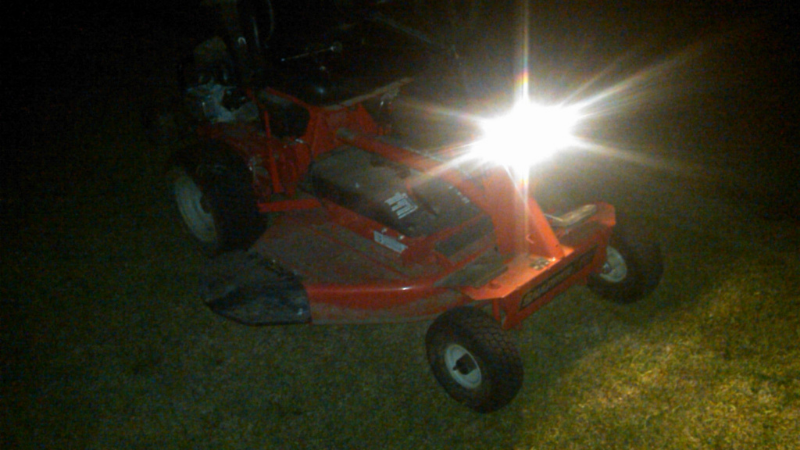
Headlights are the most common source of parasitic drain on riding mowers. A switch that's worn or stuck in a middle position keeps a small draw running indefinitely — enough to flatten a 28–35Ah battery within 24–48 hours. If your mower has headlights and you've noticed the battery going flat overnight, verify the headlight switch is fully in the off position before suspecting anything else.
The Most Common Causes of Battery Discharge
A Failing or Dead Cell
Lead-acid batteries contain six cells, each producing roughly 2.1 volts. When one cell fails — due to age, sulfation, or physical damage — total voltage drops to around 10.5 volts and the battery can no longer hold a meaningful charge. You'll notice this as a mower that cranks weakly or produces a rapid clicking sound rather than turning over. If you've experienced that lawnmower clicking symptom, a dead cell is one of the leading root causes.
A load test distinguishes a weak battery from a dead-cell battery. Any auto parts store will run one free of charge. If the battery fails under load despite showing acceptable resting voltage, cell damage is confirmed and replacement is the only fix.
Dysfunctional Alternator or Stator
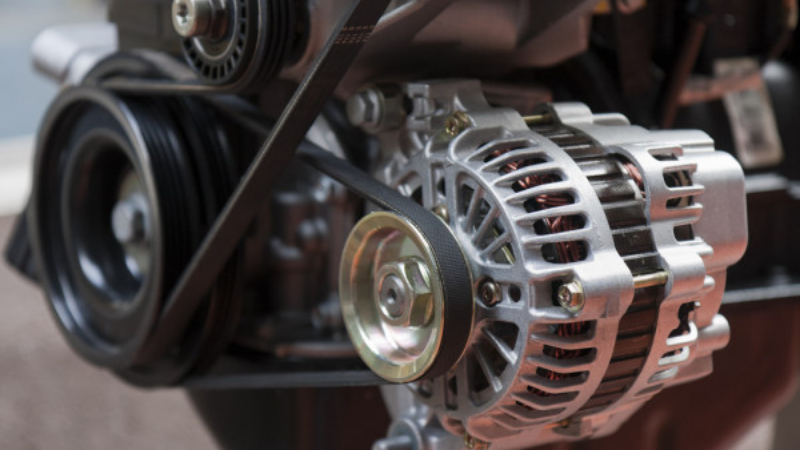
The alternator is the single most common reason a lawnmower battery won't stay charged across multiple sessions. On most riding mowers, the stator sits behind the flywheel and generates current from engine rotation. Stator windings can burn out from age or overheating, and voltage regulators — which control output — fail independently and are often overlooked during diagnosis.
Symptoms of alternator or stator failure include:
- Battery reads full charge but dies mid-mow
- Voltage stays at resting level even with engine at full throttle
- Burning electrical smell from the engine area
- Headlights noticeably dimming when engine load increases
Replacing a stator is a moderate DIY job. You'll need to pull the flywheel, which requires a flywheel puller tool. The voltage regulator is simpler — typically a bolt-on component accessible without major disassembly, and inexpensive enough that replacing it during any stator job is worth doing preventatively.
Accessories Left Running
This one is painfully simple and surprisingly common. Leaving the ignition in the accessory position, forgetting to switch off lights, or having an aftermarket accessory wired directly to the battery with no switch — all of these drain a 12V battery flat within hours. A mower battery typically has 28–35Ah capacity. A headlight pulling 5–7 amps drains it completely in under six hours.
Always verify your ignition switch is fully in the "off" position before walking away — a partial turn leaves the electrical system active and will kill your battery overnight.
Simple Fixes vs. Deeper Electrical Repairs
What You Can Fix in 30 Minutes
Not every battery problem needs a technician. Several of the most common fixes are genuinely beginner-accessible and require no special tools:
- Corroded terminals: Mix baking soda and water, scrub with a wire brush, rinse, dry, and reconnect. Corrosion adds resistance that prevents proper charging even when the alternator is working fine.
- Loose cable connections: A terminal that moves under hand pressure is enough to break the charging circuit intermittently — and it's easy to miss.
- Trickle charger conditioning: A smart charger with a desulfation mode can partially recover a mildly sulfated battery over 24–48 hours.
- Parasitic drain from accessories: Identify and disconnect the offending circuit, or install an inline switch to cut it cleanly.
If your mower also has starting trouble after extended storage, that problem often shares causes with a battery that won't hold charge. The diagnostics in why your lawn mower won't start after winter address overlapping electrical and fuel issues that frequently appear together.
When the Job Goes Deeper
Stator replacement, flywheel removal, and wiring harness diagnosis move into intermediate territory. You need the right tools and the confidence to work safely around the ignition system. A failed solenoid — which can both prevent starting and create unusual electrical loads — bridges beginner and intermediate territory and is worth understanding specifically.
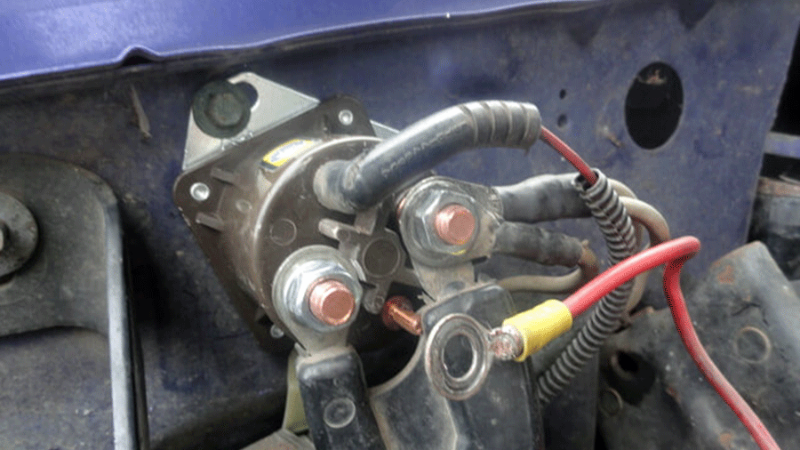
A faulty solenoid can hold its contacts in the closed position even after the key is removed — continuously drawing battery current and draining it flat within hours. If your mower cuts out unexpectedly mid-session alongside the battery drain issue, cross-reference why your lawn mower stops running after a while for solenoid and fuel system failures that frequently overlap with charging problems.
Tools and Equipment for Battery Diagnosis
Essential Diagnostic Tools
Diagnosing a lawnmower charging problem doesn't require a professional shop. The following tools cover 95% of what you'll encounter:
| Tool | Purpose | Estimated Cost |
|---|---|---|
| Digital Multimeter | Test resting voltage, alternator output, parasitic drain current | $15–$50 |
| Battery Load Tester | Confirm true capacity under real electrical load | $20–$60 |
| Smart Battery Charger / Maintainer | Recharge plus desulfation conditioning cycles | $30–$80 |
| Terminal Wire Brush | Remove corrosion from cable ends and battery posts | $5–$10 |
| Flywheel Puller | Required for stator access on most small engines | $15–$40 |
| Baking Soda + Water | DIY terminal cleaning solution — neutralizes battery acid | Under $5 |
The multimeter is the one non-negotiable tool in this list. Buy a decent one — cheap meters give inconsistent readings that send you chasing false diagnoses. Every other tool becomes relevant only after the multimeter has confirmed the nature of the problem. If your mower shows performance symptoms alongside the battery issue, such as running slow under load, that combination often points to alternator or voltage regulator failure affecting both charging capacity and engine behavior.
Battery Types and Their Charging Characteristics
Lead-Acid vs. AGM vs. Lithium
Not all lawnmower batteries charge the same way or degrade at the same rate. Understanding your battery type tells you how aggressively you can discharge it, how to store it correctly, and what charger profile to use.
| Battery Type | Nominal Voltage | Deep Discharge Tolerance | Maintenance Required | Typical Lifespan |
|---|---|---|---|---|
| Flooded Lead-Acid | 12V | Low — sulfates quickly below 50% state of charge | Check electrolyte levels seasonally | 2–4 years |
| AGM (Absorbed Glass Mat) | 12V | Moderate — handles deeper discharge cycles better | Sealed — no fluid checks needed | 3–5 years |
| Lithium-Ion (LiFePO4) | 12.8V nominal | High — can discharge to 20% without plate damage | Minimal — built-in BMS protection | 8–10+ years |
Most riding mowers ship with flooded lead-acid batteries — the cheapest and most discharge-sensitive type. Upgrading to an AGM or drop-in lithium replacement gives you significantly more resilience against the partial-charge cycles that result from short mowing sessions. If your typical mow runs under 30 minutes, the alternator may not fully replenish a flooded lead-acid battery each time — and cumulative shortfalls kill the battery within a single season.
How to Prevent Your Lawnmower Battery from Losing Charge
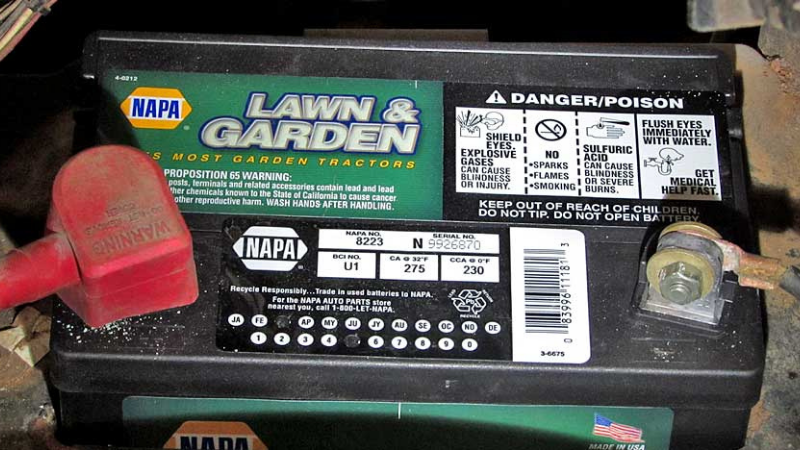
Storage and Maintenance Habits
Prevention is almost always cheaper than replacement. These habits make a measurable difference in battery lifespan:
- Connect a smart maintainer during storage. A battery sitting at 12.0 volts for months sulfates and loses permanent capacity. A $35 maintainer keeps it topped up without overcharging.
- Disconnect the negative terminal if storing the mower for more than 30 days without a maintainer attached.
- Store at room temperature — cold alone doesn't kill batteries, but freezing a discharged lead-acid battery cracks the internal plates irreparably.
- Clean terminals before every season. A 10-minute job prevents the resistance buildup that forces the alternator to work harder and the battery to charge more slowly.
- Run the engine long enough after every use — 20–30 minutes of operation typically recoups what the starter motor drew during ignition.
Seasonal Care
Seasonal transitions are when most battery failures surface. Pulling a mower out of winter storage and finding a dead battery is one of the most common spring complaints — and it's almost entirely preventable. If you put the mower away in autumn without addressing the charging issue that developed over the season, you'll find the battery fully dead and sulfated by spring.
Before storing for winter, run a full multimeter check: resting voltage and charging voltage with the engine running. Fix any charging deficiency before storage — not after. A battery stored at full charge survives winter dramatically better than one stored at 60%. And when spring arrives and you connect the charger, resist the urge to skip a full load test before your first session of the new year. A battery that technically accepts a charge over winter may still fail under load at the first crank of the season.
Frequently Asked Questions
Can a bad solenoid drain my lawnmower battery?
Yes. A solenoid with stuck-closed contacts draws continuous current from the battery even when the engine is off. This is one of the less obvious causes of overnight battery drain and is frequently misdiagnosed as a pure battery failure. Test the solenoid by disconnecting it and checking whether the parasitic draw disappears.
How long should a lawnmower battery last?
A properly maintained flooded lead-acid battery lasts two to four years. AGM batteries typically reach three to five years. The primary killers are deep discharges, storage without a maintainer, and chronic undercharging from a weak alternator. Lithium-ion replacements extend that lifespan to eight to ten years under normal use.
Will mowing the lawn recharge my battery?
Yes — but only if the alternator is functioning correctly. A session of 20–30 minutes at operating speed typically recharges what the starter motor drew during ignition. Shorter sessions may not fully replenish the battery, leading to a gradual decline that looks like a charging failure but is actually a usage pattern problem compounding over time.
Why does my battery charge fine on a charger but die while mowing?
This points to a battery that has lost capacity due to cell damage or sulfation. It accepts a surface charge from the charger but can't sustain output under the real electrical load of a running engine. A load test confirms this — the battery fails under load despite showing full voltage at rest. Replacement is the only reliable fix at this stage.
Is it worth trying to recondition an old lawnmower battery?
Sometimes. A smart charger with a desulfation mode can recover a mildly sulfated battery that's lost 20–30% of its capacity. A battery that fails load testing with more than one dead cell is not recoverable. Given that replacement batteries typically cost $30–$70, reconditioning only makes economic sense for batteries less than two years old with minor sulfation.
A battery that keeps dying is your charging system asking for help — fix the source, not just the symptom, and you'll stop replacing batteries every season.


About Lee Safin
Lee Safin was born near Sacramento, California on a prune growing farm. His parents were immigrants from Russia who had fled the Bolshevik Revolution. They were determined to give their children a better life than they had known. Education was the key for Lee and his siblings, so they could make their own way in the world. Lee attended five universities, where he studied plant sciences and soil technologies. He also has many years of experience in the U.S. Department of Agriculture as a commercial fertilizer formulator.
Get FREE Gardening Gifts now. Or latest free toolsets from our best collections.
Disable Ad block to get all the secrets. Once done, hit any button below