Last spring, my neighbor stood at the edge of his lawn looking completely defeated. His grass was patchy and yellowed while everyone else's yard was lush and deep green. He'd watered faithfully, mowed regularly — and still, nothing happened. Sound familiar? If you're searching for the best fertilizer for green lawns, you're in exactly the right place. Understanding what your lawn actually needs — and which product delivers results the fastest — can turn a dull, tired yard into something you're genuinely proud of. Head over to our gardening tips section for more guides on keeping your outdoor space healthy and thriving all season long.
The good news? Most lawns respond quickly once you give them the right nutrients. The trick is knowing what to apply, when to apply it, and how much. Get those three things right and you can see a noticeable color shift in as little as five to seven days.
This guide walks you through everything — from understanding why grass goes yellow in the first place, to picking the fastest-acting fertilizer on the market, to avoiding the common pitfalls that stall your progress. Let's dig in.
Contents
Why Grass Loses Its Green Color
Before you reach for any product, it helps to understand what's actually happening beneath the surface. Grass turns yellow or pale for specific reasons — and the fix depends on which one applies to your lawn.
The Role of Nitrogen
Nitrogen (N) is the single most important nutrient for green color in grass. It drives the production of chlorophyll (the pigment that makes plants green). When your lawn is low on nitrogen, the chlorophyll breaks down faster than it's replaced, and the grass fades to a dull yellow or lime color.
Here's what nitrogen deficiency typically looks like:
- Grass is uniformly pale yellow or light green across the whole lawn
- Growth is slow or almost stopped
- Older blades yellow first, starting at the tips
- The problem gets worse after heavy rain, which leaches nitrogen from the soil
According to Purdue University Extension, nitrogen is the most commonly deficient nutrient in home lawns, and correcting it produces the most visible response of any lawn treatment.
Fertilizers are labeled with three numbers — for example, 30-0-4. Those represent the percentage of nitrogen (N), phosphorus (P), and potassium (K) by weight. For greening up fast, you want a high first number.
Reading Your Soil Before You Fertilize
Applying fertilizer without knowing your soil's current condition is a bit like guessing at a prescription. A basic soil test (available at most garden centers for under $20, or through your local cooperative extension office) tells you:
- Current nitrogen, phosphorus, and potassium levels
- Soil pH (more on this later)
- Whether you have deficiencies beyond nitrogen
- What type and amount of fertilizer to apply
If a soil test isn't practical right now, you can still move forward — just start with a balanced nitrogen-heavy fertilizer and adjust after you see the results.
Best Fertilizer Options for Fast Green Results
When people ask which is the best fertilizer for green lawns, the honest answer is: it depends on how fast you need results and how long you want them to last. Here's a practical breakdown of your main options.
Liquid Fertilizers — The Fastest Option
Liquid fertilizers are absorbed directly through the grass blades and roots. They work faster than any other type — often showing visible greening within 24 to 72 hours.
Common liquid fertilizer options include:
- Liquid nitrogen concentrate (e.g., 30-0-0 urea solutions) — applied with a hose-end sprayer
- Chelated iron sprays — great if your grass is yellow from iron deficiency rather than nitrogen
- Balanced liquid fertilizers (e.g., 20-20-20) — useful when you need a broader nutrient boost
The downside? Liquid fertilizers are fast, but they don't last. You'll typically need to reapply every two to three weeks during the growing season.
Pro tip: Apply liquid fertilizer in the early morning or late afternoon — never in the midday heat. Heat can cause the solution to evaporate before it's absorbed, and it increases the risk of leaf scorch.
Granular Fertilizers — Slower but Longer Lasting
Granular fertilizers are the most common type you'll find at hardware stores and garden centers. You spread them with a broadcast or drop spreader, then water them in. They take longer to show results — usually one to two weeks — but they also last much longer.
Two main types:
- Quick-release granular — dissolves fast when watered, shows results in 5–10 days
- Slow-release granular — coated pellets that release nutrients gradually over 6–12 weeks
For the fastest green-up, look for quick-release granular products with a first number of 25 or higher (like 30-0-4 or 28-0-6).
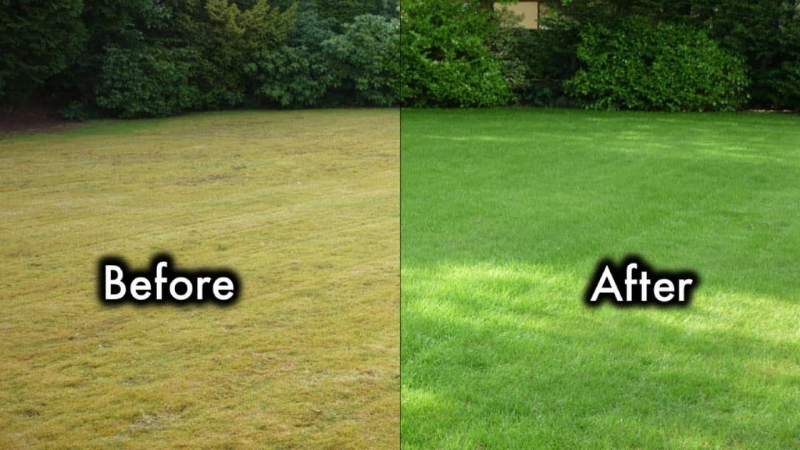
Quick-Release vs. Slow-Release Nitrogen
This comparison comes up constantly, so here's a side-by-side look at both approaches:
| Feature | Quick-Release Nitrogen | Slow-Release Nitrogen |
|---|---|---|
| Time to visible green-up | 3–7 days | 10–21 days |
| Duration of effect | 2–4 weeks | 6–12 weeks |
| Burn risk | Higher — requires careful dosing | Lower — more forgiving |
| Cost | Generally lower | Generally higher |
| Best for | Fast results, problem spots | Season-long maintenance |
| Leaching risk | Higher — loses nutrients in heavy rain | Lower — more stable in soil |
| Application frequency | Every 2–4 weeks | Every 6–12 weeks |
Many lawn care experts recommend combining both: a quick-release application now for immediate greening, followed by a slow-release product to maintain color through the season. If you're also overseeding bare patches, check out this guide on how to mix grass seed and fertilizer at the same time for a step-by-step approach.
Building a Long-Term Plan for Consistently Green Grass
A single fertilizer application can green up your lawn fast. But keeping it green — that's where a real plan comes in. The best fertilizer for green lawns is one you use consistently and correctly over time, not just in a one-time emergency fix.
Setting a Seasonal Fertilizing Schedule
Your grass type determines your fertilizing calendar. Here's a general framework:
Cool-season grasses (Kentucky bluegrass, fescue, ryegrass):
- Primary feeding: early fall (most important)
- Secondary feeding: late spring
- Light feeding: early spring (optional)
- Avoid: midsummer heat — grass is stressed and fertilizer can cause burn
Warm-season grasses (Bermuda, zoysia, St. Augustine, centipede):
- Begin feeding: late spring when grass breaks dormancy
- Continue through: summer every 4–8 weeks depending on product
- Stop: 6–8 weeks before the first expected frost
- Avoid: fall feeding — it can reduce cold hardiness
If you enjoy making your own soil amendments, making compost fertilizer at home is a cost-effective way to improve soil structure between your main nitrogen applications. Compost won't green up grass as fast as a synthetic fertilizer, but it builds the foundation that makes everything else work better.
Mowing and Watering to Support Fertilizer
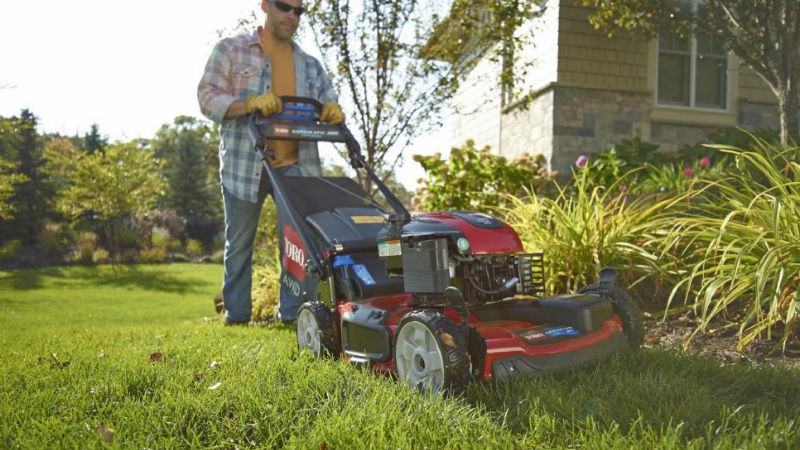
Fertilizer works better when you support it with proper mowing and watering habits. These aren't optional extras — they directly affect how well nutrients are absorbed.
Mowing tips that help fertilizer work:
- Never cut more than one-third of the blade height at once — stressing the grass reduces uptake
- Keep mower blades sharp — torn grass blades lose moisture and recover slowly
- Leave clippings on the lawn — they return nitrogen to the soil naturally (called grasscycling)
- Mow after fertilizing, not right before — give granules time to be watered in first
Watering tips that help fertilizer work:
- Water granular fertilizer in within 24–48 hours of application
- Aim for 1 inch of water per week total (rain + irrigation)
- Water deeply and infrequently rather than shallowly every day — deep roots absorb nutrients better
- Water in the morning to reduce fungal disease risk

Fertilizer Mistakes That Slow Down Your Results
Even with the right product in hand, small mistakes can completely undermine your efforts. These are the most common errors homeowners make — and how to avoid them.
Applying Too Much at Once
More is not better when it comes to lawn fertilizer. Over-fertilizing is one of the most common lawn care mistakes, and it causes real damage.
What happens when you apply too much nitrogen:
- Fertilizer burn — grass blades turn brown or tan in streaks or patches
- Excessive top growth that stresses roots
- Increased disease susceptibility
- Nutrient runoff into waterways, which is both wasteful and environmentally harmful
Always follow the label rate. If you're unsure, apply half the recommended dose, wait two weeks, and assess the response before applying more. This is especially important with quick-release nitrogen products, which can burn grass fast if misapplied.
Warning: Never fertilize dormant or drought-stressed grass. The nutrients can't be properly absorbed, and the salt concentration in fertilizer can pull moisture out of stressed roots, making things worse.
Ignoring Soil pH
Here's something a lot of people don't realize: even if you apply the perfect fertilizer at the perfect rate, your grass won't absorb the nutrients properly if the soil pH is off.
Most grass types grow best at a pH of 6.0 to 7.0 (slightly acidic to neutral). Outside that range, nutrients become chemically "locked up" in the soil and unavailable to plant roots.
How to fix pH problems:
- Too acidic (below 6.0) — apply ground limestone at the rate recommended by your soil test
- Too alkaline (above 7.5) — apply elemental sulfur to lower pH gradually
- pH adjustment takes time — expect 3 to 6 months before you see full effects
- Retest soil annually if you're making adjustments
The same principle applies to other plants in your garden. If you're curious how nutrient uptake and soil conditions affect vegetable crops, this guide on the best fertilizers for vegetables covers the concept in helpful detail.
When Your Lawn Still Won't Green Up
You've fertilized correctly, watered properly, mowed at the right height — and your lawn still looks pale and patchy. What now? There are a few less obvious causes worth checking before you apply more product.
Compaction and Thatch Buildup
Soil compaction happens when the ground gets packed down from foot traffic, heavy equipment, or clay-heavy soil. When soil is compacted, water, air, and nutrients can't penetrate to the roots — so fertilizer just sits on the surface and washes away.
Signs of compaction:
- Water puddles on the lawn instead of soaking in
- You can't push a screwdriver more than 2 inches into dry soil
- Grass thins out in high-traffic areas
The fix: core aeration. A core aerator removes small plugs of soil, opening up channels for nutrients and water. Do this in early fall for cool-season grass, or late spring for warm-season grass.
Thatch is a different problem — it's the layer of dead organic material (stems, roots) that builds up between the grass blades and the soil surface. A thatch layer thicker than half an inch blocks water and fertilizer from reaching the roots.
How to address thatch:
- Use a dethatching rake or power dethatcher (verticutter) to remove the buildup
- Dethatch in early fall for cool-season grass or early summer for warm-season grass
- Follow up with aeration and fertilizing for the best recovery
Pests and Disease to Rule Out
Sometimes what looks like a fertilizer problem is actually a pest or disease problem. Fertilizer won't fix a lawn that's being attacked from the inside. Common culprits include:
- Grubs (white grub larvae) — feed on roots, causing grass to lift away in patches like loose carpet
- Chinch bugs — drain fluids from grass blades, causing yellowed patches that spread in hot weather
- Dollar spot — a fungal disease causing small, circular straw-colored patches
- Brown patch — large brown rings that appear in warm, humid conditions
If you suspect grubs, peel back a small section of turf and look for C-shaped white larvae in the top 2 inches of soil. More than 10 per square foot usually warrants treatment. For fungal disease, look for irregular patterns and a cottony white mycelium (fungus threads) in the morning dew — these are the giveaways that tell you the problem isn't nutritional.
Frequently Asked Questions
How quickly can I expect to see results after fertilizing my lawn?
With liquid fertilizers or quick-release granular products, you can typically see a noticeable improvement in color within 3 to 7 days, assuming you water the lawn in properly and the soil temperature is warm enough for active growth. Slow-release granular fertilizers take 10 to 21 days to show visible results, but they maintain that color for much longer without needing reapplication.
Is it better to fertilize before or after rain?
Light rain after fertilizing granular products is actually helpful — it waters them in without you doing anything. However, heavy rain within 24 hours of application can wash nitrogen off before it's absorbed, which wastes product and risks runoff. Avoid fertilizing if heavy rain is in the forecast. For liquid fertilizers, apply when no rain is expected for at least 4 to 6 hours so the solution has time to be absorbed through the blades.
Can I use the same fertilizer on my lawn as on my vegetable garden?
Some products are labeled for both lawns and gardens, but be cautious. Lawn fertilizers are often high in nitrogen and may contain weed killers (in "weed and feed" products) that are harmful to edible plants. For vegetables, you generally want a more balanced ratio of nutrients. It's usually best to use lawn-specific fertilizer for turf and a separate product for your edible garden. Check the label carefully before applying any fertilizer to food-producing plants.
Next Steps
- Get a soil test this week. Pick up an inexpensive test kit at your local garden center or contact your county's cooperative extension office. Knowing your pH and nutrient levels takes the guesswork out of every product decision you make going forward.
- Choose your fertilizer based on your timeline. If you need fast results, go with a liquid nitrogen product or a quick-release granular with a first number of 25 or higher. If you're building a season-long plan, pair a quick-release application now with a slow-release product to follow.
- Apply at the correct rate and water it in. Read the label, measure your lawn area, and apply accordingly. For granular products, water within 24 hours. For liquid, apply in the morning or evening and keep off the lawn for a few hours after.
- Check for compaction or thatch if results are slow. If you're not seeing improvement after two weeks, probe the soil, look for thatch buildup, and consider aerating before your next application cycle.
- Set a fertilizing calendar for the rest of the season. Note your grass type, mark your next application date on your calendar, and stick to it. Consistent, correctly timed feeding is what separates a reliably green lawn from one that looks great for a week and then fades again.


About Lee Safin
Lee Safin was born near Sacramento, California on a prune growing farm. His parents were immigrants from Russia who had fled the Bolshevik Revolution. They were determined to give their children a better life than they had known. Education was the key for Lee and his siblings, so they could make their own way in the world. Lee attended five universities, where he studied plant sciences and soil technologies. He also has many years of experience in the U.S. Department of Agriculture as a commercial fertilizer formulator.
Get FREE Gardening Gifts now. Or latest free toolsets from our best collections.
Disable Ad block to get all the secrets. Once done, hit any button below